
When it comes to heat exchange systems, plate heat exchangers and shell and tube heat exchangers are two of the most commonly used technologies in industries such as chemical processing, HVAC, power plants, and oil & gas. However, there are situations where it may be necessary or beneficial to switch from a plate heat exchanger to a shell and tube heat exchanger.
Whether driven by the need for higher pressure ratings, larger flow capacities, or different operational requirements, making this switch requires careful consideration of various factors. In this article, we will explore the key aspects to consider when transitioning from a plate heat exchanger to a shell and tube heat exchanger.
1. Heat Transfer Efficiency and Surface Area
One of the first things to evaluate when considering a change is the heat transfer efficiency. Plate heat exchangers typically offer higher heat transfer rates due to their larger surface area per unit volume, which promotes more efficient thermal exchange between fluids. They also generate turbulent flow, enhancing heat transfer.
In contrast, shell and tube heat exchangers are designed for different operational conditions. While they may not offer the same heat transfer efficiency as plate heat exchangers in certain circumstances, they can still provide an adequate heat exchange in cases where:
Lower pressure drop is required
The flow rate is larger and more uniform
Handling of corrosive fluids in industrial applications is needed
Key Consideration: Evaluate the required heat transfer capacity. If the heat load is high and efficiency is a critical factor, shell and tube heat exchangers may need to be larger and designed with more tube passes to match the performance of a plate heat exchanger.
2. Pressure and Temperature Conditions
One significant advantage of shell and tube heat exchangers is their ability to handle high-pressure and high-temperature applications. If your process requires handling fluids at higher pressure, shell and tube designs are better equipped for these conditions because they can be built to withstand higher internal pressures compared to plate heat exchangers.
Plate heat exchangers are typically limited by their design pressure and may not be able to withstand pressures higher than 30 bar or so, depending on the material.
Shell and tube heat exchangers, however, can handle pressures up to 150 bar or more, depending on the design and materials used.
Key Consideration: If your process requires high-pressure operation, switching to a shell and tube heat exchanger may be necessary. Carefully assess the design pressure limits of your current plate exchanger and compare them to the shell and tube options.
3. Fluid Compatibility and Flow Arrangement
The choice between a plate heat exchanger and a shell and tube heat exchanger often depends on the fluid types and flow arrangement. While both systems can handle a wide variety of fluids, shell and tube exchangers offer some advantages when dealing with highly viscous, fouling, or particulate-laden fluids.
Plate heat exchangers are more efficient with clean, low-viscosity fluids. However, they may clog or experience performance degradation with fluids containing debris or high viscosity.
Shell and tube heat exchangers, with their large, open tubes, are better suited for handling dirty or viscous fluids, making them ideal for certain chemical or industrial applications.
Key Consideration: If your fluids are likely to cause fouling or if they contain particles, a shell and tube heat exchanger may be a better fit. Also, consider the number of passes and the type of flow arrangement (countercurrent or parallel) that would optimize heat transfer.
4. Space and Footprint Requirements
Plate heat exchangers are known for their compact size and modular design. They are especially useful in applications where space is limited, and the heat exchanger needs to fit into tight or confined areas. The compact design also makes it easier to expand or modify the system as needed.
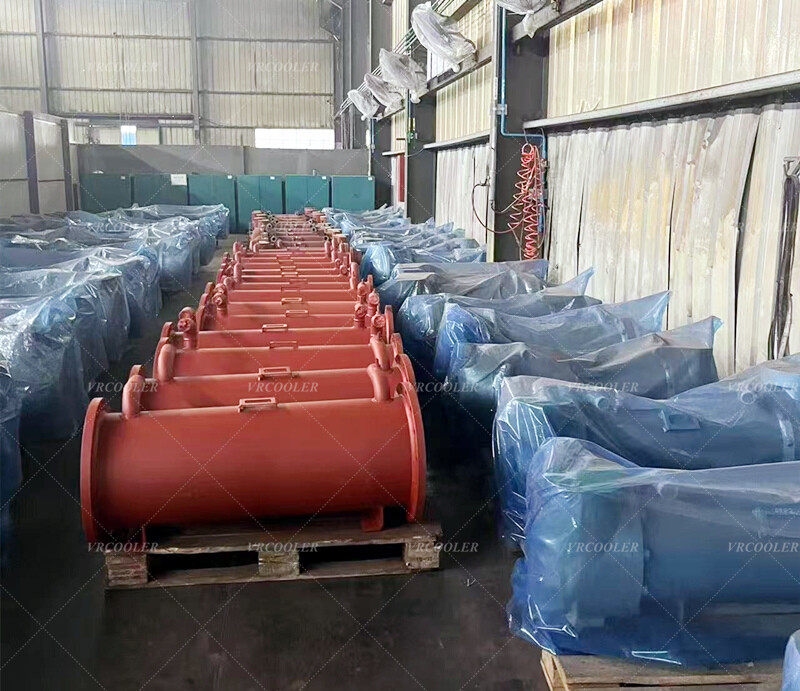
Shell and tube heat exchangers, on the other hand, tend to have a larger footprint due to their bulky shell and the arrangement of the tubes inside. However, they are better suited for handling large volumes of fluids and larger heat loads.
Key Consideration: If space is a significant constraint, you may need to opt for a larger shell and tube heat exchanger or reconsider whether the switch is necessary. If space efficiency is paramount, a plate heat exchanger may still be the better option.
5. Maintenance and Cleaning
When switching to a shell and tube heat exchanger, maintenance and cleaning procedures will change. Plate heat exchangers are often easier to maintain and clean because they can be disassembled quickly, allowing for manual cleaning of the plates. This is particularly useful in industries where fouling is a concern.
Shell and tube heat exchangers, although not as easy to clean as plate exchangers, are more accessible for maintenance, particularly when cleaning is required for external surfaces or tube bundle replacement.
Plate heat exchangers require gasket replacements and occasional plate cleaning.
Shell and tube heat exchangers may need to be cleaned by chemical cleaning or mechanical cleaning using pigs or other tools for internal cleaning of the tubes.
Key Consideration: Evaluate the maintenance and cleaning schedule for each system. For heavy fouling processes, shell and tube heat exchangers might require more specialized cleaning techniques, while plate heat exchangers are easier to disassemble and clean.
6. Initial Cost and Operational Costs
While plate heat exchangers typically have a lower initial cost, they might incur higher maintenance costs over time, especially when dealing with aggressive fluids or very high temperatures. In contrast, shell and tube heat exchangers usually come with a higher upfront cost due to their larger size and more robust construction.
However, shell and tube heat exchangers may offer better cost efficiency over the long term when considering operational costs and maintenance. They can operate effectively in more demanding conditions and are generally more durable in high-temperature and high-pressure settings.
Key Consideration: Compare the total cost of ownership for both systems, factoring in installation, maintenance, and operational costs over the lifetime of the equipment.
