
Lube Oil Tubular Heat Exchanger For Cement Mill And Raw Mill Gearbox
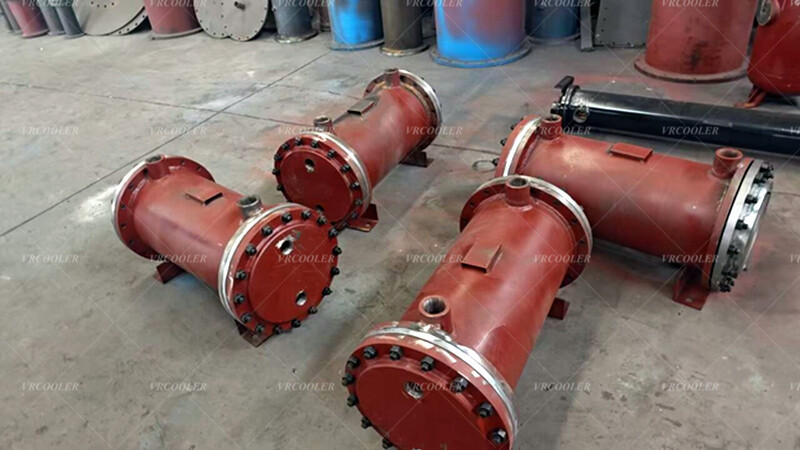
Tube heat exchanger mainly consists of shell, tube bundle, tube sheet, header (end cap) and other components. The high-temperature lubricating oil from the gearbox enters the heat exchanger's shell stroke and flows inside the shell, while the cooling medium (usually water) flows inside the tube stroke. Due to the temperature difference between the fluid in the tube course and the shell course, heat will be transferred from the high-temperature lubricant to the low-temperature cooling medium, thus realizing the cooling of the lubricant.
Structural characteristics
Shell: generally made of cylindrical seamless steel pipe or welded steel pipe, with tube plates welded at both ends, used to fix the tube bundle, and at the same time to withstand the pressure of the lubricating oil in the shell process.
Tube bundle: consists of many heat exchanger tubes, is the main place of heat exchange. Heat exchanger tube is usually copper, stainless steel tube and other materials with good thermal conductivity to improve the heat transfer efficiency.
Tube plate: the tube plate is welded with the shell to fix the ends of the heat exchanger tubes to ensure that the fluids in the shell and tube courses do not leak into each other.
Head (end cap): installed at both ends of the shell, on which there is an inlet and outlet for cooling medium, the head and tube plate are connected by bolts, which is convenient for disassembling and cleaning the tube bundle.
Advantages
Sturdy structure: able to withstand high pressure and temperature, suitable for harsh working environments such as cement mill and raw material mill gearbox, with long service life.
High heat transfer efficiency: through the reasonable design of the arrangement of tube bundles and the folding plate in the shell, it can make the lubricating oil and cooling medium in the heat exchanger to realize countercurrent or wrong flow, increase the temperature difference of heat transfer, and improve the heat transfer efficiency.
Easy maintenance: the head can be disassembled, which is convenient for cleaning, overhauling and replacing the damaged heat exchanger tubes.
Wide range of application: according to different gear box specifications and cooling requirements, you can choose the appropriate heat exchanger model and size, but also by adjusting the flow rate and temperature of the cooling medium to meet the actual cooling requirements.
Selection considerations
Heat exchanger area: According to the power of the gearbox, the flow rate of the lubricant and the temperature change requirements and other factors, the required heat exchanger area is calculated to ensure that the heat exchanger can effectively cool the lubricant to the appropriate temperature.
Flow and pressure loss: need to consider the flow and pressure loss of lubricating oil and cooling medium in the heat exchanger, to ensure that there will be no excessive impact on the lubrication system and cooling system of the gear box, to ensure the normal operation of the system.
Material selection: according to the working environment in which the gear box is located and the characteristics of the medium, select the appropriate heat exchanger material, such as in the environment of corrosive media, stainless steel and other corrosion-resistant materials should be selected.
Installation space: consider the size of the installation space around the cement mill and raw material mill gear box, select the appropriate structure and size of the tubular heat exchanger, to ensure that it can be installed and maintained smoothly.
