
Dual cooling roles inside engine room
Lubrication oil temperature control mission
In marine diesel engines, lubrication oil continuously absorbs heat from moving components such as bearings and gears. Without proper cooling, oil temperature rises, reducing viscosity and lubrication performance, which may lead to accelerated wear.
Freshwater circuit heat removal function
Freshwater is used as a secondary cooling medium to absorb heat from the engine block and internal components. This heated freshwater must then be cooled before recirculation to maintain a stable engine temperature.
Independent yet interconnected systems
Although oil cooling and freshwater cooling serve different functions, they are interconnected within the engine cooling system. Stable performance of both is essential for overall system reliability.
Continuous operation under marine conditions
Ships operate for long durations without shutdown, requiring both cooling systems to function reliably under vibration, humidity, and varying load conditions.
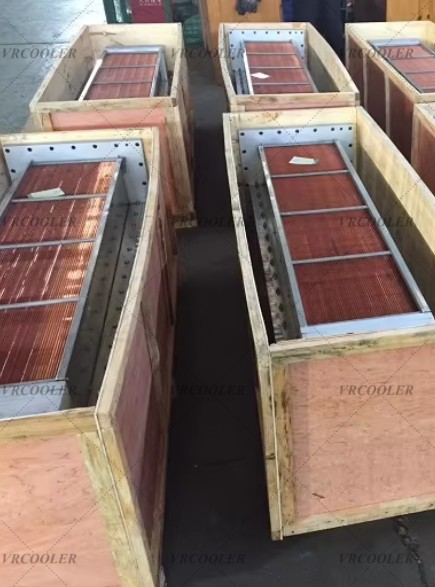
Oil cooler ensuring lubrication stability
Shell and tube design for oil cooling
Marine oil coolers typically use a shell and tube structure, where lubrication oil flows through tubes while cooling water circulates on the shell side, ensuring effective heat removal.
Maintaining optimal oil viscosity
Proper cooling keeps the oil within the ideal temperature range, preserving viscosity and ensuring effective lubrication of engine components.
Protection of mechanical components
Stable oil temperature reduces friction and wear, extending the lifespan of critical engine parts.
Adaptation to variable engine load
The oil cooler must handle fluctuations in heat load as engine speed and power output change during operation.
Freshwater cooler managing engine heat
Secondary cooling loop principle
Freshwater absorbs heat from the engine and transfers it to seawater through the freshwater cooler, forming a closed-loop cooling system.
Preventing direct seawater contact
Using freshwater as an intermediate medium prevents seawater from directly entering the engine, reducing corrosion risks.
Stable engine temperature control
The freshwater cooler ensures that engine operating temperature remains within a safe range, preventing overheating.
Efficiency in heat dissipation
The shell and tube structure allows efficient transfer of heat from freshwater to seawater, ensuring consistent cooling performance.
Structural features for marine durability
Corrosion resistant material selection
Materials such as copper-nickel alloys, stainless steel, or titanium are selected depending on whether seawater or freshwater is used.
Reinforced design for vibration resistance
Marine environments involve constant vibration, requiring robust structural design to prevent fatigue damage.
Compact layout for engine room space
Cooling equipment must fit within limited engine room space, requiring compact and efficient design.
Long service life expectation
Proper material and structural design ensure that the equipment can operate reliably over long service periods.
Maintenance strategy for long voyages
Accessibility for cleaning operations
Shell and tube coolers are designed to allow easy access to tube bundles for cleaning and inspection.
Fouling and scaling management
Seawater systems are prone to fouling, making regular maintenance essential to maintain heat transfer efficiency.
Reduced downtime requirements
Reliable design minimizes the need for frequent maintenance, which is critical during long voyages.
Spare parts and service planning
Marine operators often prepare spare parts in advance to ensure quick repair if needed.
Practical results from marine project
Stable temperature control achieved
After installation, both oil and freshwater cooling systems maintained stable temperatures under various operating conditions.
Improved engine reliability
The coordinated cooling system reduced the risk of overheating and lubrication failure.
Lower maintenance frequency observed
Optimized design and material selection resulted in less fouling and reduced maintenance needs.
Enhanced operational safety at sea
Reliable cooling performance ensured safe and continuous ship operation, which is essential in marine environments.
