
A Compact and Robust Appearance Designed for Performance
Plate Packs Inside a Pressure-Resistant Shell
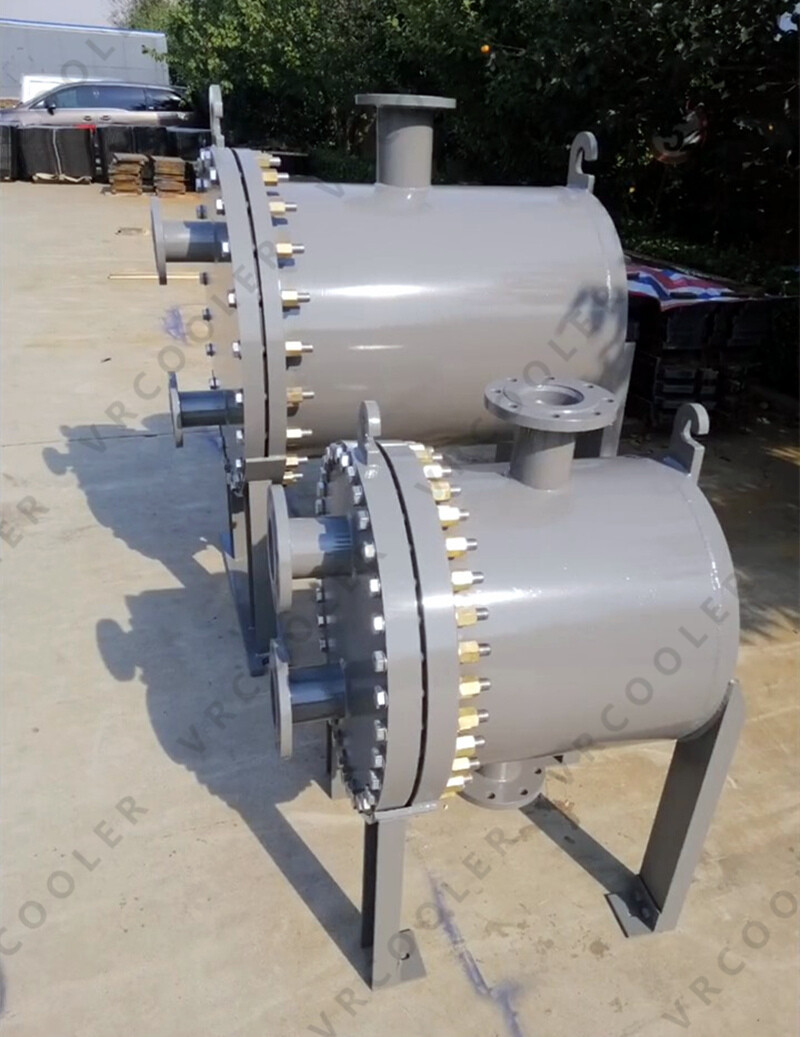
Unlike conventional shell and tube heat exchangers, plate and shell units feature welded plate packs enclosed within a cylindrical shell. This design allows a much larger heat transfer area in a compact footprint while maintaining strong pressure resistance.
Space-Saving Structure for Modern Plants
The compact geometry makes plate and shell heat exchangers ideal for installations with limited space, such as skid-mounted systems or plant revamps.
Why Plate and Shell Heat Exchangers Outperform Conventional Shell and Tube Designs
Higher Heat Transfer Efficiency in a Smaller Volume
Corrugated plates create strong turbulence, significantly improving heat transfer efficiency compared with smooth tubes used in traditional shell and tube exchangers.
Better Performance Under High Pressure and Temperature
Fully welded plate construction eliminates gasket risks, enabling reliable operation under extreme conditions where standard plate heat exchangers may not be suitable.
Lower Fouling Tendency and Improved Flow Distribution
Optimized flow paths reduce fouling and ensure uniform temperature distribution, improving long-term performance.
Exceptional Thermal Efficiency Across Multiple Process Applications
Efficient Heat Recovery and Energy Saving
Plate and shell heat exchangers enable efficient heat recovery between hot and cold process streams, helping plants reduce energy consumption and operating costs.
Suitable for Challenging Process Fluids
They perform well with high-pressure gases, phase-changing fluids, and aggressive media, making them suitable for complex process environments.
Where Plate and Shell Heat Exchangers Are Commonly Applied
Oil and Gas Processing and Refining
Widely used for gas cooling, condensation, and heat recovery in upstream, midstream, and downstream operations.
Chemical and Petrochemical Industries
Applied in reactors, condensers, and inter-stage coolers requiring precise temperature control.
Energy and Power Generation Systems
Used in heat recovery systems, district heating, and waste heat utilization units.
Hydrogen and Clean Energy Applications
Increasingly adopted in hydrogen production, compression, and thermal management systems.
Simple Maintenance Practices for Long-Term Reliability
Easy Inspection and Cleaning Options
Designed to allow inspection and cleaning of both shell side and plate side, ensuring consistent performance.
Reduced Maintenance Frequency
Lower fouling rates and robust construction help extend service intervals and reduce total maintenance costs.
