
What Is a Plate and Shell Heat Exchanger
A Hybrid Design Concept
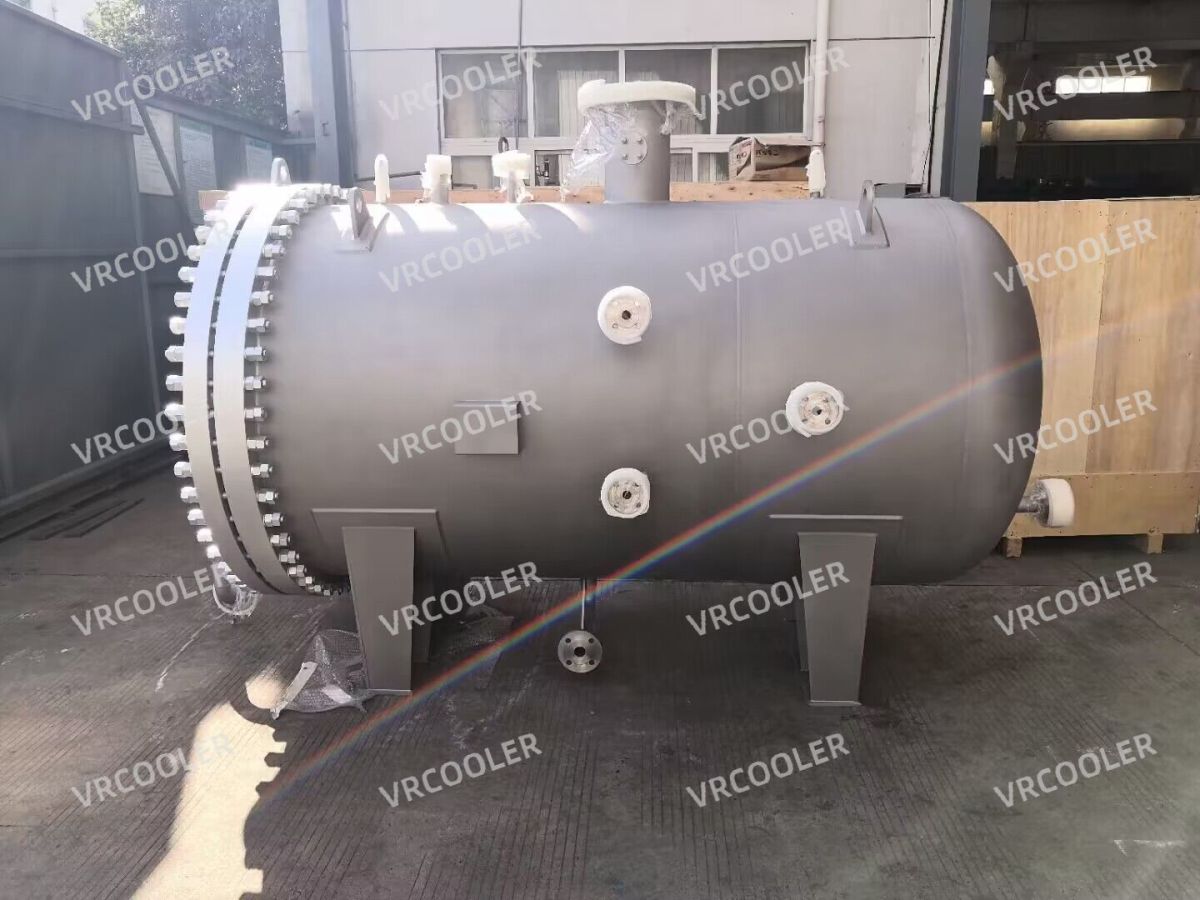
A plate and shell heat exchanger integrates plate heat transfer elements into a cylindrical pressure vessel. Instead of using traditional tube bundles, the core heat transfer element is a set of fully welded plates.
Structural Composition
It mainly consists of:
Shell (pressure vessel)
Welded plate pack
Inlet and outlet nozzles
Support structures
This design allows the exchanger to withstand high pressure while offering much higher thermal efficiency than standard shell and tube units.
How Plate and Shell Heat Transfer Works
Plate-Based Flow Channels
Fluids flow through narrow channels formed by corrugated plates. The plate pattern creates strong turbulence, which:
Increases heat transfer coefficient
Reduces fouling risk
Improves temperature approach
True Counter-Current Operation
Most plate and shell designs allow real counter-current flow, enabling:
Higher heat recovery rates
Smaller temperature difference (LMTD)
More compact equipment size
What Has Changed Compared with Traditional Shell and Tube
From Tubes to Plates
The key modification is replacing tube bundles with welded plates. This leads to:
Much larger heat transfer area per volume
Lower thermal resistance
Faster response to temperature changes
From Mechanical Seals to Fully Welded Core
Unlike gasketed plate exchangers, plate and shell units are fully welded, making them suitable for:
High-pressure systems
High-temperature processes
Hazardous or toxic media
Key Technical Features and Advantages
Compact but Powerful
Plate and shell heat exchangers are typically:
30–50% smaller than conventional shell and tube
Lighter in weight
Easier to install in limited spaces
High Efficiency and Energy Saving
Thanks to turbulence and thin plates:
Heat transfer efficiency is significantly higher
Energy consumption is reduced
Heat recovery performance is improved
Excellent for Severe Conditions
They perform well under:
High pressure
High temperature
Phase change processes (evaporation/condensation)
Where Plate and Shell Heat Exchangers Are Used
Process Industry Applications
Common industries include:
Oil & gas
Chemical processing
Petrochemical plants
Power generation
Energy and Environmental Systems
They are widely used in:
Waste heat recovery
District heating
Carbon capture systems
Hydrogen production
Refrigeration and LNG
Plate and shell units are ideal for:
LNG vaporizers
Refrigerant condensers
Cryogenic processes
Maintenance and Operational Benefits
Low Fouling Design
The strong turbulence reduces deposit buildup, leading to:
Longer cleaning intervals
More stable long-term performance
Easy Inspection and Service
Most designs allow:
Plate pack removal
Visual inspection
On-site cleaning
Long Service Life
Fully welded construction ensures:
No gasket aging problems
High mechanical strength
Reduced leakage risk
Why Plate and Shell Is the Future of Shell Heat Exchangers
Plate and shell heat exchangers represent the evolution of traditional shell and tube technology. By combining compact plate efficiency with shell-side mechanical strength, they offer a perfect balance between performance, reliability, and safety. For modern industrial systems that demand high efficiency, limited space, and energy recovery, plate and shell heat exchangers are becoming one of the most preferred solutions worldwide.