
Pressure Testing The First Safety Barrier
Pressure testing is the most critical step after manufacturing. It verifies whether the heat exchanger can withstand its designed operating pressure without leakage or deformation.
Hydraulic pressure tests are commonly used, applying 1.25 to 1.5 times the design pressure.
Separate testing is conducted on shell side and tube side.
Any pressure drop, visible leakage, or abnormal deformation leads to immediate rework.
This step directly determines whether the equipment is qualified for field operation.
Leak Detection Confirming Long-Term Sealing Reliability
Beyond basic pressure testing, detailed leak detection ensures that all welded joints and sealing surfaces are fully secure.
Soap solution testing for visible micro-leaks.
Helium or air testing for higher precision requirements.
Special focus on tube-to-tube-sheet joints and nozzle welds.
Effective leak detection prevents future shutdowns caused by media cross-contamination or loss of system pressure.
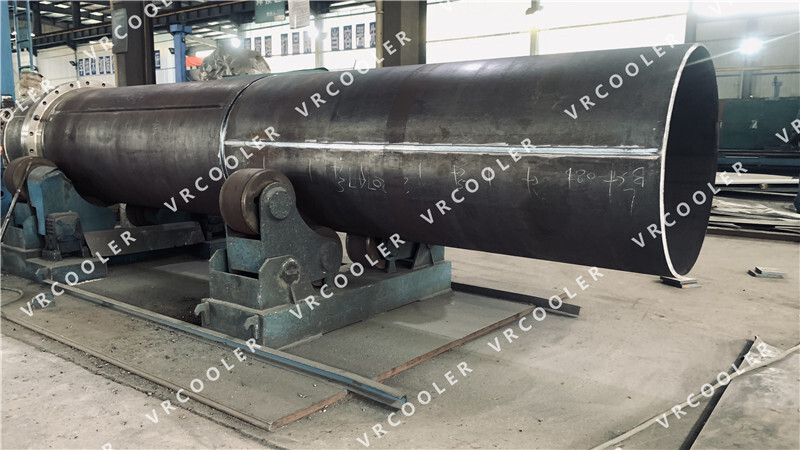
Leak Detection Confirming Long-Term Sealing Reliability
Beyond basic pressure testing, detailed leak detection ensures that all welded joints and sealing surfaces are fully secure.
Soap solution testing for visible micro-leaks.
Helium or air testing for higher precision requirements.
Special focus on tube-to-tube-sheet joints and nozzle welds.
Effective leak detection prevents future shutdowns caused by media cross-contamination or loss of system pressure.
Dimensional and Visual Inspection Ensuring Structural Accuracy
Geometric accuracy is essential for installation and system integration.
Measurement of nozzle positions, flange alignment, and overall dimensions.
Inspection of internal components such as baffles and tube spacing.
Surface finishing checks for corrosion protection coatings.
These inspections ensure that the exchanger fits perfectly into the client’s piping system.
Documentation and Traceability Supporting Long-Term Use
All testing results are documented and archived as part of the quality assurance system.
Pressure test certificates and inspection reports.
Material certificates and welding records.
Quality dossiers for future maintenance reference.
This traceability system provides long-term technical support and simplifies future troubleshooting or upgrades.
