
Shell-and-tube reboilers serve as the “core heat source” for distillation columns in petrochemical and oil/gas processing. Their primary function is to provide stable heat to the liquid at the column bottom, partially vaporizing it into rising vapor. This vapor then undergoes gas-liquid mass transfer with reflux liquid descending from the column top, ultimately achieving mixture separation and purification. As such, they are critical equipment ensuring continuous and efficient distillation operations.
The distillation column's core requirements for the reboiler are “controllable heat input and stable vaporization.” The shell-and-tube structure precisely meets these demands:
Stable vaporization heat supply: Bottom liquids (e.g., heavy oil from crude fractionation towers, high-boiling residues from solvent recovery towers) flow through the shell side of shell-and-tube reboilers. High-temperature heating media (e.g., high-pressure steam, high-temperature thermal oil, process waste heat fluids) circulate through the tube side. Heat is transferred through the tube walls to the bottom liquids, raising their temperature to the boiling point and partially vaporizing them into steam.
Ensuring vapor-liquid mass transfer equilibrium: Shell-and-tube reboilers precisely control the bottom liquid vaporization rate (typically 3%-15%) by adjusting the heating medium flow rate (e.g., steam valve opening). This ensures the rising vapor volume matches the top reflux liquid volume, preventing “flooding” due to excessive vaporization or reduced separation efficiency from insufficient vaporization, thereby maintaining stable distillation tower operation.
Bottom liquids in petrochemical distillation often exhibit high viscosity, high boiling points, and impurities (e.g., solid particles, coke deposits), while heating processes frequently require high-temperature, high-pressure conditions. The shell-and-tube reboiler's structural and material design specifically addresses these challenges:
Resisting Complex Media Effects: When high-viscosity bottom liquids flow through the shell side, the shell-side flow channels in shell-and-tube reboilers are wider (compared to plate or finned types), reducing the risk of flow obstruction due to excessive viscosity. Additionally, if the medium contains minor impurities or is prone to coking, optimizing the spacing of shell-side baffles and applying anti-coking coatings (e.g., nitriding treatment) can minimize impurity deposition and coking, thereby extending operational cycles.
Withstanding High-Temperature and High-Pressure Conditions: Shell-and-tube reboiler shells and tube bundles can be fabricated from thick-walled carbon steel, stainless steel (e.g., 304, 316L), or specialty alloys (e.g., chromium-molybdenum steel) to meet strength and corrosion resistance requirements under high-temperature/high-pressure conditions, preventing equipment deformation or leakage.
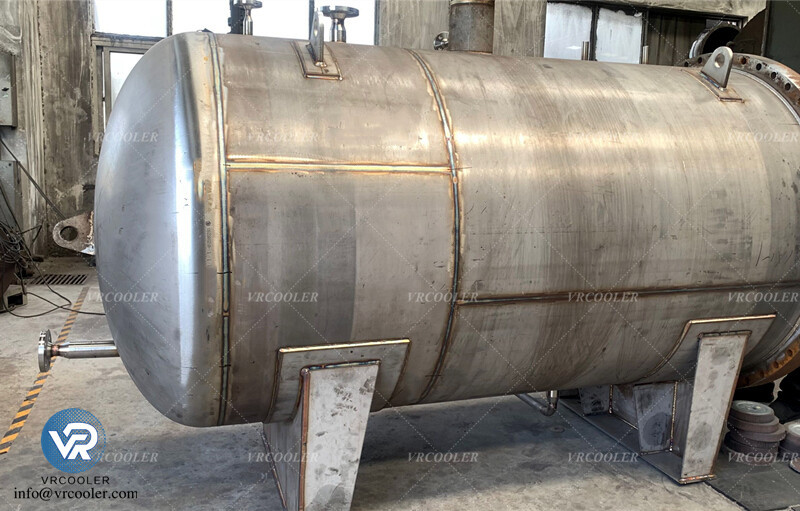
Petrochemical production demands exceptional heat transfer efficiency, continuous operation capability, and maintenance accessibility from equipment. Shell-and-tube reboiler design precisely addresses these requirements:
Heat transfer efficiency for high loads: Optimized tube bundle arrangements (e.g., triangular staggered packing), external fins (for low-thermal-conductivity media), and incorporating “reactor-style” or “thermal siphon” shell-side structures (enhancing liquid agitation) significantly boosts heat transfer coefficients. This adaptability accommodates diverse load requirements—from small-to-medium distillation columns (e.g., laboratory-scale solvent separation) to large refining towers (e.g., crude oil fractionation columns exceeding 10 meters in diameter)—ensuring efficient vaporization of bottom-of-column liquids.
Maintenance-friendly design minimizes downtime losses: If fouling occurs in the tube-side heating medium (e.g., steam condensate scaling or thermal oil carbon deposits), the tube bundle can be accessed by removing end caps and cleaned via high-pressure water flushing or chemical cleaning (e.g., hydrochloric acid pickling). If individual tubes fail due to corrosion or coking, they can be isolated or replaced without scrapping the entire unit, drastically reducing distillation unit maintenance downtime.
Shell-and-tube reboilers can be structurally adapted to suit various scenarios based on distillation tower type, medium properties, and operating conditions:
Thermosiphon Shell-and-Tube Reboiler: Utilizes the density difference between tower bottom liquid and reboiler liquid to create natural circulation without additional pump drive. Suitable for low-viscosity, non-coking media (e.g., gasoline, diesel fractionation), offering low energy consumption and simple maintenance.
Kettle-type shell-and-tube reboiler: Features an enlarged “kettle chamber” at the bottom of the shell side, accommodating greater liquid volume. Suitable for high-viscosity, coking-prone media or those requiring stable liquid levels (e.g., heavy oil fractionation). A blowdown port can be installed at the kettle chamber bottom to periodically discharge accumulated impurities and coke deposits.
