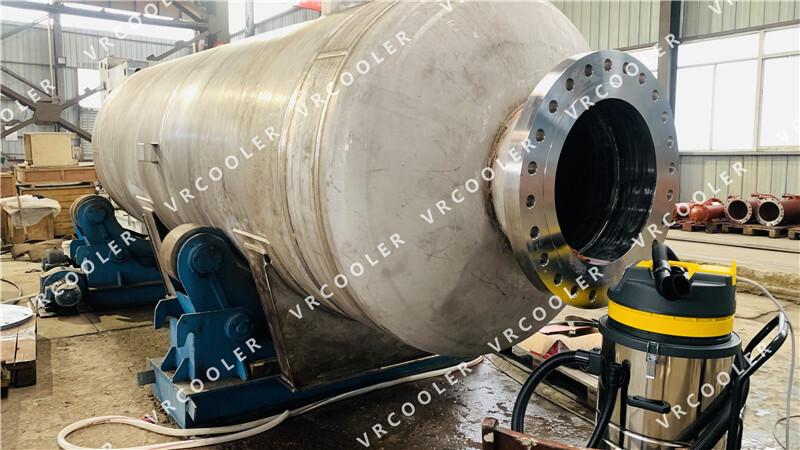
Recovery of Industrial Waste Heat Using Shell and Tube Heat Exchangers
Key points of design and selection
Material Selection: Select the appropriate material according to the nature of industrial waste heat and temperature and other factors. For high temperature and corrosive waste heat, shell and tube heat exchanger made of stainless steel, titanium alloy and other materials can be selected to ensure the durability and stability of the equipment.
Structural design: optimize the structure of the shell and tube heat exchanger by considering factors such as the flow rate, pressure and temperature change of the waste heat fluid. Such as the use of multi-tube range, multi-shell range structure to increase the heat transfer area and heat transfer efficiency; reasonable design of the tube spacing and shell range baffle, so that the fluid distribution is more uniform, improve the heat transfer effect.
Calculation of heat transfer: Accurately calculate the heat transfer process between the waste heat fluid and the heated fluid to determine the appropriate heat transfer coefficient and heat transfer area. According to the temperature, flow rate and required heat recovery of waste heat, calculate the main parameters of the shell and tube heat exchanger, such as tube diameter, tube length, shell diameter, etc., to ensure efficient recovery of waste heat.
Application Scenarios
Iron and steel industry: In the process of iron and steel production, coke oven gas and blast furnace gas contain a large amount of waste heat. Through the shell and tube heat exchanger, this waste heat can be used to preheat air, water or other process fluids, which improves the energy utilization efficiency and reduces the production cost.
Chemical industry: Many reaction processes in chemical production will produce a large amount of high temperature waste heat, such as ammonia, oil cracking and other processes. The use of shell and tube heat exchanger can be used to recover this waste heat for heating raw materials, preheating reaction medium or generating steam, to realize the recycling of energy.
Power industry: the flue gas of thermal power station contains a lot of heat energy, through the shell and tube heat exchanger can be used to recover the waste heat in the flue gas, used to heat the boiler make-up water or other thermal systems, improve power generation efficiency and reduce energy waste.
Advantages
Efficient heat transfer: Shell and tube heat exchanger has a large heat transfer area and good heat transfer performance, which can effectively transfer the waste heat from the high temperature fluid to the low temperature fluid and realize the recovery and utilization of heat.
Strong adaptability: according to different industrial waste heat working conditions and recovery requirements, the structure and parameters of the shell and tube heat exchanger can be flexibly designed and adjusted to adapt to a variety of complex application scenarios.
High reliability: relatively simple structure, stable operation and low maintenance cost. Under reasonable design and operation conditions, it can operate stably for a long time to ensure the reliability and continuity of the waste heat recovery system.
Challenges and solutions
Scaling and corrosion: Industrial waste heat may contain various impurities and corrosive substances, which can easily form scaling and corrosion on the surface of the shell and tube heat exchanger, affecting the heat transfer effect and equipment life. Solutions include regular cleaning of the heat exchanger, use of corrosion-resistant materials and coatings, and adding corrosion inhibitors to the waste heat fluid.
Pressure loss: During waste heat recovery, fluid flow within the shell-and-tube heat exchanger generates pressure losses that may affect the operation of the entire process. In order to reduce the pressure loss, the structural design of the heat exchanger can be optimized, selecting the appropriate flow rate and tube diameter, using low resistance fittings and valves, and so on.
Temperature matching: The temperature and flow rate of waste heat fluid may fluctuate, so it is necessary to reasonably design the waste heat recovery system and adopt temperature regulating devices and control systems to ensure that the shell-and-tube heat exchanger can realize good temperature matching under different working conditions, so as to improve the efficiency of waste heat recovery.