
A tube bundle replacement for a kettle type heat exchanger is often the most practical way to restore performance without replacing the entire exchanger body. In many plants, the shell, saddle supports, and piping connections may still be in usable condition, while the internal bundle has suffered from fouling, corrosion, tube leakage, vibration damage, or long-term thermal stress. In these cases, replacing the tube bundle can extend equipment life, reduce downtime, and lower overall project cost.
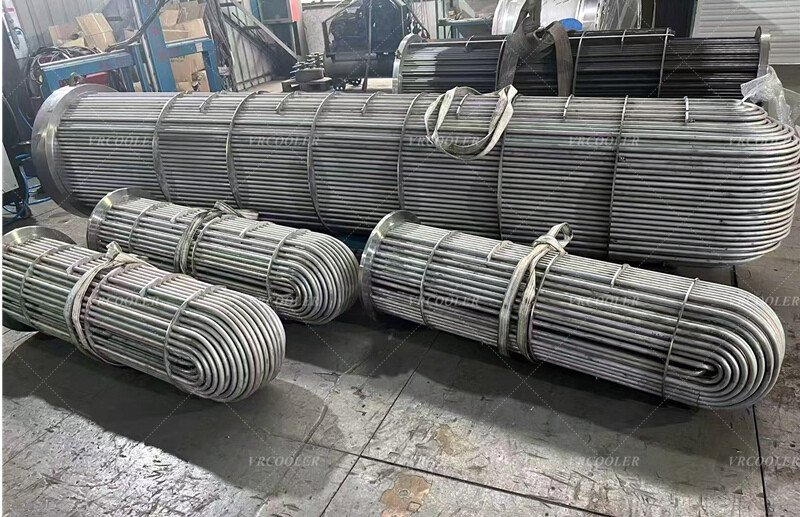
Kettle type heat exchangers are widely used in refinery, petrochemical, chemical, gas processing, and other industrial plants, especially in reboiler service. Their design allows a liquid pool to be heated on the shell side while vapor is generated above the liquid level. Because of this duty, the tube bundle is exposed to demanding operating conditions, including boiling service, scaling, fouling, temperature cycling, and in some cases corrosive process media. Over time, even a well-designed bundle may reach the point where repair is no longer the best long-term solution.
A replacement tube bundle must do more than simply fit inside the shell. It has to match the original exchanger layout or be redesigned carefully to improve performance while remaining compatible with the existing equipment. Important details include tube size, tube count, tube length, tube pitch, baffle arrangement if applicable, tubesheet dimensions, nozzle alignment, gasket seating, and bundle clearance. If these points are not handled correctly, installation problems or poor operating performance can follow.
One of the main reasons plant operators choose tube bundle replacement is leakage. When tubes begin to fail because of corrosion, erosion, or repeated thermal stress, plugging individual tubes may work only for a limited time. Once too many tubes are plugged, heat transfer capacity drops and the exchanger can no longer perform as required. A new tube bundle restores the effective surface area and gives the exchanger a better chance of returning to stable design duty.
Material selection is also a major part of a successful replacement project. The original bundle may have been built in carbon steel, stainless steel, copper alloy, titanium, or another material depending on service conditions. When replacing the bundle, engineers often review the actual plant history to see whether the original material is still the best choice. In some cases, upgrading the tube or tubesheet material can improve resistance to corrosion, reduce maintenance frequency, and increase equipment life.
For kettle type exchangers, mechanical fit is especially important because the exchanger is often part of a larger process loop where piping changes are expensive. A well-made replacement bundle should be dimensionally accurate and designed to slide into the existing shell correctly while maintaining proper sealing and support. This is why field measurement and review of the original drawings are usually necessary before manufacturing starts.
Another advantage of tube bundle replacement is the opportunity to improve thermal design. If the process duty has changed, or if the original exchanger has shown repeated operating problems, the new bundle can sometimes be optimized to better match the real plant conditions. This may involve changes in tube material, tube wall thickness, surface area, or internal arrangement, while still keeping the existing shell in service. For many industrial users, that balance between retrofit and performance improvement is the main value of a custom replacement bundle.
Quality control is critical in this kind of work. A replacement tube bundle for a kettle type heat exchanger should be manufactured with proper inspection, pressure testing, and dimensional checks before shipment. In refinery and chemical service, users normally expect the replacement bundle to meet the relevant code, material certification, and testing standards required by the plant. Good fabrication quality is just as important as the thermal design because the bundle has to operate safely under real process pressure and temperature conditions.
From a maintenance point of view, replacing only the tube bundle can also shorten shutdown time compared with replacing the full exchanger. This is especially valuable in plants where turnarounds are carefully scheduled and every extra day of outage affects production. If the new bundle is designed correctly and delivered on time, installation can be straightforward, helping the plant return to service faster.
In short, tube bundle replacement for a kettle type heat exchanger is a cost-effective and practical solution when the exchanger shell remains usable but the internal heat transfer bundle has reached the end of its service life. With the right design review, material selection, and manufacturing quality, a replacement bundle can restore heat transfer performance, improve reliability, and give the exchanger many more years of productive operation.
