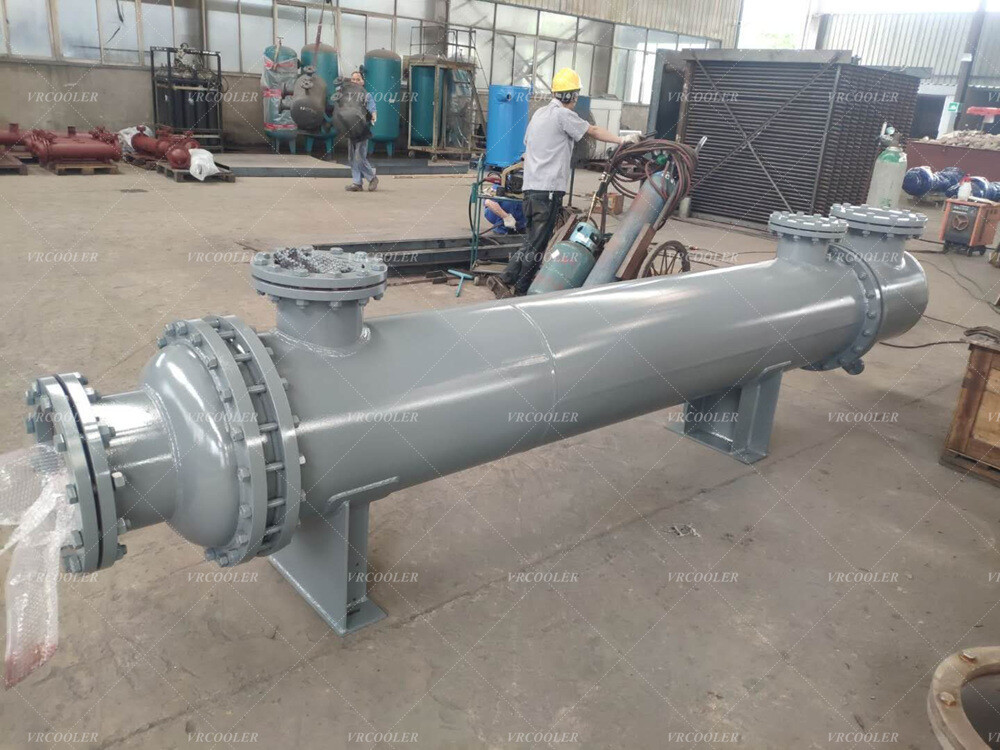
Structure
Shell: The shell is a cylindrical container that houses the tube bundle. It is usually made of steel or other corrosion - resistant materials to withstand the pressure and corrosive effects of the cooling medium. The shell has inlet and outlet ports for the cooling water.
Tube Bundle: Inside the shell, there are numerous tubes arranged in a specific pattern. The tubes are typically made of copper - alloy, stainless steel or other materials with good heat transfer properties and corrosion resistance. The fluid to be cooled flows through the tubes, while the cooling seawater flows outside the tubes, around the tube bundle.
Working Principle
Heat Exchange: The hot fluid that needs to be cooled enters the tubes of the condenser. At the same time, seawater is pumped into the shell side of the condenser. Due to the temperature difference between the hot fluid in the tubes and the cooler seawater outside, heat is transferred from the hot fluid through the tube walls to the seawater. As a result, the hot fluid is cooled down, and the seawater absorbs the heat and gets heated up.
Phase Change (if applicable): In some cases, the hot fluid may undergo a phase change from vapor to liquid as it releases heat to the seawater. This phase change further enhances the heat transfer process, as the latent heat of condensation is also transferred to the cooling water.
Advantages
High Heat Transfer Efficiency: The large surface area provided by the tube bundle and the good heat transfer properties of the materials used allow for efficient heat exchange between the hot fluid and the seawater. This helps in quickly cooling the process fluid to the desired temperature.
Compact Design: Shell - and - tube condensers have a relatively compact structure, which means they can achieve a high heat transfer rate in a relatively small space. This is beneficial for installations where space is limited.
Reliable Operation: They are designed to handle high - pressure and high - temperature fluids, and with proper maintenance, they can operate continuously for long periods. The simple and robust structure of the shell - and - tube design contributes to its reliability.
Disadvantages
Corrosion Issues: Seawater is corrosive, which can cause damage to the tubes and the shell of the condenser over time. Special materials and corrosion - prevention measures, such as coatings and sacrificial anodes, are required to mitigate this problem, increasing the initial cost and maintenance requirements.
Fouling: Seawater contains various impurities and organisms that can adhere to the tube surfaces, reducing the heat transfer efficiency. Regular cleaning and maintenance are necessary to remove the fouling and ensure the proper operation of the condenser.
High Initial Cost: The construction of a shell - and - tube condenser, especially one designed to handle seawater, requires high - quality materials and precise manufacturing processes, resulting in a relatively high initial investment.