
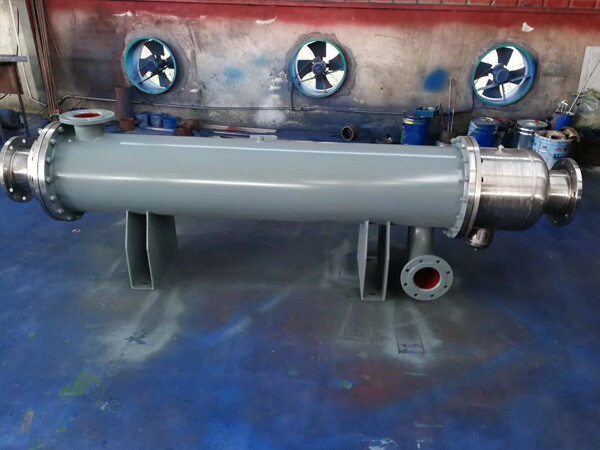
shell and tube evaporator for cooling purposes
A shell and tube evaporator is a widely used heat exchanger in various cooling applications. Here is a more detailed look at its features, working principles, advantages, and applications for cooling purposes:
Features
Tube Bundle: Comprises a large number of small-diameter tubes, usually made of copper or copper alloys, which offer excellent heat transfer properties. These tubes are arranged in a specific pattern within the shell to provide a large surface area for heat exchange.
Shell: A cylindrical vessel that encloses the tube bundle. It is typically constructed of steel or other durable materials capable of withstanding the operating pressures and temperatures. The shell provides a sealed chamber for the refrigerant and the medium to be cooled.
Tube Sheets: Flat plates located at each end of the tube bundle, used to hold the tubes in place and create a seal to prevent the mixing of the refrigerant and the cooling medium.
Baffles: Installed inside the shell to direct the flow of the cooling medium around the tube bundle. Baffles enhance heat transfer by increasing turbulence in the fluid flow, ensuring more efficient heat exchange between the refrigerant and the cooling medium.
Working Principles
Refrigerant Flow: The refrigerant enters the tube bundle in a liquid state at a low temperature and pressure. As it passes through the tubes, it absorbs heat from the surrounding cooling medium, which causes the refrigerant to evaporate and turn into a vapor.
Cooling Medium Circulation: The cooling medium, such as water or a secondary refrigerant, is pumped into the shell side of the evaporator and circulates around the outside of the tube bundle. Heat is transferred from the cooling medium to the refrigerant through the tube walls, resulting in a decrease in the temperature of the cooling medium.
Heat Transfer Mechanism: The temperature difference between the cooling medium and the refrigerant drives the heat transfer process. The thin walls of the tubes, along with the large surface area provided by the tube bundle and the enhanced turbulence created by the baffles, facilitate efficient heat transfer, allowing for rapid cooling of the cooling medium.
Applications
Air Conditioning Systems: In commercial and industrial air conditioning systems, shell and tube evaporators are used to cool the chilled water that is then circulated through air handling units to cool the air in buildings. This provides a comfortable indoor environment for occupants.
Refrigeration Systems: They are an essential component of refrigeration systems used in cold storage warehouses, supermarkets, and food processing plants. The evaporator cools the refrigerant, which in turn absorbs heat from the refrigerated space, maintaining the desired low temperatures for food preservation.
Industrial Process Cooling: Many industrial processes require precise temperature control for efficient operation. Shell and tube evaporators are used to cool process fluids, such as water, glycol mixtures, or other heat transfer fluids, in applications such as plastic extrusion, metal heat treatment, chemical manufacturing, and pharmaceutical production.
HVAC Systems in Large Buildings: In large institutional and commercial buildings, such as hospitals, hotels, and office complexes, shell and tube evaporators are often used in central HVAC systems to provide cooling for multiple zones or floors. They can handle large cooling loads and offer reliable performance to meet the comfort and process cooling requirements of these facilities.