
Shell And Tube Heat Exchanger Uses Water And Steam As Working Fluids
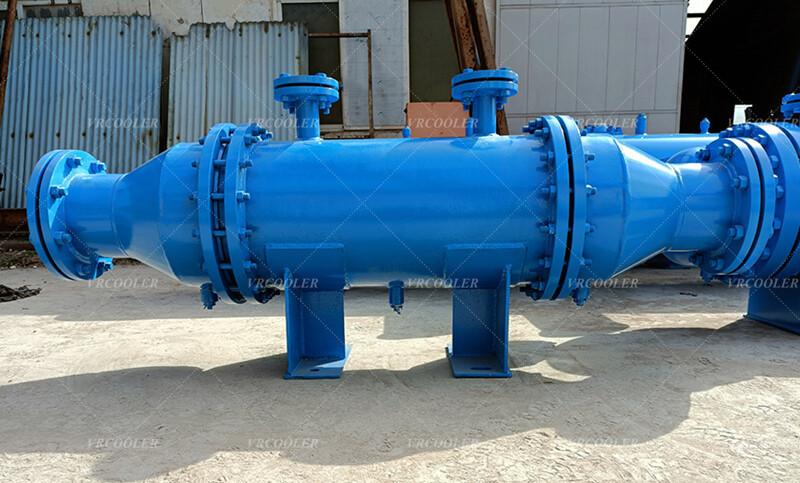
A shell and tube heat exchanger using water and steam as working fluids is a widely used thermal transfer device, leveraging the high heat capacity of water and the latent heat of steam to efficiently transfer heat between two fluid streams.
Core Working Principle
In this configuration, the heat exchanger consists of a cylindrical "shell" (a pressure vessel) and a bundle of tubes inside it. The two working fluids (steam and water) flow in separate paths, with heat transferring through the tube walls:
Steam side: High-temperature, high-pressure steam (often saturated or superheated) typically flows through the shell side (the space between the tube bundle and the shell). As steam condenses into liquid (condensate), it releases large amounts of latent heat.
Water side: Cooler water (e.g., cold water, process water, or return water) flows through the tube side (inside the tubes). It absorbs the heat released by the condensing steam, increasing in temperature (and sometimes reaching near-boiling conditions).
The heat transfer is driven by the temperature difference between the steam (hot fluid) and the water (cold fluid), with condensation of steam being the primary mechanism for efficient heat release.
Key Applications
Given the efficiency of steam-to-water heat transfer, this setup is critical in various industrial, commercial, and institutional settings:
Heating Systems (Space and Water Heating)
Commercial/Residential Hot Water Supply: Used in hotels, hospitals, and apartment buildings to heat cold tap water. Steam from a central boiler flows through the shell, transferring heat to water in the tubes, which then supplies hot water to taps or radiators.
District Heating: Large-scale systems use shell and tube heat exchangers to transfer heat from steam (generated at a central plant) to circulating water, which distributes heat to homes, offices, or factories via pipelines.
Industrial Process Heating
Food and Beverage Industry: Heating process water for cleaning, pasteurization, or cooking. For example, steam heats water in tubes that circulate through tanks to maintain precise temperatures for brewing or dairy processing.
Chemical and Pharmaceutical Manufacturing: Heating water (or other process fluids) to facilitate reactions, dissolution, or sterilization. The controlled heat transfer ensures process stability and safety.
Power Generation and Utilities
Feedwater Heating: In power plants, steam extracted from turbines is used to preheat boiler feedwater via shell and tube heat exchangers. This reduces fuel consumption by raising the water temperature before it enters the boiler.
Condensate Recovery: Capturing heat from steam condensate (after it releases latent heat) to preheat incoming water, improving overall system efficiency.
HVAC Systems
Air Handling Units (AHUs): Heating water for hydronic coils in AHUs, where hot water (heated by steam in a shell and tube exchanger) circulates through coils to warm air blown into buildings.
