
Shell Tube Condenser for Domestic Power Generation and Auxiliary Equipment
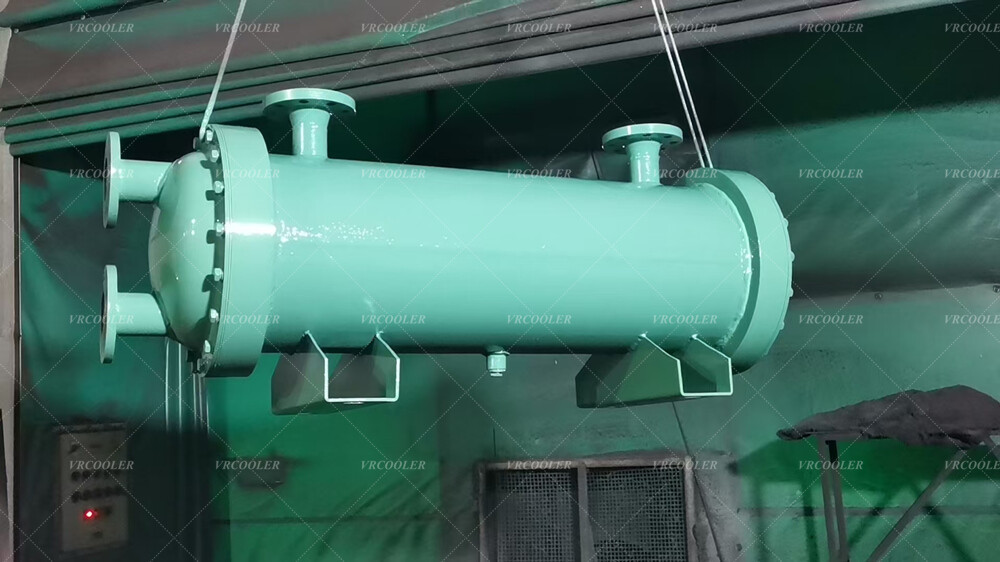
shell and tube condenser is a widely used type of heat exchanger, commonly employed in various power generation systems, including domestic power generation and auxiliary equipment. Its main function is to condense steam back into water by transferring heat from the steam to a cooling fluid (usually water or air). This process is crucial in ensuring the efficient operation of steam turbines and other equipment in power plants or small-scale domestic power generation systems.
What is a Shell and Tube Condenser?
A shell and tube condenser consists of a cylindrical shell that contains a set of tubes. The steam (hot fluid) flows through the tubes, while the cooling water (cold fluid) circulates around the outside of the tubes (in the shell). Heat is transferred from the steam inside the tubes to the cooling water, which then carries the heat away, causing the steam to condense into water. This condensed water is typically returned to the boiler or heat exchanger for reuse in the cycle.
Key Components:
Shell: The outer casing that houses the tube bundle. It directs the flow of cooling water around the tubes.
Tubes: The internal pipes through which the steam flows. These are typically made from materials with high thermal conductivity, such as copper, stainless steel, or titanium, to maximize heat transfer efficiency.
Tube Sheet: Plates that hold the tubes in place at either end, separating the steam side from the cooling side.
Cooling Water Inlet and Outlet: Ports through which the cooling water enters and exits the shell.
Steam Inlet and Condensate Outlet: Ports for steam to enter the tubes and for the condensed water to exit.
Function in Domestic Power Generation
In domestic power generation systems (often in the form of small-scale combined heat and power systems, or CHP systems), shell and tube condensers are used in the steam cycle to cool and condense steam produced by small boilers, fuel cells, or engines. These condensers help improve the efficiency of the power generation process by ensuring that steam is condensed back into water to be reused in the system.
Steam Turbine Operation: A steam turbine generates mechanical power by converting the energy from steam. After the steam passes through the turbine, it is in a high-enthalpy state and must be cooled down to increase the efficiency of the system. A shell and tube condenser achieves this by transferring the heat from the steam to a cooling medium.
Heat Recovery: In CHP systems, where heat is recovered for domestic heating purposes, the condenser plays a critical role in returning the heat to a usable form while ensuring efficient power generation.
Advantages of Shell and Tube Condensers for Domestic Power Generation
High Efficiency:
The shell and tube design offers a large surface area for heat exchange, allowing for efficient condensation of steam in a relatively compact unit. This efficiency is critical in domestic systems where space and energy usage must be optimized.
Versatility:
Shell and tube condensers can be designed for different types of working fluids (e.g., steam, air, or gas) and cooling fluids (e.g., water, glycol). This flexibility makes them suitable for various domestic power generation applications, from small-scale solar thermal power to waste-heat recovery systems.
Compact Design:
Shell and tube condensers are modular and can be tailored to fit within the size constraints of small-scale power generation setups. This makes them ideal for domestic or off-grid power systems.
Durability:
The robust design of shell and tube condensers ensures long-term performance with minimal maintenance. Materials like stainless steel or copper are corrosion-resistant, which is especially important for systems exposed to water or humidity.
Maintenance:
Shell and tube condensers are easier to maintain compared to other heat exchangers. The tube bundle can be cleaned or replaced without dismantling the entire system, and the condenser is generally accessible for routine inspection.
Typical Applications of Shell and Tube Condensers in Domestic Power Generation
Combined Heat and Power (CHP) Systems:
These systems are commonly used in domestic power generation, particularly for heating and electricity production. A shell and tube condenser is used to condense the steam after it has passed through the turbine, allowing the heat to be recovered for use in heating the home or for other household needs.
Solar Thermal Power:
In small-scale solar thermal power systems, a shell and tube condenser can be used to condense steam produced by solar concentrators or solar boilers. The heat can then be used for domestic hot water or space heating.
Geothermal Systems:
Geothermal power generation systems use heat from the Earth’s core to generate electricity. A shell and tube condenser is often used to cool the steam from geothermal wells, enabling the water to be condensed and reused in the system.
Biomass Power Generation:
Biomass power systems that use organic materials to generate heat and power also benefit from shell and tube condensers. After steam passes through a turbine, it must be condensed efficiently to maintain system performance.
