
Shell & tube heat exchangers are indispensable in maintaining the safety and operational stability of nuclear power plants. In the CCW, RHR, and ESW systems, they form a critical part of the cooling chain that protects the reactor, safeguards personnel, and ensures regulatory compliance.
With nuclear-grade engineering, corrosion-resistant materials, and decades-long durability, these heat exchangers remain the industry standard for the world’s most demanding thermal management applications.
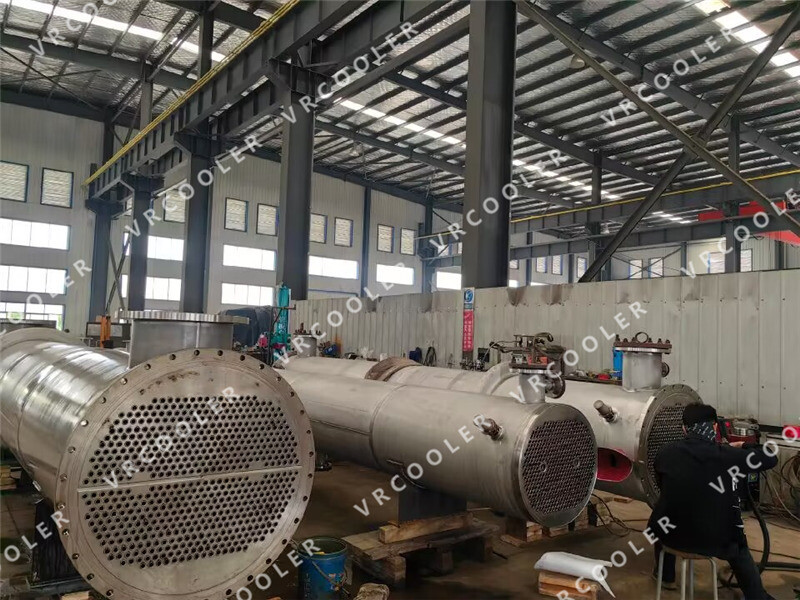
Applications in Nuclear Power Plants
In nuclear power generation, safety, redundancy, and material integrity are paramount. Shell and tube exchangers are used in both safety-related and non-safety-related systems:
1. Component Cooling Water (CCW) Heat Exchangers
Transfer heat from reactor coolant pumps, heat shields, and auxiliary components to the service water system.
2. Residual Heat Removal (RHR) System Exchangers
Critical for post-shutdown cooling, keeping the reactor core within safe temperature limits.
3. Emergency Cooling Systems
Engineered with nuclear-grade materials and seismic qualification.
4. Essential Service Water (ESW) Heat Exchangers
Provide cooling to vital equipment even during station blackout events.
5. Turbine Island Exchangers
Including moisture separator reheaters, drain coolers, and feedwater heaters in nuclear steam cycles.
Engineering Features for High-Performance Industrial Exchangers
1. Custom Baffle Designs
Segmental, double-segmental, and helical baffles optimize heat transfer and reduce vibration.
2. Removable Tube Bundles
U-tube, floating head, and TEMA BEU/AEU designs allow fast maintenance.
3. Enhanced Tubes
Rifled, finned, or corrugated tubes improve heat transfer efficiency and reduce fouling.
4. Redundancy & Standby Configuration
Nuclear facilities often employ 2×50%, 3×33%, or N+1 configurations for reliability.
