
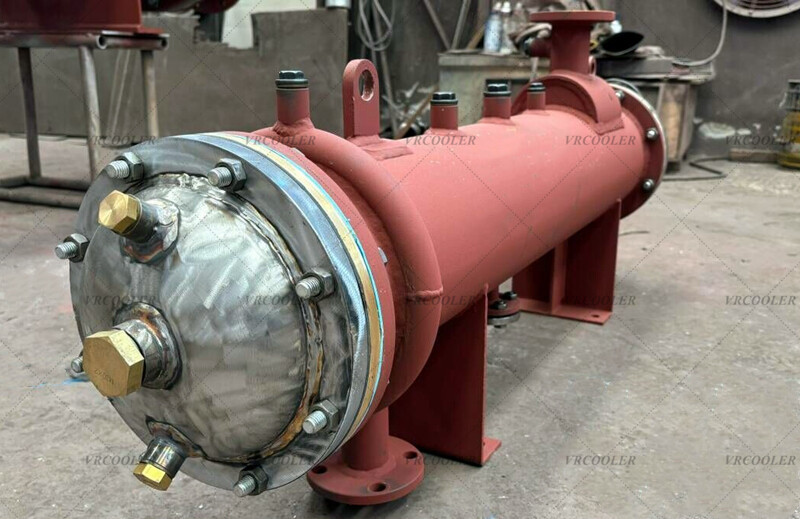
A shell & tube refrigerant condenser is a heat exchanger where hot refrigerant vapor condenses on one side, while cooling seawater flows through the tubes. As heat is removed, the refrigerant changes phase from vapor to liquid, enabling efficient and stable operation of the refrigeration or air-conditioning system.
This indirect heat exchange prevents mixing of refrigerant and seawater, ensuring safety and system integrity.
Why Use Seawater as the Cooling Medium?
Seawater cooling offers several advantages in marine and coastal installations:
Abundant and cost-effective cooling source
Stable temperature profile compared to ambient air
Reduced reliance on cooling towers or freshwater systems
Compact condenser footprint
However, seawater is highly corrosive, making material selection a critical design factor.
Advantage of Cu/Ni Tubes for Seawater Condensers
Copper–Nickel (Cu/Ni) alloy tubes are the industry standard for seawater-cooled condensers due to their outstanding properties:
Excellent corrosion resistance against seawater, biofouling, and erosion
High thermal conductivity for efficient heat transfer
Long service life in marine and offshore environments
Resistance to stress corrosion cracking
Reduced maintenance and cleaning frequency
Typical grades include 90/10 Cu-Ni or 70/30 Cu-Ni, selected based on seawater velocity and operating conditions.
Key Features of Shell & Tube Refrigerant Condenser Units
Heavy-duty shell construction for refrigerant-side pressure
Cu/Ni tube bundles optimized for seawater flow
Removable tube bundle design for easy inspection and cleaning
Multiple pass configurations to optimize heat transfer
Horizontal or vertical installation options
Flanged seawater connections for reliable piping integration
Typical Applications
Shell & tube refrigerant condensers with seawater cooling are widely used in:
Marine HVAC and shipboard air-conditioning systems
Offshore platforms and FPSOs
Industrial chillers in coastal factories
Fishery and seafood processing refrigeration
Port and dockside cold storage facilities
Power and utility auxiliary cooling systems
Design Considerations for Seawater Condensers
To ensure long-term performance, seawater-cooled condensers are designed with:
Controlled seawater velocity to prevent erosion
Sacrificial anodes or corrosion protection systems
Easy-access end covers for mechanical tube cleaning
Compatibility with common refrigerants (NH₃, R134a, R404A, R507, etc.)
Compliance with marine and offshore standards where required
Benefits for Marine & Coastal Refrigeration Systems
Stable condensing temperatures, improving system efficiency
Lower energy consumption compared to air-cooled condensers
High reliability in harsh environments
Reduced operating and maintenance costs
Compact and space-saving design for onboard installations
Conclusion
A Shell & Tube Refrigerant Condenser Unit with Cu/Ni tubes and seawater cooling is a dependable and efficient choice for marine and coastal refrigeration systems. With proven corrosion resistance, excellent thermal performance, and a rugged mechanical design, these condensers ensure consistent operation even in the most demanding seawater environments.