
A central freshwater cooler is one of the key heat exchangers in a modern marine cooling system. Instead of using seawater directly to cool every engine room machine, the ship uses a closed freshwater circuit to absorb heat from the main engine, auxiliary engines, air compressors, lubricating oil coolers, jacket water coolers, and other onboard equipment. The central freshwater cooler then transfers this heat from the closed freshwater loop to seawater. This design helps protect valuable machinery from seawater corrosion, scaling, and fouling.
In marine service, seawater is an effective cooling medium, but it is also highly corrosive and often contains sand, salt, marine organisms, and suspended solids. If seawater passes through every cooler on board, maintenance becomes more difficult and the risk of corrosion damage increases. A central cooling system reduces this problem by limiting seawater contact mainly to the central freshwater cooler. The internal machinery is cooled by treated freshwater or glycol water, which is much cleaner and easier to control.
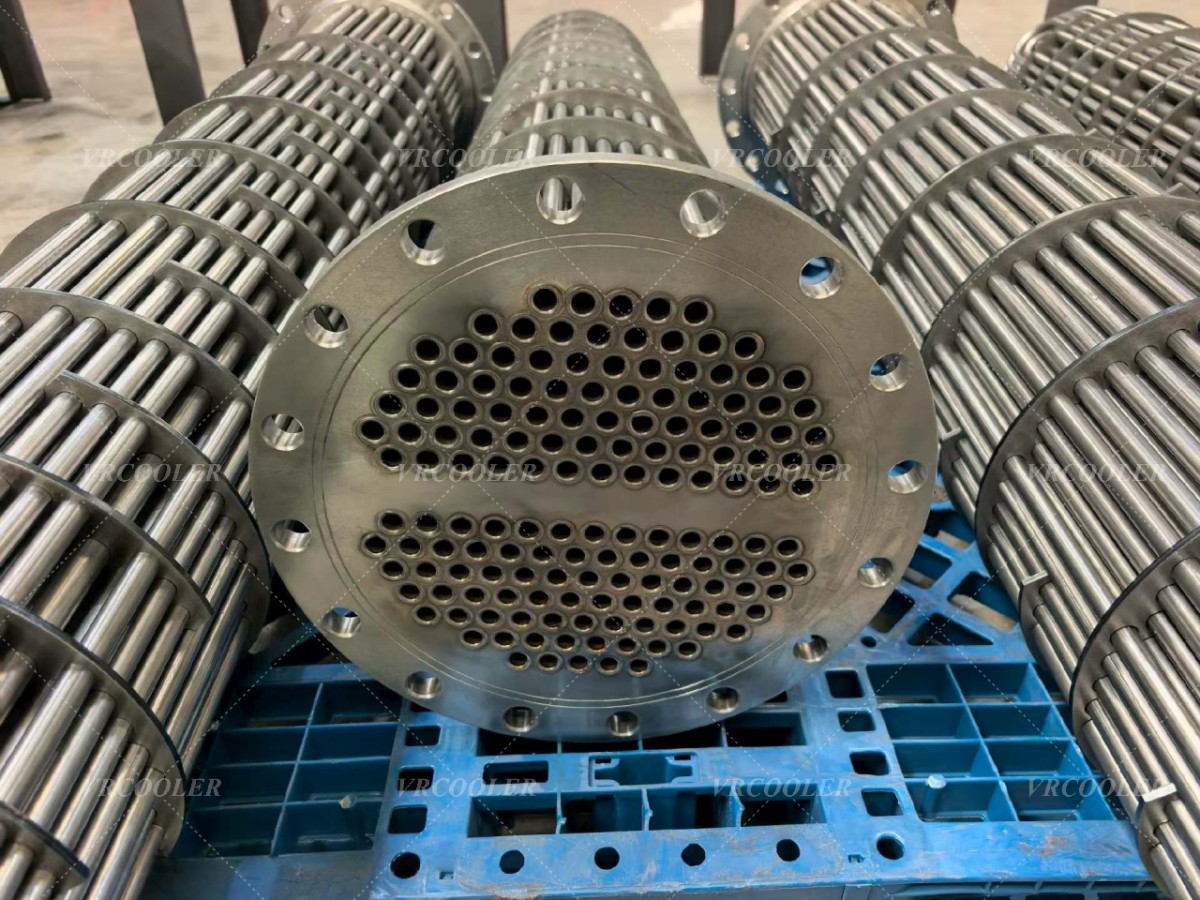
Shell and tube construction is widely used for central freshwater coolers because it is strong, reliable, and easy to maintain. In many marine designs, seawater flows inside the tubes, while freshwater flows through the shell side. This arrangement allows the seawater side to be mechanically cleaned when scaling or biological fouling occurs. Tube materials are selected according to seawater conditions, vessel type, and project requirements. Common options include Cu-Ni 90/10, Cu-Ni 70/30, titanium, stainless steel, or duplex stainless steel. For long service life in aggressive seawater, titanium tubes are often preferred.
The freshwater side also requires careful design. The cooler must maintain stable outlet temperature under different sea temperatures, engine loads, and sailing conditions. In tropical areas, seawater temperature can be high, so the heat exchanger needs enough surface area to keep the closed cooling water within the required operating range. In colder regions, flow control or bypass arrangements may be used to prevent overcooling. A well-designed central freshwater cooler helps the complete cooling system run safely and efficiently.
For shipowners and shipyards, maintenance access is an important factor. A removable tube bundle, bolted channel cover, and proper cleaning space make inspection and servicing easier during dry dock or routine maintenance. The cooler should also be designed with suitable vents, drains, zinc anodes if required, marine-grade coating, and flange standards matching the vessel piping system. Reliable sealing is especially important because leakage between seawater and freshwater circuits can affect the whole engine room cooling system.
Central freshwater coolers are commonly used on cargo vessels, tankers, container ships, offshore support vessels, fishing vessels, dredgers, tugboats, ferries, naval auxiliary vessels, and marine power plants. They are also suitable for offshore platforms and floating production facilities where closed-loop cooling is required. Depending on the application, the cooler can be designed as a single unit, duplex arrangement, plate type, or shell and tube type. For heavy-duty marine service, shell and tube units remain a practical choice because of their mechanical strength and serviceability.
Vrcooler can design and manufacture custom central freshwater coolers according to heat duty, seawater temperature, freshwater flow rate, working pressure, design pressure, allowable pressure drop, material requirements, classification society requirements, and installation space. The cooler can be supplied with carbon steel, stainless steel, bronze, Cu-Ni, duplex stainless steel, or titanium materials according to the real working condition.
A high-quality central freshwater cooler is not only a heat exchanger. It is a protection device for the ship’s main cooling system. By keeping seawater away from most onboard machinery, it helps reduce corrosion risk, simplify maintenance, improve equipment reliability, and extend the service life of engines and auxiliary systems. For marine applications where continuous operation and easy maintenance are essential, a properly designed central freshwater cooler is a dependable solution.
