
Shell and Tube Condenser Used for Heating Water, Seawater, Or Brine
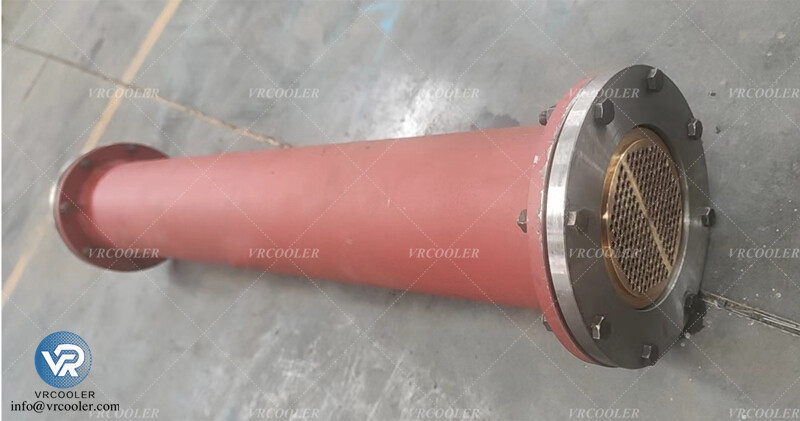
Shell-and-tube condensers, when applied in refrigeration equipment, serve the core function of condensing high-temperature, high-pressure refrigerant vapor discharged from the compressor into liquid form through indirect heat exchange with water (freshwater/seawater/brine). Simultaneously, they heat the water, fulfilling dual roles as a critical component in the refrigeration cycle and a means of thermal energy recovery.
1. Addressing Dual Requirements of Refrigeration Cycle and Water Heating
The core of refrigeration equipment lies in heat transfer through refrigerant phase change. Shell-and-tube condensers efficiently bridge the processes of “refrigerant condensation” and “water heating”:
Critical refrigeration cycle step: High-temperature, high-pressure refrigerant vapor (e.g., R32, R410A) discharged from the compressor enters the shell side of the condenser. It exchanges heat with water (freshwater/seawater/brine) flowing through the tube side. After releasing heat, the refrigerant condenses into high-pressure liquid, preparing for subsequent throttling, pressure reduction, and evaporative heat absorption for cooling.
Simultaneous water heating: Water in the tube side absorbs the heat released by the refrigerant, increasing its temperature by 5-15°C (depending on cooling capacity and water flow rate). This heated water can be directly used for domestic hot water or industrial applications (e.g., workshop cleaning, heating system makeup water), enabling thermal energy recovery from the refrigeration system and enhancing overall energy efficiency.
2. Corrosion-Resistant Design for Diverse Water Qualities (Freshwater / Seawater / Brackish Water)
Refrigeration equipment cooling water may involve freshwater (e.g., municipal tap water), seawater (shipboard refrigeration, coastal factories), or brackish water (low-temperature systems operating below -10°C). Shell-and-tube condensers adapt to different water qualities through material and structural optimization:
Freshwater Applications: The tube side commonly uses 304 stainless steel or copper alloys (e.g., naval brass) to withstand freshwater corrosion while minimizing scale buildup (can be further combined with water softening equipment to reduce scaling risks).
Seawater/Brine Applications: Seawater and brine contain high chloride ions, making them highly corrosive. The tube side requires corrosion-resistant materials like 316L stainless steel, titanium alloys, or copper-nickel alloys (e.g., B10, B30) to prevent corrosion perforation. The shell side interior can be coated with anti-corrosion coatings (e.g., epoxy resin) to extend equipment lifespan.
Structural Anti-Fouling: Compared to the narrow flow channels of plate condensers, shell-and-tube condensers feature wider tube-side passages (typically 10-25mm diameter). This design resists clogging even when seawater/brine contains minor amounts of sediment or microorganisms, and allows for regular backwashing to clear internal debris.
3. Meeting Stability and Efficiency Requirements for Refrigeration Equipment
Refrigeration equipment (e.g., chillers, heat pump units) demands exceptionally high heat transfer efficiency and operational stability from condensers, which shell-and-tube structures precisely deliver:
Heat Transfer Efficiency Aligned with Cooling Capacity: By optimizing tube-side arrangements (e.g., equilateral triangle or square patterns), adding external fins (enhancing refrigerant-side heat transfer), and installing shell-side baffles (forcing refrigerant to flush tube walls), the heat transfer coefficient can be significantly increased. This accommodates cooling capacities ranging from tens of kW to thousands of kW, ensuring rapid refrigerant condensation and preventing compressor overload due to excessively high discharge temperatures.
Stable Operation Adapted to Variable Conditions: Refrigeration equipment frequently encounters load fluctuations (e.g., high summer demand, low winter demand). Shell-and-tube condensers flexibly match load changes by adjusting cooling water flow (e.g., via variable-frequency pumps). Their rigid structure exhibits strong adaptability to temperature and pressure fluctuations, minimizing seal failures due to thermal expansion/contraction (resulting in lower failure rates compared to plate condenser gaskets).
4. Safety and Maintenance Adapted for Refrigeration Equipment Scenarios
Refrigeration equipment often requires continuous operation (e.g., data centers, industrial workshops). Shell-and-tube condenser design reduces maintenance costs and downtime risks:
Comprehensive safety protection: The shell side (refrigerant side) incorporates safety valves and high-pressure controllers to prevent accidents caused by excessive refrigerant pressure. The tube side (water side) features pressure gauges and thermometers to monitor water quality and temperature, preventing accelerated scale formation or water degradation due to overheating.
Easy Maintenance, Minimal Downtime: If scaling occurs in the tube side (e.g., freshwater scale or seawater biofouling), the end caps can be removed for high-pressure water flushing or chemical descaling (e.g., citric acid). If a single tube bundle fails, it can be isolated or replaced individually without requiring full equipment replacement, significantly reducing downtime for refrigeration system maintenance.