
Shell-and-tube condensers in petrochemical and oil/gas processing
In petrochemical and oil/gas processing, shell-and-tube condensers deliver core value by efficiently condensing and cooling process media. They handle high-load, multi-impurity, and highly corrosive conditions while ensuring operational stability and maintenance accessibility, making them critical heat exchange equipment in chemical production.
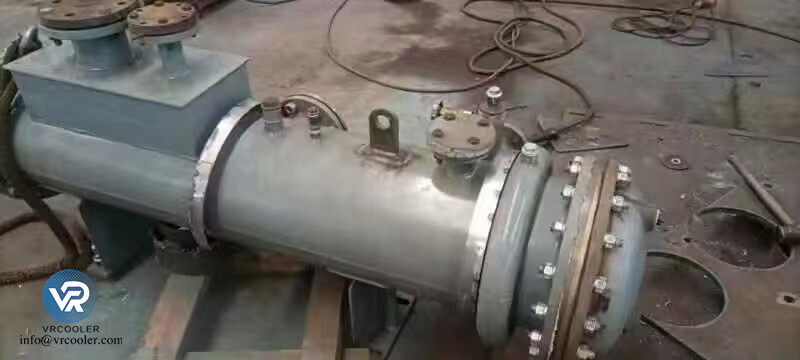
Media in petrochemical and oil/gas processing (e.g., crude oil components, refinery tail gases, solvent vapors) often exhibit high viscosity, impurity content, and strong corrosivity. Condensation processes frequently involve high temperatures and pressures. The shell-and-tube structure specifically addresses these challenges:
Resistance to Multi-Impurity Media: When process steam (e.g., refinery tail gas containing trace oil mist or solid particles) flows through the shell side, the wider shell-side flow channels of shell-and-tube condensers prevent clogging from impurity buildup. Even minor deposits can be periodically purged via shell-side blowdown ports, maintaining condensation efficiency—a capability difficult for narrow-channel equipment (e.g., plate condensers) to achieve.
Corrosion Resistance and High-Temperature/High-Pressure Tolerance: Material selection can be tailored to the corrosiveness of the medium. For instance, 316L stainless steel is used for sulfur-containing oil and gas, while titanium alloys are employed for highly corrosive media (e.g., acidic water vapor). Additionally, the shell and tube bundle employ thick-walled metals (e.g., carbon steel, specialty alloys) capable of withstanding pressures of 1-5 MPa and temperatures of 200-400°C, meeting condensation demands for high-temperature, high-pressure processes like atmospheric and vacuum distillation and catalytic cracking in oil and gas processing.
Petrochemical and oil/gas processing demand stringent condensation efficiency, medium recovery rates, and compatibility with downstream processes. Shell-and-tube condensers achieve these core requirements through structural design:
High condensation efficiency with large load capacity: Baffles in the shell side force process steam to vertically flush tube bundle surfaces, disrupting the steam boundary layer and accelerating heat transfer. Flexible adjustment of tube bundle quantity, length, and arrangement expands heat transfer area from tens to thousands of square meters, accommodating loads from small-to-medium units (e.g., solvent recovery) to large refining/petrochemical facilities (e.g., catalytic cracking tower top condensation), ensuring rapid vapor-to-liquid conversion.
Precise temperature control ensures process continuity: Cooling media (e.g., circulating water, ethylene glycol solutions) flow through the tube side. By regulating cooling media flow rate, tube bundle wall temperatures can be precisely controlled, thereby regulating the condensation temperature of process media. For instance, in oil-gas separation processes, steam must be condensed to specific temperatures to separate different components. The stable temperature control capability of shell-and-tube condensers ensures separation accuracy, preventing fluctuations in downstream product quality.
Petrochemical and oil/gas processing demand exceptional equipment safety, continuous operation capability, and maintenance accessibility. Shell-and-tube condenser design precisely meets these requirements:
Adequate Safety Redundancy: Connections between the shell, tube sheets, and tube bundles (expansion or welding) undergo rigorous strength and seal integrity testing to prevent leaks of process media (e.g., flammable/explosive hydrocarbons) or cooling media, thereby averting safety incidents. Additionally, both shell and tube sides are equipped with pressure gauges, safety valves, temperature sensors, and level indicators for real-time monitoring. These systems trigger protective actions like shutdown or pressure relief during over-temperature or over-pressure conditions.
Easy Maintenance, Reduced Downtime Losses: If cooling medium scaling occurs within the tube side (e.g., circulating water scaling), the end cover can be removed to clean the tube bundle using high-pressure water flushing or chemical cleaning. Should a single tube bundle fail due to corrosion or wear, it can be replaced individually without scrapping the entire unit. This significantly shortens maintenance time and minimizes production line downtime losses in chemical plants.
