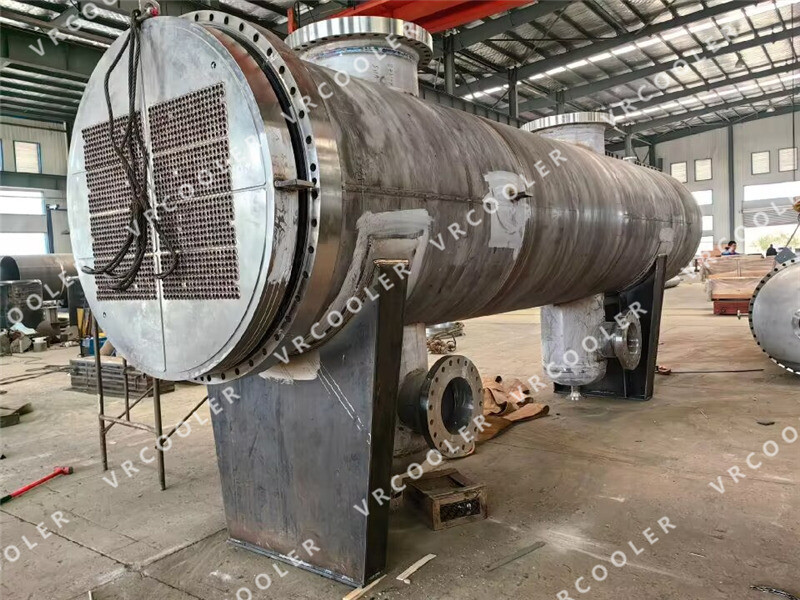
Shell and Tube Coolers Used in Wastewater Treatment Systems in Oil Drilling
Tube-designed wastewater treatment systems utilize heat exchange and separation technology to effectively remove oil from water, ensuring that wastewater discharge meets environmental standards.
Through gravity separation and heat exchange, the system is able to separate the oil from the water so that clear water can be recovered.
Heating treatment: Shell and tube heat exchanger can heat the wastewater to reduce the viscosity of oil and promote the separation of oil molecules. The heated effluent facilitates the subsequent separation process.
Cooling function: During the treatment process, the cooling system can also control the temperature through the shell and tube cooler to prevent overheating and the release of volatile organic compounds.
Gravity Separation: In the shell and tube separator, the sewage flows under the effect of gravity, and the oil and dirt float to the surface of the water due to the difference in density, thus realizing separation.
Multi-stage separation: Multi-stage shell-and-tube separator can be separated several times according to the characteristics of different oil-water mixtures to improve the quality of clear water.
Optimize flow pattern: The design of shell and tube makes the sewage flow more evenly during the treatment process, which improves the treatment efficiency and water quality.
Reduce the use of chemicals: Through physical separation technology, the reliance on chemicals is reduced, lowering treatment costs and environmental risks.
Recovery of oil: Through effective wastewater treatment, the recovered oil can be reused, reducing the waste of resources.
Water reuse: The treated clean water can be used for industrial water recycling, further reducing the consumption of water resources.