
A shell and tube heat exchanger for cement mill lubrication plays a quiet but essential role in keeping heavy equipment running smoothly. In a cement plant, mills work under continuous load, high dust exposure, and demanding operating conditions. The lubrication system protects bearings, gearboxes, and other moving parts, but the oil itself also needs protection. As the machine runs, lube oil absorbs heat from friction and mechanical load. If that heat is not removed efficiently, oil temperature rises, viscosity drops, and the lubrication film becomes less stable. That is where a shell and tube heat exchanger becomes so important.
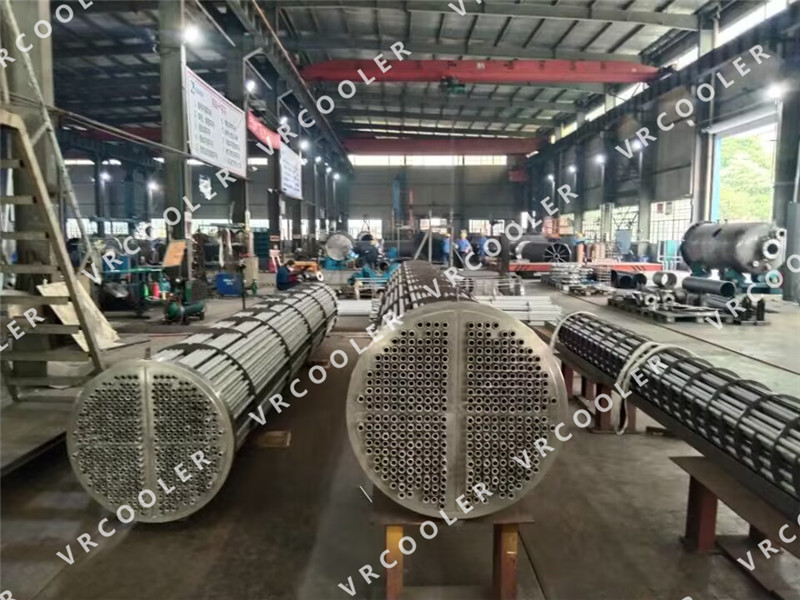
In cement mill service, the heat exchanger is commonly used as a lube oil cooler. Its job is to transfer heat from the hot circulating lubrication oil to a cooler medium, usually water. By keeping the oil within the correct temperature range, the cooler helps preserve viscosity, supports bearing protection, and reduces the risk of overheating in the lubrication circuit. This may sound simple, but in a cement plant, stable oil temperature can have a direct effect on equipment reliability, maintenance intervals, and overall plant uptime.
The shell and tube design is especially suitable for cement mill lubrication systems because it is strong, practical, and well proven in industrial duty. Cement plants are not gentle environments. Equipment must cope with vibration, dust, long operating hours, and in many cases variable cooling water quality. A shell and tube heat exchanger is valued in this setting because it has a rugged construction and can be designed to handle relatively high pressure, dirty service conditions, and continuous operation. Compared with more delicate heat exchanger types, it is often preferred where durability and maintainability matter more than compactness alone.
For lubrication duty, hot oil usually flows on one side of the exchanger while cooling water flows on the other. Heat passes through the tube walls without mixing the two fluids. This arrangement allows the lubrication oil to be cooled safely and efficiently before it returns to the mill bearings or gearbox system. In practice, this helps maintain proper oil characteristics and prevents excessive thermal stress on seals, pumps, and other components within the lubrication skid.
One of the biggest advantages of using a shell and tube heat exchanger in cement mill lubrication is its serviceability. In real plant operation, fouling can happen over time, especially on the water side. A good shell and tube unit can be designed for easier cleaning, inspection, and maintenance. That is valuable in a cement plant, where minimizing downtime is always a priority. Plant operators often want equipment that can be opened, inspected, and returned to service without unnecessary complication. This is one reason shell and tube coolers remain a popular choice in heavy industry.
Material selection is another important factor. The exact choice depends on the oil properties, cooling water quality, plant standards, and budget. Carbon steel, stainless steel, brass, copper alloys, or other material combinations may be used depending on the application. If the cooling water has scaling or corrosion concerns, the tube material becomes particularly important. A properly selected material combination helps improve service life and reduce the risk of leakage between the oil and water circuits.
For cement mill applications, the heat exchanger is often required to operate reliably over long periods with minimal intervention. That means the design should take into account not just heat transfer duty, but also oil flow rate, inlet and outlet temperatures, allowable pressure drop, water conditions, and installation space. In many projects, the exchanger may be supplied as part of a complete lubrication station, while in other cases it is provided as a replacement unit for an existing mill system. In either case, matching the real operating conditions is critical to getting dependable cooling performance.
A well-designed shell and tube heat exchanger can help reduce oil degradation, improve lubrication stability, and protect expensive mill components from heat-related problems. In cement production, where unscheduled shutdowns are costly and maintenance windows are tightly planned, this kind of protection matters. The cooler may not be the most visible part of the system, but it supports the reliability of the entire lubrication circuit.
In the end, a shell and tube heat exchanger for cement mill lubrication is a practical and durable solution for controlling oil temperature in one of the toughest industrial environments. It combines robust construction, reliable cooling performance, and straightforward maintenance, making it an excellent choice for cement plants that need dependable operation day after day.
