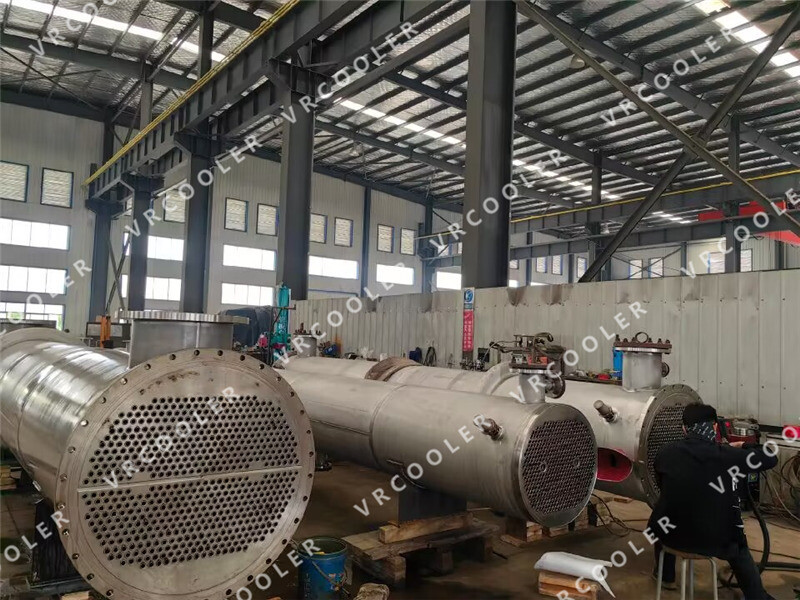
Shell and Tube Heat Exchanger for Gas-Liquid Separators in Natural Gas Processing Plants
Natural gas often contains water during extraction and transportation. Gas-liquid separators with shell-and-tube design effectively separate the water from the gas, preventing pipeline icing and corrosion.
The separator also removes solid impurities (e.g., sand, dirt) and liquid impurities (e.g., oil) from the natural gas, ensuring the purity of the final product.
Working principle of the shell and tube
Fluid flow: The natural gas flows at a certain speed in the shell and tube separator, and the difference in density between the gas and the liquid causes the water and impurities to settle to the bottom.
Gravity separation: The gas is discharged through the upper part of the shell and tube, while the liquids (e.g. water and impurities) deposited at the bottom are periodically removed.
Improving the quality of natural gas
Ensuring purity: Through effective separation, the shell-and-tube gas-liquid separator ensures the quality of the natural gas and reduces damage to subsequent processing equipment.
Increased calorific value: The removal of impurities increases the calorific value of the natural gas, increasing its economic value as a fuel.
Energy saving and environmental protection
Reduced wastage: Efficient gas-liquid separation reduces the wastage of natural gas and improves the overall processing efficiency.
Reduced emissions: By removing water and impurities, pollutant emissions from natural gas combustion are reduced, contributing to environmental protection.
Maintenance and Safety
Easy Maintenance: The shell-and-tube separator is designed to be easy to clean and maintain, ensuring long-term stable operation.
Safety: The effective separation process reduces the amount of moisture and impurities in the gas, minimizing safety hazards caused by corrosion and other problems.