
Heat Transfer for BOG Conditioning and Control
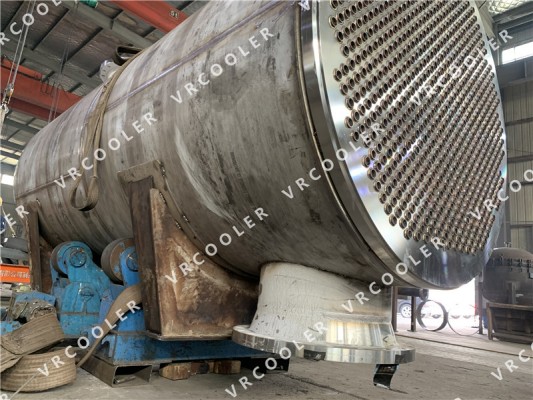
Shell and tube heat exchangers are used throughout the LNG BOG handling process to manage temperature and phase changes of boil-off gas.
Heating Boil-Off Gas for Compression and Utilization
In many LNG systems, BOG needs to be heated prior to compression. Heat exchangers provide controlled heating to ensure that gas enters compressors at the correct temperature, protecting mechanical components and improving efficiency.
Cooling and Partial Recondensation
When necessary, heat exchangers cool BOG to partially or fully recondense it back to liquid. This reduces the volume of gas that must be flared or vented, lowering losses and improving overall LNG plant economy.
Design Considerations for Cryogenic and Marine Conditions
LNG BOG service poses unique demands on heat exchanger materials and mechanical design.
Shell and tube units for this service are engineered to handle:
Cryogenic temperatures
Large temperature differentials
Continuous or transient loads
Material selection focuses on low-temperature toughness and corrosion resistance. Designs accommodate differential thermal expansion and minimize thermal stress, ensuring long-term reliability in demanding environments.
Operational Advantages of Shell and Tube BOG Heat Exchangers
Shell and tube heat exchangers offer several practical advantages for LNG BOG systems.
High Mechanical Strength and Safety Margin
Their sturdy construction withstands cryogenic service and fluctuating loads, helping maintain system integrity.
Flexible Maintenance and Inspection Access
The tube bundle can be accessed for inspection and cleaning, reducing downtime and improving operational continuity.
These characteristics make them suitable for both onshore terminals and LNG carriers.
Efficient Energy Use and Heat Recovery
Heat exchangers in LNG BOG systems can be part of broader energy optimization strategies.
Recovering Energy from Hot Streams
Heat removed from BOG can be used to preheat other process streams or support plant utilities, reducing fuel consumption.
Supporting Emission Reduction Goals
By reducing the need to vent or flare BOG and improving overall thermal efficiency, these systems help operators meet environmental requirements and sustainability goals.
Typical Industrial Scenarios for LNG BOG Solutions
Shell and tube heat exchangers for boil-off gas are applied in:
Onshore LNG storage tank BOG handling systems
Shipboard (LNG carriers) BOG reliquefaction units
Regasification terminal pressure control and cooling trains
Floating storage and regasification units (FSRUs)
Their strong adaptability and mature technology make them a preferred choice across the LNG value chain.
