
Engineering Structure Building Long-Term Reliability
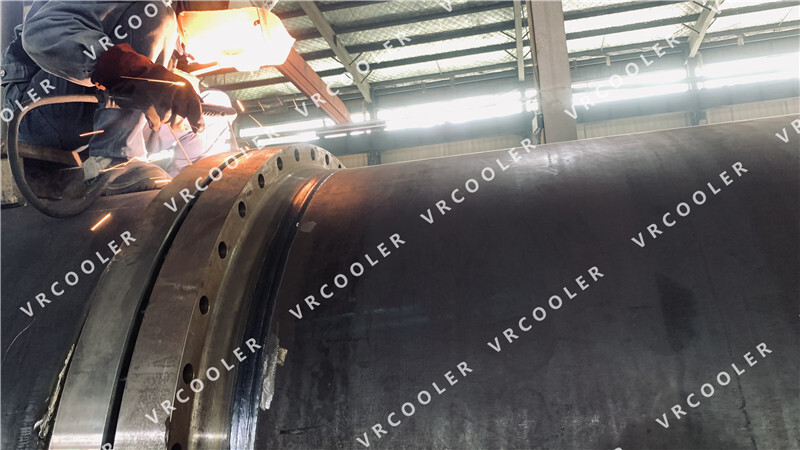
The fundamental structure of a shell and tube heat exchanger consists of the shell, tube bundle, tube sheet, baffles, and channel heads. This modular design allows the equipment to operate safely under high temperature, high pressure, and continuous duty conditions.
The shell provides mechanical strength and pressure resistance.
The tube bundle forms the main heat transfer surface.
Baffles guide fluid flow, enhance turbulence, and improve heat exchange efficiency.
This classical configuration has been proven by decades of industrial practice and remains one of the most reliable exchanger designs today.
Heat Transfer Logic Behind Efficient Performance
The working principle of shell and tube heat exchangers is based on indirect heat transfer between two fluids separated by the tube wall. One fluid flows inside the tubes, while the other circulates in the shell side.
Thermal energy is transferred through the tube material without mixing fluids.
Counter-current or cross-flow patterns maximize temperature difference.
Multi-pass designs allow better control of flow velocity and residence time.
This design ensures stable heat transfer, high safety, and excellent adaptability to different process requirements.
Material Strategy Adapting to Diverse Process Conditions
Material selection is one of the most important factors in shell and tube heat exchanger performance and service life. Common materials include carbon steel, stainless steel, copper, nickel alloys, and special corrosion-resistant alloys.
Carbon steel offers cost-effectiveness for general industrial use.
Stainless steel provides corrosion resistance for chemical and food industries.
Copper and nickel alloys ensure superior thermal conductivity and seawater resistance.
Through flexible material combinations, shell and tube exchangers can be customized for almost any operating environment.
Industrial Scenarios Where Versatility Matters
Shell and tube heat exchangers are widely used across multiple industries due to their flexible design and strong reliability. Typical applications include:
Oil & gas processing systems (coolers, condensers, reboilers).
Power generation (lube oil coolers, heat recovery units).
Chemical and petrochemical plants (reactor cooling, solvent recovery).
Environmental systems (waste heat recovery, carbon capture).
Their ability to handle large flow rates and complex media makes them indispensable in industrial processes.
Operation and Maintenance Ensuring Long-Term Value
Proper operation and maintenance significantly extend the service life of shell and tube heat exchangers.
Regular inspection of tube fouling and corrosion conditions.
Periodic cleaning of tube bundles to maintain heat transfer efficiency.
Monitoring pressure drop to detect blockage or leakage early.
With correct maintenance strategies, shell and tube heat exchangers can operate reliably for decades, providing long-term economic and technical benefits for industrial users.
