
Functional Role in Green Hydrogen Production Systems
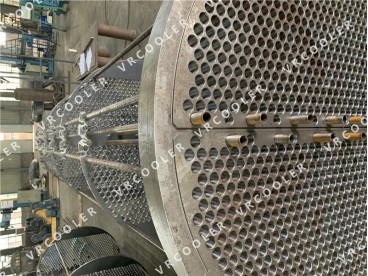
Shell and tube heat exchangers are used to control temperatures across multiple stages of hydrogen production and handling.
Thermal Management for Electrolysis Processes
In water electrolysis systems, heat exchangers help maintain optimal operating temperatures for electrolyzers, ensuring stable hydrogen generation efficiency and protecting sensitive components.
Cooling and Heating of Process Media
They are also applied to cool hydrogen streams, process water, and auxiliary fluids, as well as to provide controlled heating where required in balance-of-plant systems.
Design Characteristics for Hydrogen and Low-Carbon Applications
Shell and tube heat exchangers for green hydrogen applications are designed to operate under varying pressures and temperatures, often in combination with renewable energy sources. Material selection focuses on compatibility with hydrogen service, corrosion resistance, and long-term reliability. Their flexible configuration allows integration into modular hydrogen production systems and large-scale industrial installations.
Key Advantages for Decarbonization Projects
Shell and tube heat exchangers offer proven benefits that align well with the goals of green hydrogen and decarbonization initiatives.
High Reliability for Continuous and Intermittent Operation
Their mechanical strength and stable performance support both continuous operation and load fluctuations caused by renewable energy input.
Long Service Life with Low Maintenance
Simple and mature design allows for easy inspection and maintenance, reducing downtime and lifecycle costs.
Energy Efficiency and Heat Recovery Contribution
Shell and tube heat exchangers enable effective recovery of waste heat from electrolyzers, compressors, and auxiliary systems. Recovered heat can be reused for feed preheating or auxiliary heating, improving overall plant energy efficiency and supporting low-energy, low-emission hydrogen production.
Practical Application Areas in Green H₂ Production and Infrastructure
Renewable Energy-Based Electrolysis Plants
Applied in alkaline, PEM, and solid oxide electrolysis systems to manage operating temperatures and improve efficiency.
Hydrogen Compression and Cooling Systems
Used to cool hydrogen after compression stages and maintain safe temperatures during storage and transport preparation.
Balance of Plant and Auxiliary Systems
Installed in cooling water circuits, thermal oil systems, and heat recovery units supporting hydrogen production facilities.
Integrated Power-to-Hydrogen Projects
Applied in largescale decarbonization projects that integrate renewable power generation, hydrogen production, and energy storage.
