
Thermal Control Driving Polymer Quality
Polyethylene production requires precise temperature management during polymerization, separation, and finishing stages. Shell and tube heat exchangers operate based on indirect heat transfer between two fluids separated by tube walls.
Reaction heat is removed through cooling media flowing inside or outside the tubes.
Condensation of hydrocarbon vapors is achieved without mixing process streams.
Controlled heating maintains optimal viscosity during downstream processing.
Stable thermal control directly impacts polymer density, molecular weight distribution, and product consistency.
Strategic Positions Across the Production Line
In downstream polyethylene plants, shell and tube heat exchangers are installed in several critical sections:
Reactor cooling systems to remove exothermic reaction heat.
Condensers in recovery units for unreacted monomers.
Reboilers in separation columns.
Product coolers before pelletizing and packaging.
Each position requires customized design according to pressure levels, hydrocarbon properties, and operating temperatures.
Designed for Hydrocarbon and High Pressure Environments
Polyethylene plants operate under challenging conditions including flammable gases, high pressure, and continuous production cycles. Shell and tube heat exchangers are particularly suitable because:
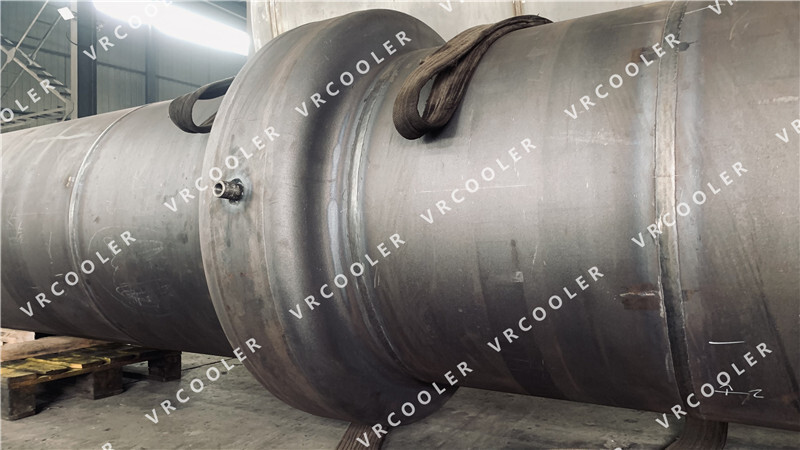
Thick-walled shells withstand elevated operating pressure.
Tube materials can be selected for hydrocarbon compatibility.
Welded construction ensures leak-tight separation between media.
Their mechanical strength and safety characteristics align with strict petrochemical industry standards.
Operational Advantages in Continuous Production
Downstream polyethylene facilities often run 24/7, making equipment reliability essential. Shell and tube heat exchangers provide:
Long service life under stable mechanical design.
Easy cleaning access for fouling control.
Replaceable tube bundles to minimize downtime.
Predictable thermal performance even under fluctuating load conditions.
These features support uninterrupted production and reduce maintenance-related shutdowns.
Economic Value Through Heat Recovery Integration
Energy efficiency is increasingly important in modern polyethylene plants. Shell and tube heat exchangers allow effective heat recovery strategies:
Recovered reaction heat can preheat feed streams.
Condensation heat can be reused in utility systems.
Optimized flow design reduces energy consumption.
By integrating heat recovery within the plant layout, operators improve overall energy efficiency and reduce operational costs.
