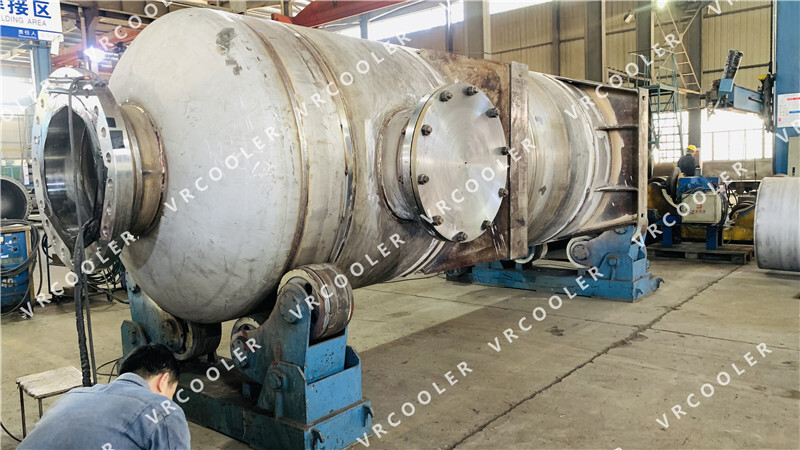
Shell and Tube Heat Exchangers Used to Cool and Heat Crude Oil in Refineries
In refineries, shell and tube heat exchangers are used for the following applications
1. Cooling and heating of crude oil
Heating: Crude oil needs to be heated to increase its fluidity and evaporation rate before it enters the fractionator. Shell and tube heat exchangers provide the required heat to the crude oil by introducing steam or hot oil into the system.
Cooling: In different parts of the process (e.g., cracking), the product is usually treated at high temperatures. The treated oil and gas mixture needs to be rapidly cooled down through a shell and tube cooler to protect downstream equipment.
2. Heat transfer
Efficient heat exchange: Due to the design of the shell and tube heat exchanger with its large surface area, heat can be transferred efficiently, ensuring the efficient utilization of heat energy.
Reuse of heat energy: Waste heat from high-temperature products is used to heat crude oil, realizing the reuse of heat energy and reducing energy consumption.
3. Application in process link
Fractionation: In the process of fractionation, the crude oil is heated to the required temperature through the shell and tube heat exchanger to promote the effective separation of light components.
Cracking: In the cracking process, shell and tube heat exchangers are used to cool the cracking products and prevent quality degradation due to overheating.
4. Energy saving and environmental protection
Reduced energy consumption: By improving thermal efficiency, shell and tube heat exchangers help refineries reduce overall energy consumption and production costs.
Reduced emissions: Effective thermal management reduces reliance on fossil fuels, thereby lowering greenhouse gas emissions.