
Built for the Entire Carbon Capture Chain
Shell and tube heat exchangers are not limited to a single step in carbon capture systems. In this project, they are integrated across the full CCUS chain.
In CO₂ capture systems
Used in absorber and stripper units for heating and cooling solvent streams.
Help control solvent temperature to improve absorption efficiency.
Act as reboilers and condensers in regeneration sections.
In CO₂ pipeline systems
Condition CO₂ before compression by removing excess heat.
Maintain stable temperature to avoid phase change and hydrate formation.
In CO₂ storage systems
Regulate injection temperature before underground storage.
Protect downstream equipment from thermal stress and corrosion.
Designed for High Pressure and Aggressive Media
Unlike conventional heat exchangers, equipment used in CCUS must handle much more demanding conditions.
Structural strength
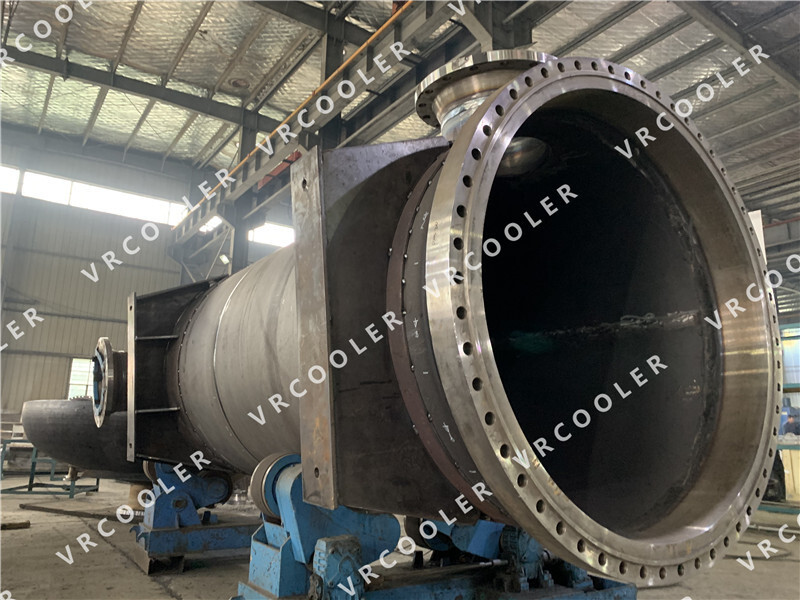
Thick shell design to withstand high operating pressure.
Reinforced tube sheets and flanges for long-term mechanical stability.
Corrosion resistance
Materials selected according to CO₂ composition, moisture level, and impurities.
Options include stainless steel, carbon steel with coating, and special alloys.
Process safety
Designed according to international pressure vessel standards.
Suitable for continuous operation in critical environmental systems.
Customized Thermal Solutions Instead of Standard Products
Each decarbonization project has different process logic and operating parameters. Standard models rarely fit.
Thermal design customization
Heat transfer area calculated based on real heat load.
Baffle spacing and flow path optimized for turbulence and efficiency.
Mechanical customization
Shell diameter, tube length, and nozzle orientation adapted to site layout.
Vertical or horizontal installation according to space constraints.
Integration flexibility
Can be used as reboilers, coolers, condensers, or inter-stage heat exchangers.
Easily integrated into both new plants and retrofit projects.
Energy Efficiency and System-Level Heat Recovery
Shell and tube heat exchangers play an important role in reducing overall energy consumption in CCUS.
Waste heat utilization
Recover heat from hot CO₂ or solvent streams.
Reuse energy to preheat incoming fluids.
Lower operational costs
Reduce steam and cooling water demand.
Improve overall energy balance of the carbon capture system.
Support low-carbon goals
Higher thermal efficiency means lower indirect emissions.
Helps make CCUS economically and environmentally sustainable.
Supporting Carbon Neutrality from Capture to Storage
The role of shell and tube heat exchangers extends beyond single equipment performance.
In industrial decarbonization
Applied in power plants, refineries, hydrogen facilities, and chemical plants.
Enable large-scale CO₂ separation and treatment.
In transport infrastructure
Support long-distance CO₂ pipeline networks.
Ensure safe and stable flow conditions.
In long-term storage projects
Used in enhanced oil recovery (EOR), saline aquifers, and geological storage.
Provide thermal control for injection systems.
Through reliable design, flexible customization, and proven thermal performance, shell and tube heat exchangers become a core component in the global transition toward low-carbon and carbon-neutral industrial systems.
