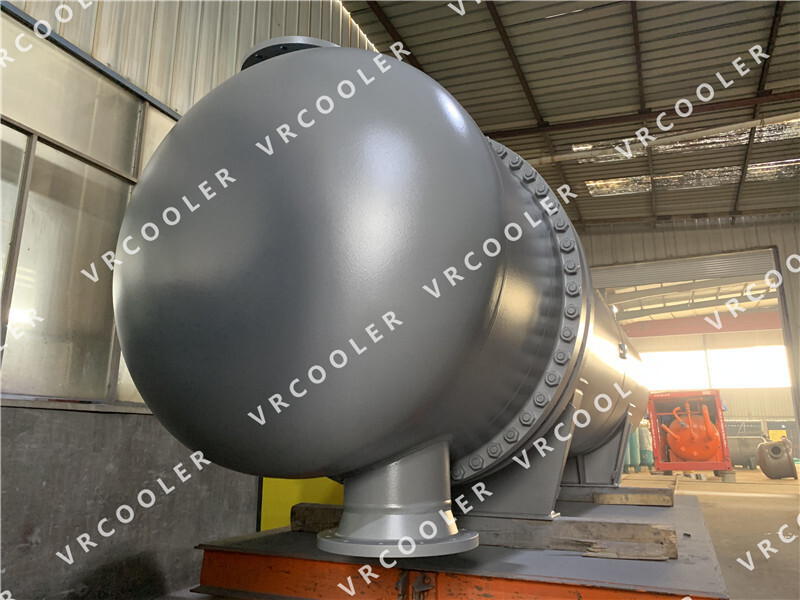
Shell and Tube Heat Exchangers for Heat Recovery from Exhaust Gases
Shell and tube heat exchangers recover thermal energy from exhaust gases by transferring heat between the shell and the tubes. The exhaust gas flows inside the pipes while another fluid (usually water or air) flows in the shell, exchanging heat through the heat transfer walls. In this way, the heat from the exhaust gas is transferred to the fluid, resulting in heat recovery.
Application Scenarios
Industrial boilers: In industrial boilers, the heat from the exhaust gas can be recovered and used to heat the feed water, improving the overall efficiency of the boiler.
Power plants: Exhaust gases generated during fuel combustion can be recovered through shell and tube heat exchangers to improve power generation efficiency.
Incinerators: Exhaust gases from the incineration process can also be recovered through heat exchangers and used to preheat fuel or other processes.
Chemical industry: In chemical reactions, the heat energy in the exhaust gases can be recovered and used in other processes to optimize energy consumption.
Advantages
Improved energy efficiency: By recovering heat from exhaust gases, the energy efficiency of a system can be significantly improved and energy waste reduced.
Reduced emissions: Heat recovery reduces the need for external energy sources, thereby reducing emissions and environmental impact.
Economic benefits: Increased energy efficiency and reduced energy consumption can lead to significant economic benefits and lower operating costs.
Flexibility: Shell and tube heat exchangers are flexible in design and can be adapted to different fluids and process conditions.
Design Considerations
Material Selection: Material selection is critical due to the corrosive substances and high temperatures in the exhaust gases. High temperature and corrosion resistant materials, such as stainless steel or alloy steel, are often used.
Fluid Characteristics: Consider the temperature, flow rate and composition of the exhaust gas to optimize the heat exchanger design.
Heat Exchanger Layout: Determine the proper piping layout and flow patterns (e.g., counterflow, parallel flow, etc.) to improve heat exchange efficiency.