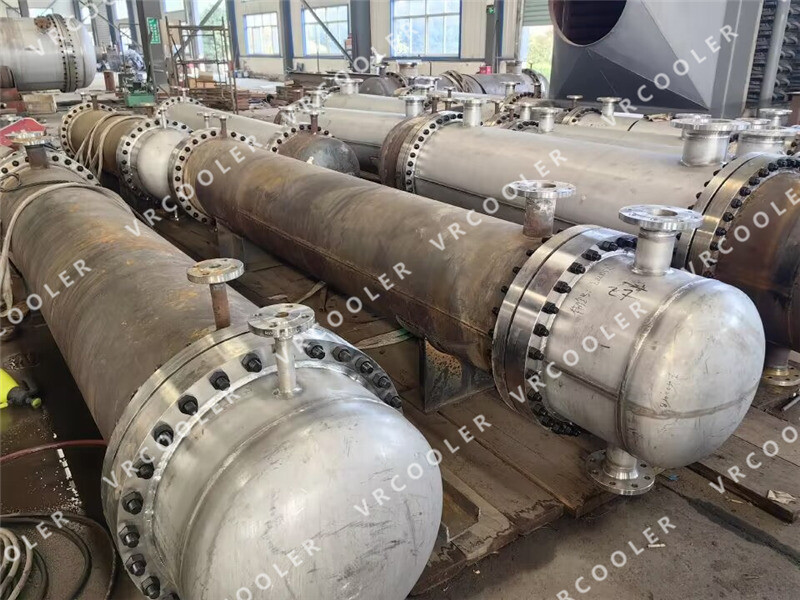
Shell and Tube Heat Exchangers in the Process of Coconut Oil Extraction
Raw material pretreatment link
Heating and softening: freshly harvested coconut or copra and other raw materials, its cellular structure is relatively tight, the oil is wrapped in the internal cell. Using shell and tube heat exchanger, the raw material is heated to 40 - 60℃ with hot water or low pressure steam as heat medium. In this temperature range, coconut raw materials in the cell structure will be softened by heat, the cell wall permeability increases, for the subsequent release of oil to create favorable conditions.
Moisture regulation: The moisture content of the coconut raw material has an important influence on the extraction effect. If the raw material moisture is too high, it will dilute the oil and reduce the extraction efficiency; moisture is too low, it will make the raw material too dry, which is not conducive to the dissolution of oil. Through the shell and tube heat exchanger on the raw material for moderate heating, can make the raw material in the moisture distribution more uniform, while removing part of the excess water, the moisture content will be adjusted to the appropriate range, generally controlled at 10% - 15%, help to improve the subsequent extraction process of oil and solvent contact and dissolution effect.
Extraction
Temperature control: In the extraction process, the shell and tube heat exchanger can ensure that the extraction temperature is stabilized in the appropriate range. For example, when using organic solvents such as hexane to extract coconut oil, the temperature should be controlled at 30 - 50℃. By adjusting the flow rate and temperature of the heat medium in the shell and tube heat exchanger, the extraction system is maintained at the set temperature, where the organic solvent has the strongest solvency capacity for coconut oil, which effectively improves the extraction efficiency, increases the solubility of coconut oil in the solvent, and allows more oil to be transferred from the raw material to the solvent phase.
Maintain the extraction environment: a stable temperature environment helps to maintain the stability of the physical and chemical properties of the solvent in the extraction process, to prevent the solvent due to temperature fluctuations and volatilization losses or changes in properties, affecting the extraction effect. At the same time, the appropriate temperature can also inhibit the possible presence of enzyme activity in the raw material, to avoid enzymatic reactions leading to a decline in the quality of oil, to ensure that the coconut oil extracted has a better color, odor and nutritional value.
Refining process
Degumming stage: the crude coconut oil obtained from extraction contains phospholipids, proteins and other gum impurities. In the process of degumming, it is necessary to heat the crude coconut oil to a certain temperature, generally 50 - 70 ℃, so that the gelatinous impurities coagulation and precipitation. Shell and tube heat exchanger can transfer the heat of the heat medium to the crude coconut oil, so that it can be quickly warmed up to the temperature required for degumming, to promote the separation of gummy impurities and oil, to improve the degumming effect, and to lay a good foundation for the subsequent refining process.
Decolorization stage: In the process of decolorization of coconut oil, it is usually necessary to heat the oil to 80 - 100 ℃, in order to make activated carbon and other decolorizers play a better role in adsorption of pigments and other impurities in the oil. Shell and tube heat exchanger can accurately control the heating temperature of the fat, so that the decolorization process is carried out under the appropriate temperature conditions, to ensure the decolorization effect, so that the color of coconut oil has been significantly improved, and improve the appearance of the product quality.
Deodorization stage: Deodorization is the key step to remove odor and volatile impurities in coconut oil, which generally needs to be carried out under higher temperature and vacuum conditions. Shell and tube heat exchanger can heat the coconut oil to a high temperature of 180 - 260 ℃, together with the vacuum system, so that the odor and volatile impurities can be volatilized and removed at a high temperature. By precisely controlling the temperature and heating time of the heat exchanger, the nutrients and natural flavor of the coconut oil can be retained to the maximum extent while the odor is effectively removed.