
From Design to Delivery A Complete Engineering Process
Customized Design Based on Real Operating Conditions
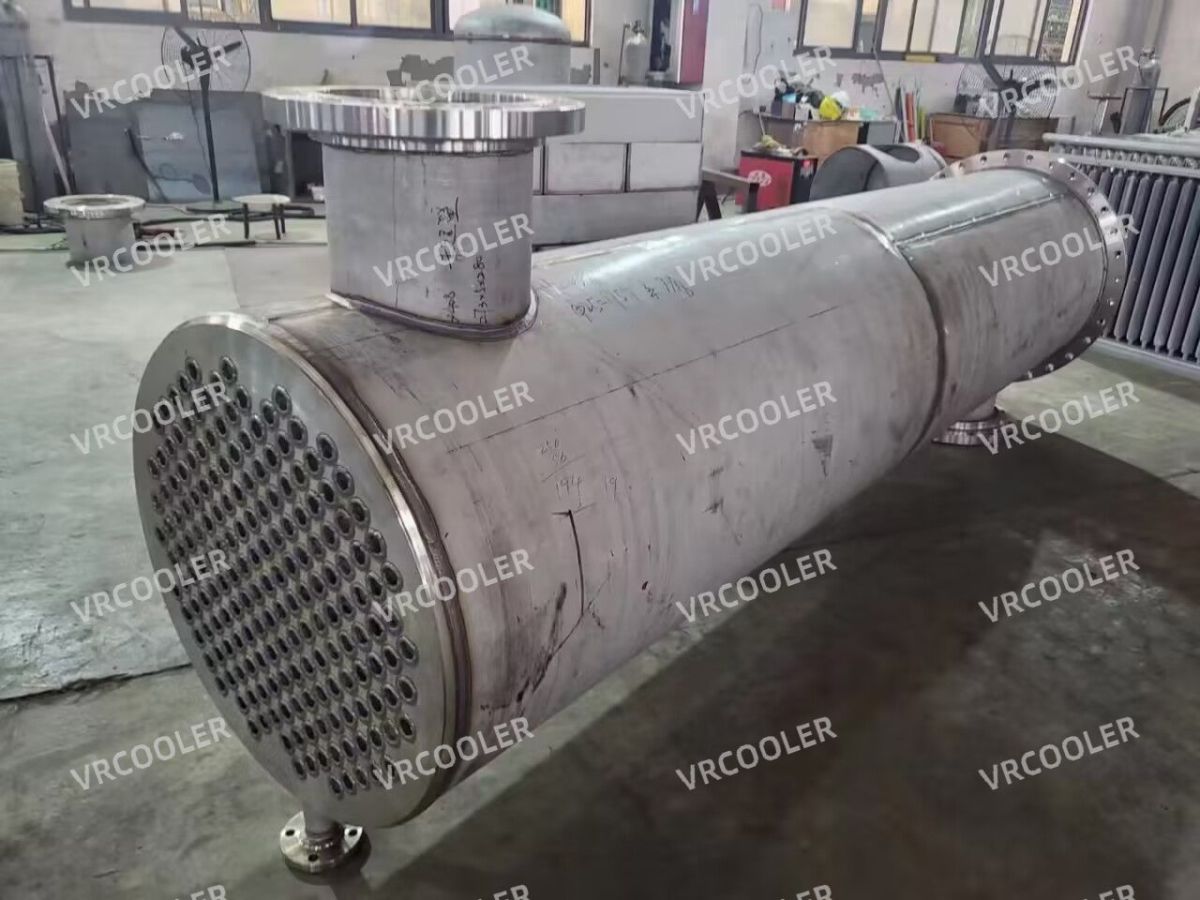
In this project, the shell and tube heat exchanger was designed according to the actual working conditions of the auxiliary boiler system, including exhaust temperature, condensate flow rate, pressure levels, and installation space. Through thermal calculation and structural optimization, the heat transfer area, tube arrangement, and flow pattern were precisely determined.
Strict Production and Quality Control
From material selection to welding, pressure testing, and final inspection, the entire production process followed industrial standards. Each unit was hydrostatically tested before delivery to ensure mechanical strength, sealing performance, and long-term operational safety.
Ready for On-Site Installation
The equipment was manufactured with modular design, allowing easy transportation and fast installation at the boiler site, minimizing downtime for the end user.
Where Is It Used Practical Application Scenarios
Auxiliary Boiler Exhaust Heat Recovery
In auxiliary boiler systems, a large amount of thermal energy is lost through flue gas and hot condensate. The shell and tube condenser recovers this waste heat and transfers it to make-up water or feedwater.
Condensate Heat Utilization
High-temperature condensate discharged from the boiler still contains valuable thermal energy. The heat exchanger cools the condensate while preheating incoming cold water, achieving secondary energy utilization.
Supporting Stable Boiler Operation
By stabilizing inlet water temperature and reducing temperature fluctuations, the condenser improves boiler thermal balance and operating stability.
Structural and Technical Features of the System
Robust Shell and Tube Structure
The classic shell and tube configuration provides strong pressure resistance, high structural reliability, and excellent adaptability to continuous industrial operation.
Flexible Flow Arrangement
Both counter-current and cross-flow designs can be applied according to site requirements, ensuring maximum temperature difference and optimal heat transfer.
Wide Material Compatibility
The system can be manufactured with carbon steel, stainless steel, or special alloys depending on medium properties and corrosion requirements.
Why Shell and Tube Is the Best Choice
High Reliability in Harsh Environments
Compared with plate heat exchangers, shell and tube units are more suitable for high-temperature, high-pressure, and dirty working conditions.
Long Service Life
With proper material selection and structural design, shell and tube condensers can operate for decades with minimal performance degradation.
Low Maintenance Cost
The removable tube bundle design allows easy cleaning, inspection, and tube replacement, significantly reducing lifecycle maintenance cost.
Heat Transfer Efficiency and Main Application Fields
High Thermal Efficiency
By maximizing heat transfer surface area and optimizing fluid flow paths, the system achieves high heat recovery rates, effectively improving overall boiler efficiency.
Main Application Industries
Shell and tube heat recovery condensers are widely used in:
Power plants and auxiliary boiler systems
Chemical and petrochemical plants
Food and beverage processing
Textile and paper industries
District heating and energy centers
Key Role in Energy Saving Systems
They play a core role in waste heat recovery, boiler efficiency improvement, and industrial energy management systems.
Daily Maintenance and Long-Term Operation
Regular Inspection
Operators should periodically check for leakage, pressure drop, and temperature deviation to ensure stable operation.
Cleaning and Fouling Control
Tube side and shell side fouling should be cleaned according to water quality and operating conditions to maintain heat transfer performance.
Preventive Maintenance Strategy
By establishing routine maintenance schedules and monitoring key parameters, users can significantly extend equipment service life and avoid unexpected shutdowns.
A Key Component for Energy Efficiency and Low-Carbon Industry
Shell and tube heat recovery exchangers for auxiliary boiler condensers are not just standard heat transfer equipment, but essential components of modern industrial energy-saving systems. Through effective waste heat utilization, they help enterprises reduce fuel consumption, lower carbon emissions, and move towards more sustainable and efficient production models.
