
Cooling mission inside turbocharged engines
Heat buildup after air compression
In diesel engines equipped with turbochargers, intake air is compressed before entering the combustion chamber. This compression significantly increases air temperature, which can negatively affect engine efficiency.
Need for temperature reduction before combustion
Hot intake air has lower density, meaning less oxygen is available for combustion. Cooling the air improves oxygen content and enhances combustion efficiency.
Role of intercooler in the system
The intercooler, often designed as a shell and tube heat exchanger, cools the compressed air before it enters the engine, ensuring optimal performance.
Impact on engine output and efficiency
By reducing intake temperature, the intercooler helps increase engine power output and reduce fuel consumption.
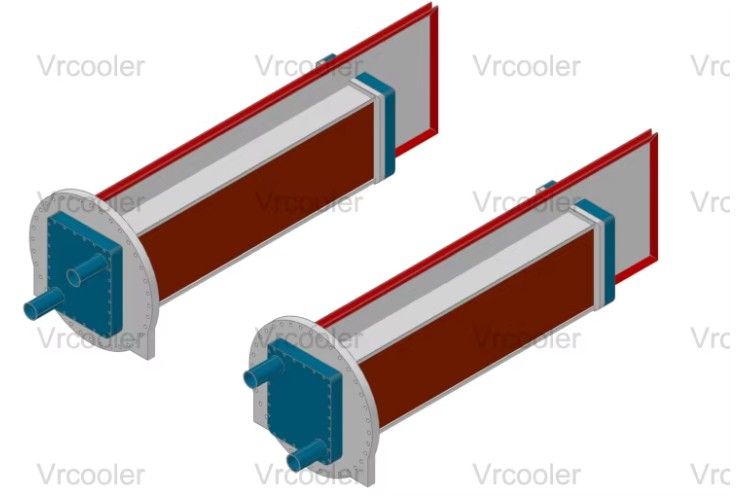
Why shell and tube structure fits marine use
Strong structure under harsh conditions
Marine environments involve vibration, humidity, and continuous operation. Shell and tube heat exchangers provide a robust structure that can withstand these conditions.
Resistance to pressure and temperature variation
The intercooler must handle fluctuating pressures and temperatures. The shell and tube design offers reliable performance under such variations.
Flexibility in material selection
Depending on whether seawater or freshwater is used, materials such as copper alloys or stainless steel can be selected.
Long service life in demanding applications
With proper design and materials, shell and tube intercoolers can operate reliably for long periods in marine systems.
Heat exchange process inside intercooler
Separation of air and cooling medium
Compressed air flows through one side (usually tubes), while cooling water flows through the shell side, ensuring efficient heat transfer without mixing.
Enhanced cooling through flow design
Internal baffles guide the cooling water to increase turbulence, improving heat transfer efficiency.
Continuous removal of heat
The design allows constant heat removal from compressed air, maintaining stable intake temperature.
Stable operation under varying loads
Even when engine load changes, the intercooler maintains consistent cooling performance.
Material considerations in marine systems
Copper alloy tubes for seawater cooling
Copper alloys are commonly used due to their good thermal conductivity and resistance to seawater corrosion.
Stainless steel for higher durability
In some cases, stainless steel is selected for its strength and corrosion resistance in specific environments.
Anti-corrosion design measures
Coatings and cathodic protection may be applied to extend equipment life.
Balancing performance and cost
Material selection depends on the operating environment, balancing efficiency, durability, and budget.
Operational advantages for diesel engines
Improved combustion efficiency
Cooler intake air increases oxygen density, leading to more complete fuel combustion.
Reduction in engine thermal load
Lower intake temperature helps reduce overall engine temperature, protecting components.
Enhanced fuel economy
Better combustion efficiency leads to reduced fuel consumption over time.
Lower emission levels
Improved combustion also contributes to reduced exhaust emissions, supporting environmental compliance.
Real project results and benefits
Stable operation after installation
The intercooler performed reliably in continuous marine operation without failure.
Noticeable improvement in engine output
The engine achieved better performance due to optimized intake air conditions.
Reduced maintenance frequency
Durable design and material selection minimized maintenance needs.
Increased system reliability at sea
The overall system became more dependable, which is critical for marine applications where downtime must be avoided.
