
Shell and tube construction is preferred in power-generation environments due to its mechanical strength, high pressure tolerance, and long service life under continuous operation.
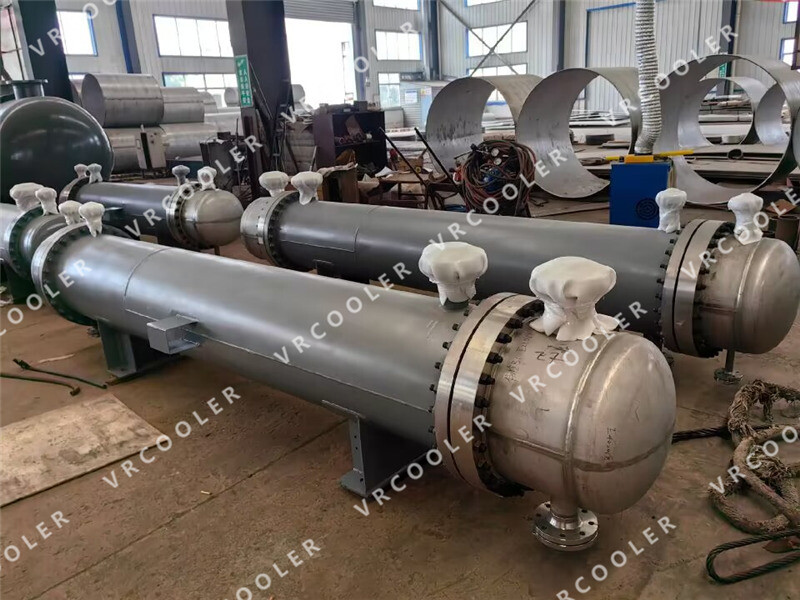
Working Principle
In a typical power-plant application:
Hot jacket-cooling water flows through the tube side
Cold process fluid (fuel oil, feedwater, or thermal oil) flows through the shell side
Heat is transferred indirectly through the tube walls
The cooled jacket water returns to the engine cooling circuit
The pre-heated fluid enters the next stage of the system, reducing external heating demand
This closed-loop heat recovery process maximizes energy utilization without contamination between fluids.
Key Applications in Power Plants
Shell and tube jacket-cooling pre-heaters are widely used in:
Diesel and gas engine power plants
Combined Heat and Power (CHP) plants
Gas turbine auxiliary systems
Heavy fuel oil (HFO) and light diesel oil (LDO) pre-heating
Boiler feedwater pre-heating
Lube oil temperature stabilization
Design Features
Robust shell and tube construction for high-temperature and high-pressure service
Custom tube materials: carbon steel, stainless steel, Cu-Ni, or special alloys
Removable tube bundle for easy inspection and maintenance
Baffle design optimized for maximum heat transfer and low pressure drop
ASME / TEMA compliant design available on request
Flanged or welded connections to suit plant piping layouts
Typical Operating Parameters
Advantages for Power Plants
Energy recovery from waste heat
Reduced fuel consumption for boilers and heaters
Improved plant efficiency and lower heat rate
Stable operating temperatures for engines and auxiliaries
Lower operating and maintenance costs
Long service life under continuous duty
Custom Engineering & Manufacturing
Each jacket-cooling pre-heater is custom-engineered based on:
Heat load and temperature requirements
Fluid properties
Site conditions
Applicable international standards
From small captive power plants to large utility installations, shell and tube pre-heaters can be tailored for maximum reliability and efficiency.
Conclusion
A Shell and Tube Jacket-Cooling Pre-Heater is a proven and reliable solution for waste heat recovery in power plants. By effectively utilizing jacket-cooling water heat, power producers can achieve higher efficiency, reduced fuel costs, and more sustainable operation.
