
Turning Vapor into Liquid at the Top of the Column
In distillation systems, the overhead condenser performs a critical role by converting vapor leaving the top of a column into liquid.
During operation:
Vapor generated from the separation column flows into the condenser.
Cooling medium circulates through the exchanger.
Heat is transferred through the tube walls.
The vapor gradually condenses into liquid.
Part of the condensed liquid is returned to the column as reflux, while the remaining portion becomes the final product stream.
This process stabilizes column operation and improves separation efficiency.
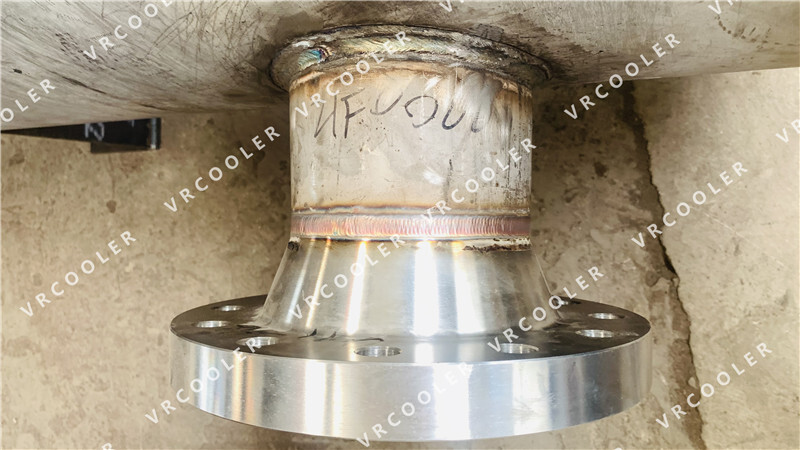
Internal Heat Transfer Design That Maximizes Condensation
The internal configuration of a shell and tube overhead condenser is carefully designed to promote efficient heat transfer.
Typical structural features include:
A large tube bundle to increase heat transfer area
Optimized baffle spacing to guide cooling flow
Proper vapor distribution to prevent uneven condensation
These features ensure that vapor condenses smoothly without excessive pressure drop.
Efficient condensation improves product purity and energy utilization within the process system.
Materials and Structural Design for Harsh Industrial Conditions
Overhead condensers often operate under demanding conditions including high temperature, pressure, and corrosive media.
For this customized project, the design considered several factors:
Corrosion resistance for process vapors
Mechanical strength under pressure
Long-term stability during continuous operation
Depending on the application, materials may include:
Carbon steel
Stainless steel
Special corrosion-resistant alloys
Proper material selection ensures both safety and long service life.
Precision Manufacturing from Tube Bundle to Final Assembly
The fabrication of the overhead condenser involved multiple controlled manufacturing steps.
Key stages included:
Machining of tube sheets with precise hole patterns
Tube bundle insertion and expansion
Shell fabrication and welding
Installation of internal baffles
Each stage required strict dimensional control to ensure perfect alignment between the tube bundle and shell structure.
This precision manufacturing guarantees stable performance once the equipment is installed in the plant.
Inspection and Pressure Testing Ensuring Operational Safety
Before delivery, the overhead condenser underwent comprehensive inspection procedures.
Quality verification included:
Hydrostatic pressure testing
Leak detection between shell and tube sides
Visual and dimensional inspection
Weld integrity testing
These procedures confirm that the equipment meets industrial safety and operational standards before entering service.
Delivering Stable Condensation Performance for the Client
After final testing, the completed overhead condenser was delivered to the client’s processing facility.
The exchanger is designed to provide:
Reliable vapor condensation
Stable reflux control
High heat transfer efficiency
Long-term durability
This project demonstrates how customized shell and tube overhead condensers support efficient separation processes in refineries and chemical plants.