
Copper Outstanding Heat Transfer for Cooling and Condensation
Copper remains one of the most widely used special materials in heat exchanger manufacturing due to its excellent thermal conductivity.
Key advantages of copper
Thermal conductivity much higher than carbon steel and stainless steel.
Enables compact design with smaller heat transfer area.
Good resistance to seawater and clean cooling water.
Typical refinery applications
Lube oil coolers.
Condensers for light hydrocarbon vapors.
Auxiliary cooling systems for compressors and pumps.
Limitations in refinery environments
Not suitable for sulfur-containing fluids.
Sensitive to ammonia and hydrogen sulfide.
Usually used in secondary or clean service loops.
Copper heat exchangers are mainly selected for systems that prioritize heat transfer efficiency over extreme corrosion resistance.
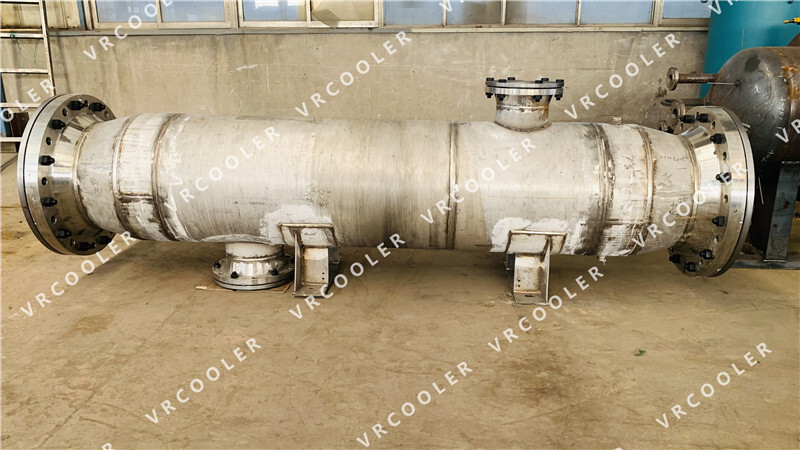
Nickel Stable Performance in Corrosive Process Streams
Nickel and nickel-based alloys are widely used in refinery systems involving aggressive chemical environments.
Key advantages of nickel
Excellent resistance to acidic and alkaline fluids.
Good mechanical strength at high temperatures.
Strong resistance to stress corrosion cracking.
Typical refinery applications
Hydrogen processing units.
Acid regeneration systems.
Alkylation and amine treatment units.
Production challenges
Higher raw material cost.
Difficult machining and forming.
Requires specialized welding procedures and qualified welders.
Nickel heat exchangers are often selected when both corrosion resistance and structural reliability are required simultaneously.
Silver Ultra-High Thermal Performance for Special Processes
Silver is rarely used in large-scale equipment, but plays a unique role in specific high-value applications.
Key advantages of silver
Highest thermal conductivity among all metals.
Excellent oxidation resistance.
Strong resistance to biological fouling.
Typical refinery applications
Critical laboratory or pilot systems.
Precision process control units.
Specialized reaction cooling zones.
Practical limitations
Extremely high material cost.
Limited availability.
High security and handling requirements.
Silver heat exchangers are usually applied only when no other material can meet the thermal performance requirements.
Hastelloy The Ultimate Material for Harsh Refinery Conditions
Hastelloy represents one of the highest levels of alloy technology in heat exchanger manufacturing.
Key advantages of Hastelloy
Exceptional resistance to strong acids and chlorides.
Excellent high-temperature strength.
Outstanding resistance to pitting and crevice corrosion.
Typical refinery applications
Sulfur recovery units (SRU).
Acid gas removal systems.
High-temperature reaction reactors.
Waste acid treatment systems.
Manufacturing difficulty
Requires special cutting tools.
Strict control of welding temperature.
Sensitive to contamination during fabrication.
Hastelloy heat exchangers are considered long-term investment equipment for the most critical refinery systems.
Production Challenges and Engineering Control
Special material shell and tube heat exchangers are not just expensive, they are technically demanding.
Material procurement risks
Long delivery cycles.
Limited global suppliers.
Price fluctuation.
Machining and fabrication complexity
Higher tool wear.
Slower processing speed.
Higher scrap risk.
Welding and inspection requirements
Strict welding procedures.
Mandatory non-destructive testing.
Higher inspection standards.
Quality control importance
Any defect may lead to severe safety.
Rework cost is extremely high.
System failure risks are unacceptable.
For refinery projects, selecting special materials is not only a material decision, but a system-level engineering strategy. These heat exchangers ensure process safety, environmental compliance, and long-term operational stability in the most demanding industrial environments.
