
In any power transmission system, oil does more than lubricate moving parts. It also carries heat away from gears, bearings, clutch assemblies, and hydraulic components. When that heat builds up too quickly, oil temperature rises, viscosity changes, and the entire transmission system can begin to lose efficiency and reliability. That is why transmission oil water cooling, shell and tube type, remains a trusted solution in many industrial, marine, and heavy-duty equipment applications.
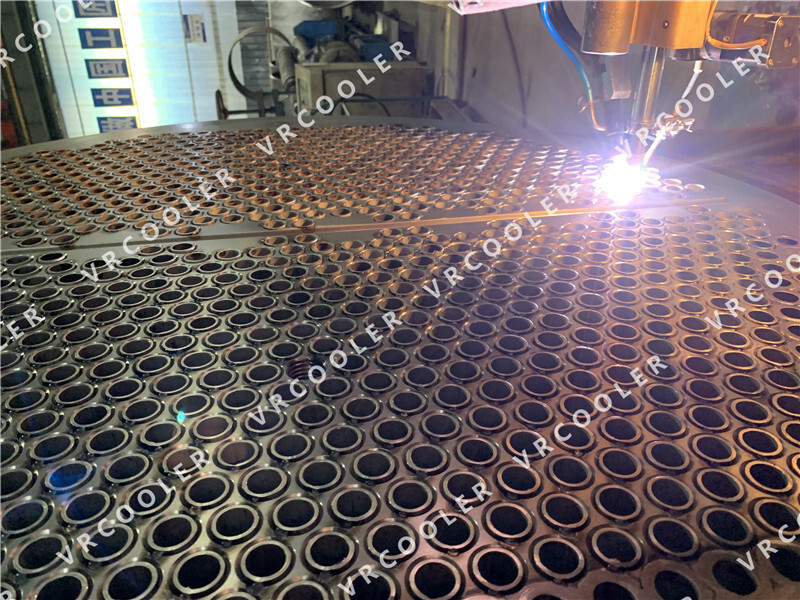
A shell and tube transmission oil cooler is designed to remove heat from hot transmission oil by transferring it to cooling water. The oil usually flows through one side of the exchanger while water flows through the other, separated by metal tube walls that allow heat to pass without mixing the two fluids. This simple principle is highly effective, especially in systems that operate continuously or under heavy load.
One of the main reasons shell and tube coolers are widely used for transmission oil cooling is their durability. Transmission systems are often installed in equipment that faces vibration, fluctuating loads, and long operating hours. In these conditions, the cooling equipment must be strong enough to handle pressure, temperature variation, and real industrial service. A shell and tube design offers exactly that. Its structure is robust, proven, and well suited to demanding environments where reliability matters more than complexity.
Water-cooled transmission oil systems are especially useful where air cooling alone is not enough or where a stable cooling source is already available. In marine transmissions, engine-driven equipment, industrial gearboxes, rolling mills, mining machinery, and heavy processing lines, the heat load can be too high for compact air cooling to manage efficiently. A shell and tube cooler uses water as a more effective heat sink, helping the transmission maintain a safer and more stable oil temperature.
Temperature control is not just about protecting the oil. It also protects the entire transmission assembly. If transmission oil overheats, lubrication quality can decline, oxidation may accelerate, and seals can age more quickly. Bearings and gears may then operate under less favorable conditions, increasing wear over time. By keeping oil temperature within the proper range, a shell and tube oil cooler supports smoother operation, better lubrication performance, and longer equipment life.
Another advantage of shell and tube transmission oil cooling is service flexibility. These coolers can be designed for a wide range of oil viscosities, water qualities, and operating pressures. They can also be customized for horizontal or vertical installation, different nozzle arrangements, removable tube bundles, and various material combinations. For example, if the cooling water is fresh water, standard material options may be suitable. If seawater is involved, more corrosion-resistant materials such as copper-nickel, stainless steel, or titanium may be required. This flexibility makes shell and tube units a practical choice for many types of transmission cooling projects.
Maintenance is another strong point. In real operating conditions, cooling systems may be exposed to fouling, scaling, or contamination on either the oil side or the water side. A shell and tube cooler can often be designed for easier cleaning and inspection compared with more compact exchanger types. That is a major advantage for operators who need equipment that can be maintained rather than replaced too often.
In transmission applications, pressure drop is also an important consideration. The cooler must remove enough heat without creating excessive resistance in the oil circuit or the water circuit. A well-designed shell and tube cooler balances heat transfer area, flow path, and internal geometry to achieve this. That is why proper design is critical. A transmission oil cooler should never be selected by size alone. It should be designed according to oil flow, inlet and outlet temperature, water conditions, pressure limits, viscosity, and the real heat load of the transmission.
For OEMs and end users, the value of a shell and tube transmission oil cooler lies in its long-term practicality. It is not the newest or most fashionable type of heat exchanger, but it remains one of the most dependable. In industries where downtime is expensive and equipment must run day after day, proven design often matters more than novelty.
A custom shell and tube transmission oil cooler can also be a good replacement solution. Many older systems still rely on original coolers that are no longer available from the equipment manufacturer. In such cases, a replacement unit can be built according to the existing dimensions and working conditions while improving materials, corrosion protection, or thermal performance. This helps users restore reliable cooling without redesigning the whole transmission package.
In summary, transmission oil water cooling, shell and tube type, is a dependable and efficient solution for controlling oil temperature in heavy-duty systems. It offers strong mechanical reliability, effective heat transfer, flexible material options, and practical maintenance advantages. Whether used in marine propulsion, industrial gear drives, or power transmission equipment, a well-designed shell and tube oil cooler helps protect the transmission, stabilize performance, and extend service life.