
The Heart of Heat Transfer
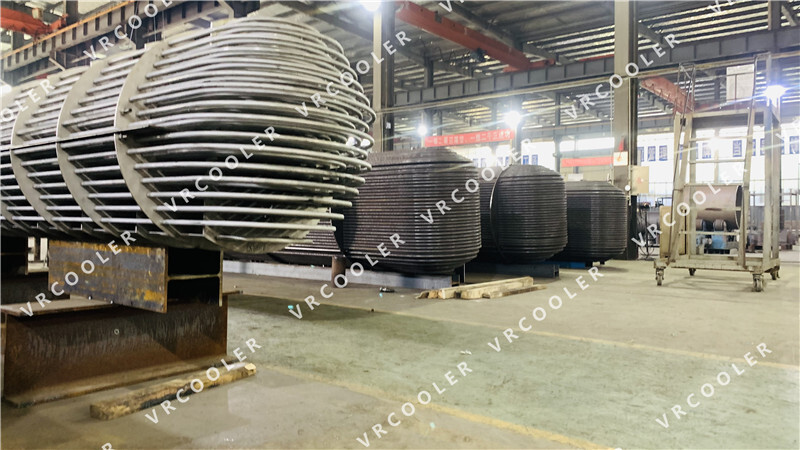
The tube bundle is essentially the core functional part of a shell and tube heat exchanger. It consists of multiple parallel tubes fixed into tube sheets, sometimes equipped with baffles or support plates.
Provides the main surface area for heat exchange.
Can be installed into existing shells without replacing the entire system.
Allows rapid refurbishment of old equipment.
In many projects, replacing only the tube bundle is enough to restore original performance.
Marine Systems Where Tube Bundles Excel
In marine applications, tube bundle exchangers are commonly used as:
Marine lube oil coolers for main engines and generators.
Seawater condensers in ship cooling systems.
Jacket water coolers for engine thermal control.
These systems require compact design, corrosion resistance, and easy onboard maintenance, making tube bundles ideal for ship retrofitting.
Power and Energy Industry Integration
In power plants and energy facilities, tube bundle exchangers serve critical roles:
Turbine oil coolers for gas and steam turbines.
Generator hydrogen coolers in large power units.
Waste heat recovery units for auxiliary systems.
Their modular structure allows quick replacement during scheduled shutdowns without modifying existing infrastructure.
Petrochemical and Process Applications
Tube bundles are widely used in chemical and refinery systems, often referred to as:
Reboiler tube bundles in distillation columns.
Condenser bundles in solvent recovery units.
Process gas coolers in compression stations.
High-pressure resistance and customizable materials make them suitable for corrosive and high-temperature processes.
Why Tube Bundles Are Chosen for Upgrades
From a lifecycle perspective, tube bundle solutions offer significant advantages:
Lower investment compared to full exchanger replacement.
Shorter lead time and simplified logistics.
Easy adaptation to upgraded process conditions.
For many operators, tube bundles represent the most efficient way to improve performance while minimizing downtime and cost.