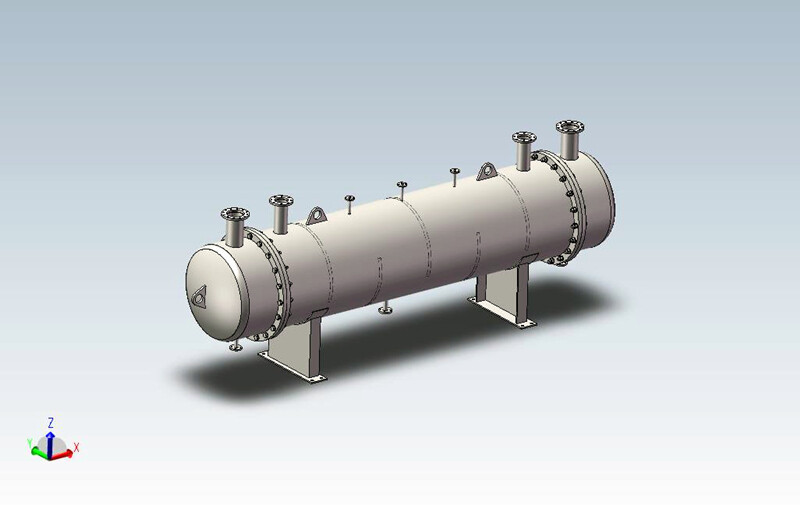
What are the application scenarios for shell and tube cryogenic heat exchangers?
Energy and Chemical Industry
1. Natural gas liquefaction (LNG)
Scenario: In LNG production lines, for pre-cooling, liquefaction and sub-cooling of natural gas. For example, the feed gas (mainly methane) is gradually cooled from ambient temperature to a liquefied state of approx. - 162°C. The process is carried out in a low-temperature heat exchanger.
Role:
Countercurrent heat transfer between multiple low-temperature fluids (e.g., refrigerants such as propane, ethylene, etc.) and natural gas is realized through the shell-and-tube structure to transfer heat efficiently.
The high-pressure resistant design can adapt to the pressure changes during the liquefaction process to ensure the safe and stable operation of the system.
Example: The main cryogenic heat exchanger of a large LNG receiving station or liquefaction plant often adopts a floating head or U-tube structure to cope with temperature difference stress.
2. Chemical cryogenic reaction and separation
Scenario:
Low-temperature synthesis reaction (e.g. low-temperature catalytic reaction in pharmaceuticals and fine chemicals): the reaction temperature is controlled by heat exchanger to avoid the generation of high-temperature by-products.
Low-temperature distillation or crystallization process: used to separate mixtures (such as solvent recovery, purification of chemical raw materials), through cooling or heating to achieve component separation.
Role:
When dealing with corrosive media, tube bundles made of stainless steel, nickel-based alloys, etc. can be used to resist chemical corrosion at low temperatures.
Shell range baffle design enhances fluid turbulence, improves heat transfer efficiency and shortens the reaction or separation cycle.
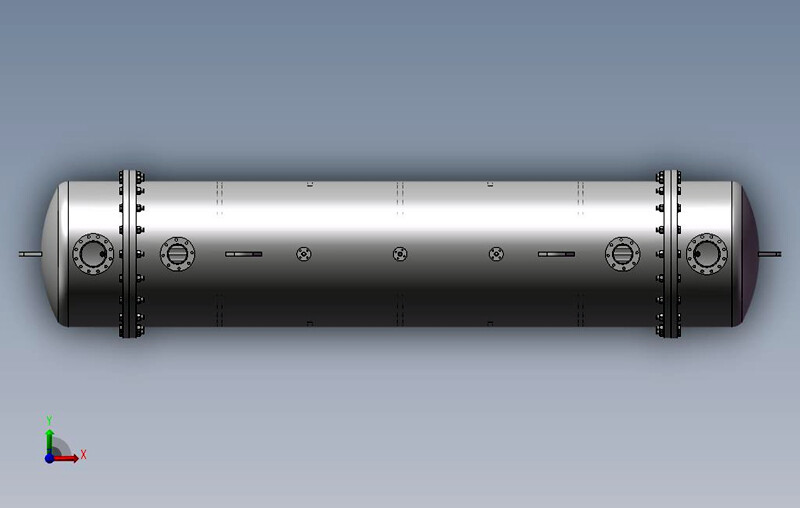
Cryogenic refrigeration and cryogenics (deep cooling technology)
1. Aerospace and superconductivity technology
Scenario:
Rocket propellant (liquid oxygen, liquid hydrogen) storage and supply systems: cooling of gaseous propellants to liquid state through heat exchangers, or temperature control to prevent vaporization during refueling.
Cryogenic cooling of superconducting magnets: e.g., superconducting coils in particle gas pedals and MRI equipment need to be maintained at - 269°C (liquid helium temperature), and heat exchangers are used to circulate the helium gas for cooling.
Characteristics: high thermal conductivity materials (e.g. aluminum alloy) are used to manufacture tube bundles to reduce heat loss; compact structure to adapt to spacecraft space constraints.
2. Biomedical and Food Cold Chain
Scenario:
Storage of biological samples (e.g. ultra-low temperature preservation of cells and vaccines): connecting cryogenic refrigerators to transfer the cold from liquid nitrogen or compressor refrigerant to the storage containers to maintain the environment below - 80℃.
Food quick-freezing and cold chain logistics: Used in quick-freezing equipment to quickly reduce the temperature of food to below - 18℃ to maintain the nutrients and taste.
Requirements: materials need to meet hygiene standards (such as 316L stainless steel) to avoid contamination of samples or food; excellent sealing performance to prevent leakage of media at low temperatures.
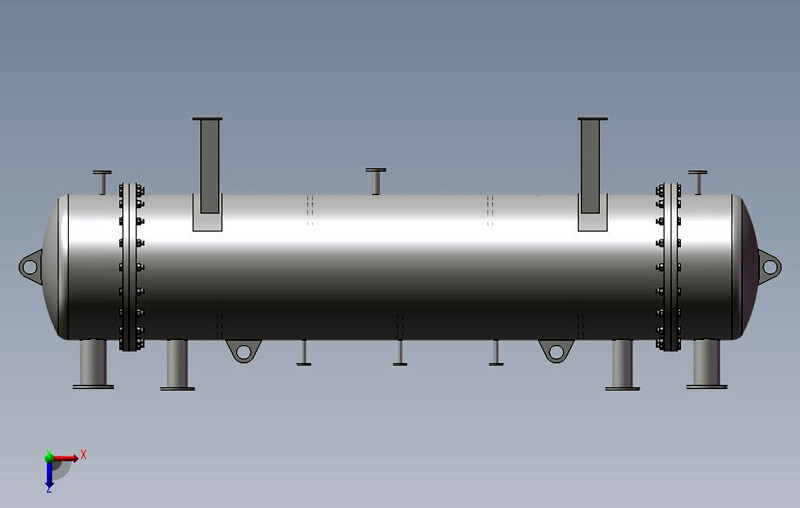
Air separation and gas treatment
1. Air separation equipment (oxygen, nitrogen production)
Scenario: In an air separation plant, air is cooled to liquefaction temperature (~ - 196°C) by a multi-stage shell and tube heat exchanger, and then oxygen, nitrogen and argon are separated using distillation.
Key Technology:
Multi-flow design to handle heat exchange of multiple fluids such as air, nitrogen and oxygen simultaneously.
Resistance to embrittlement of materials at low temperatures is critical, and austenitic stainless steel or aluminum-magnesium alloys are often used.
2. Industrial gas purification
Scenario: When dealing with gaseous fuels containing moisture (e.g. coal bed methane, biogas), the gas is cooled below the dew point through heat exchangers to condense and separate the moisture, avoiding subsequent equipment freezing and blocking.
Application: In the gas treatment process after shale gas extraction, water vapor and heavy hydrocarbons can be removed to improve gas purity.
Hydrogen energy and new energy field
1. Liquid hydrogen production and storage and transportation
Scenario: In the evaporated gas (BOG) recovery system of liquid hydrogen storage tanks, the BOG is recooled to liquid state through a heat exchanger to reduce hydrogen loss.
Challenge and design: Need to withstand ultra-low temperature of - 253℃, materials need to have very low coefficient of thermal expansion and good toughness, usually stainless steel or nickel alloy tube bundles are used.
2. Fuel Cell Low Temperature Startup
Scenario: When the hydrogen fuel cell vehicle is started in low temperature environment, the heat exchanger is used to preheat the hydrogen or coolant to ensure that the electric stack works under the appropriate temperature to avoid icing damage.
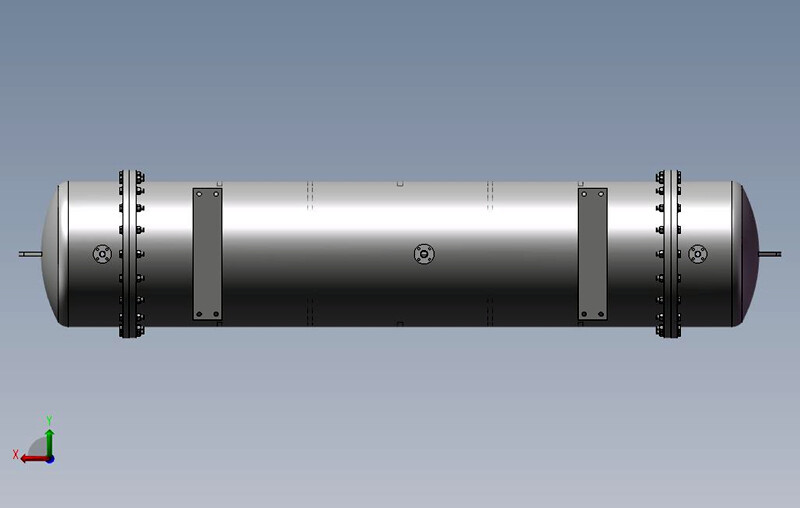
Special industrial and scientific research scenarios
1. Low temperature test equipment
Scenario: Low-temperature performance testing of aerospace components (e.g., material frost resistance, low-temperature reliability of seals), providing a stable low-temperature environment chamber through heat exchangers.
Case: Automobile manufacturers use it to test the charging and discharging performance of battery packs at -30℃, simulating the conditions of use in extremely cold regions.
2. Deep-sea exploration and polar engineering
Scenario: Refrigeration systems for deep-sea probes, low-temperature energy systems for polar research stations (e.g., power generation using low-temperature heat sources), heat exchangers need to be adapted to high-pressure, high-humidity environments that are difficult to maintain.
Design points: the use of compact structure to reduce the size of the surface anti-corrosion treatment (such as plating) to resist corrosion of seawater.