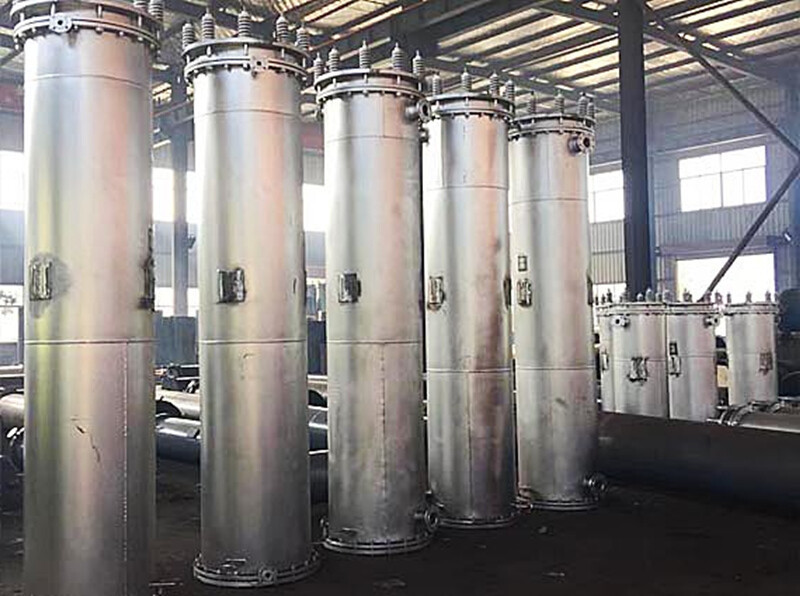
Graphite shell-and-tube heat exchangers offer unparalleled application value in highly corrosive environments across chemical, metallurgical, and environmental protection industries due to their exceptional corrosion resistance—particularly against strong acids and highly oxidizing media—and stable heat transfer performance.
The chemical industry represents the primary application scenario for graphite shell-and-tube heat exchangers, particularly for reaction cooling, medium preheating, or condensation processes involving strong acids and organic solvents. Typical applications include:
1. Sulfuric acid-related processes
This constitutes their most classic application domain, capable of withstanding corrosion from sulfuric acid across varying concentrations (from dilute to 98% concentrated sulfuric acid) and temperatures. Specific scenarios include:
Dilution cooling of sulfuric acid: As mentioned earlier in the “concentrated sulfuric acid dilution” process, mixing 98% concentrated sulfuric acid with water releases significant heat (dilution heat). Without prompt cooling, temperatures can surge rapidly (exceeding 150°C), potentially causing splashing or equipment damage. Graphite heat exchangers rapidly dissipate heat during dilution, lowering the temperature of diluted sulfuric acid below 50°C to meet subsequent storage or process requirements (e.g., sulfuric acid dilution in phosphate fertilizer production, sulfuric acid pretreatment in the dye industry).
Sulfuric Acid Concentration / Recovery: In waste sulfuric acid regeneration processes (e.g., dilute waste sulfuric acid from pharmaceuticals or chemical fiber industries), dilute sulfuric acid must be concentrated to reusable concentrations (e.g., ≥60%). Graphite heat exchangers can be used for heating (using steam or high-temperature media) or condensation (recovering evaporated water during concentration) in the concentration process, withstanding corrosion caused by fluctuating sulfuric acid concentrations during concentration.
Reaction Cooling Involving Sulfuric Acid: In processes like sulfonation (for dye and surfactant production) or nitration (for explosives and pharmaceutical intermediates), sulfuric acid acts as a catalyst or reactant, releasing heat during reactions. Graphite heat exchangers enable precise temperature control, preventing localized overheating that could trigger side reactions.
2. Hydrochloric Acid / Nitric Acid Processes
Hydrochloric Acid Stripping / Absorption: In the chlor-alkali industry, “hydrochloric acid stripping” is used to produce chlorine gas (HCl gas). Graphite heat exchangers are employed to heat dilute hydrochloric acid (decomposing it into HCl and water) or cool the stripped HCl gas (facilitating subsequent absorption). In electroplating, graphite heat exchangers also heat and concentrate waste hydrochloric acid during recovery, withstanding its severe corrosion (common metals like stainless steel corrode rapidly in hydrochloric acid).
Nitric Acid Cooling/Condensation: Nitric acid (especially concentrated nitric acid) is highly oxidizing and corrodes carbon steel and stainless steel (forming a passivation layer prone to peeling). Graphite heat exchangers can be used for “nitrogen oxide condensation” in nitric acid production (condensing NO₂ into liquid nitric acid) or for cooling nitric acid prior to storage (reducing high-temperature nitric acid to ambient temperature to minimize volatilization losses), such as in the “absorption tower auxiliary coolers” found in nitric acid plants.
3. Other Corrosive Media Processes
Organic Acid Processes: Production or purification of organic acids like acetic acid, formic acid, citric acid, etc. Organic acids (especially concentrated ones) slowly corrode metals. Graphite heat exchangers can be used for heating (e.g., preheating fermentation broth) or cooling (e.g., condensing after distillation) organic acids, such as in the recovery and cooling of acetic acid during vinyl acetate production.
Organic Solvent Processing: Distillation and condensation of organic solvents like chloroform, carbon tetrachloride, and benzene. Certain organic solvents (e.g., chlorinated solvents) react with metals. Graphite heat exchangers prevent medium contamination while achieving efficient heat transfer, such as in the recovery and condensation of organic solvents in the pharmaceutical industry.
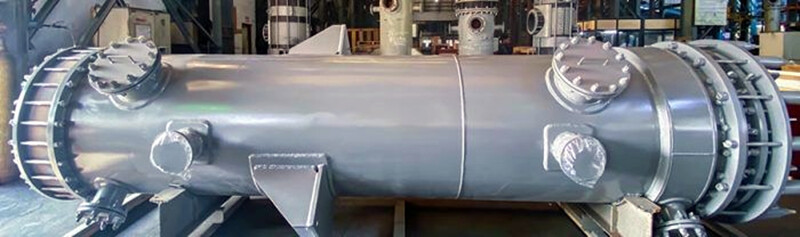
The “pickling process” in the metallurgical industry (steel, non-ferrous metals) involves highly corrosive conditions where strong acids are used to remove oxide scale (such as rust and zinc oxide) from metal surfaces. Graphite shell-and-tube heat exchangers are primarily employed for:
Heating/cooling of pickling solutions: During pickling, acidic solutions (e.g., hydrochloric acid, sulfuric acid, or hydrofluoric acid mixtures) must be maintained at specific temperatures (e.g., 50-80°C) to enhance pickling efficiency. Graphite heat exchangers can utilize steam to heat these solutions. Post-pickling waste liquid (containing high-concentration acids and metal ions) must be cooled to ambient temperature before neutralization. Graphite heat exchangers facilitate waste liquid cooling, preventing high-temperature waste liquid from corroding subsequent neutralization equipment.
Acid Pickling Waste Liquid Recovery: Some metallurgical enterprises recover acids (e.g., hydrochloric acid) from pickling waste liquids. Graphite heat exchangers are employed for heating during waste liquid concentration (e.g., utilizing waste heat from high-temperature flue gases). They withstand dual corrosion from high concentrations of acid and metal ions (e.g., Fe²⁺, Zn²⁺) in the waste liquid. (Common metals are prone to accelerated corrosion by metal ions, forming “pitting corrosion.”)
In environmental protection scenarios involving “high-concentration corrosive wastewater/exhaust gas treatment,” equipment must withstand both corrosion and pollutant impacts. Graphite heat exchanger applications include:
High-salt, high-acid wastewater treatment: For wastewater generated in industries like chemicals and electroplating (containing sulfuric acid, hydrochloric acid, nitric acid, and heavy metal ions), graphite heat exchangers are used during “evaporation crystallization” processes to heat the wastewater (for evaporation and concentration) or cool the steam (for water recovery). This prevents wastewater corrosion of heating tubes, which could lead to heavy metal leakage.
Flue gas desulfurization and denitrification byproduct treatment: Flue gas desulfurization processes in thermal power plants and steel mills (e.g., limestone-gypsum process) produces “desulfurization wastewater” (containing sulfuric acid, sulfurous acid, and chloride ions), while denitrification (e.g., SCR process) generates wastewater containing nitric acid. Graphite heat exchangers can be used for preheating or cooling these effluents, providing temperature-adapted media for subsequent treatment processes (e.g., reverse osmosis, evaporation).
The pharmaceutical and food industries demand extremely high medium purity (to prevent metal ion contamination of products), and some processes involve corrosive media. Graphite shell-and-tube heat exchangers, due to their “material stability and non-release of impurities,” can be used for:
Cooling in Pharmaceutical Intermediate Synthesis: In antibiotic and vitamin production, certain synthesis steps require acidic conditions (e.g., acid hydrolysis in penicillin synthesis). Graphite heat exchangers cool reaction solutions, preventing metal ion leaching and product contamination, meeting GMP (Good Manufacturing Practice) requirements.
Food-grade organic acid purification: In the production of food additives (e.g., citric acid, lactic acid), organic acid solutions require heating for concentration or cooling for crystallization. Graphite heat exchangers do not react with organic acids nor release metal ions, ensuring food safety. An example is the purification and cooling of citric acid in the beverage industry.