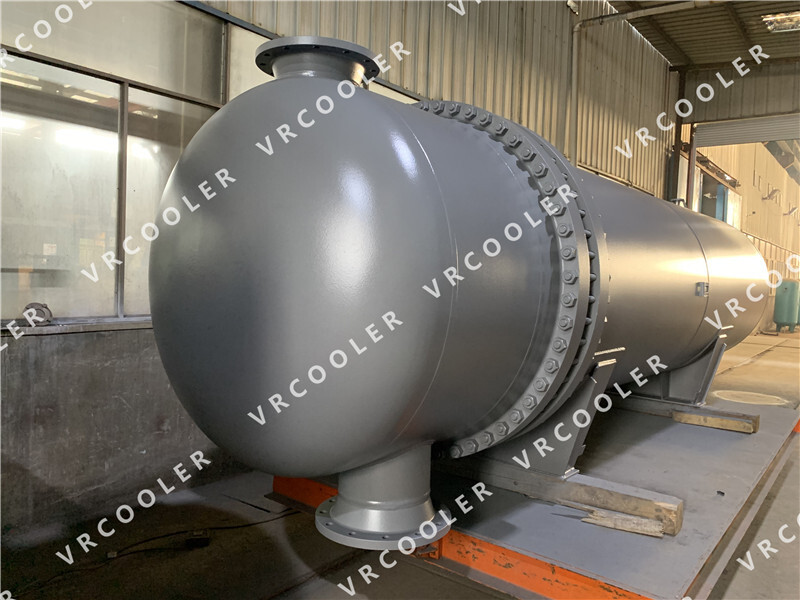
What Factors Affect the Performance of Shell and Tube Heat Exchangers?
1. Fluid Properties
Viscosity: The viscosity of the fluid affects the resistance to flow and the efficiency of heat transfer. Higher viscosity fluids result in higher pressure losses and lower flow rates.
Density: The density of a fluid affects its flow rate and heat capacity, which in turn affects heat transfer efficiency.
Thermal conductivity: Higher thermal conductivity contributes to higher heat exchange efficiency, and differences in thermal conductivity between fluids can affect heat transfer performance.
Specific heat capacity: The specific heat capacity of a fluid affects its ability to store and transfer heat, which in turn affects heat exchange capacity.
2. Temperature
Inlet and outlet temperatures: The temperature difference between the inlet and outlet fluid directly affects the efficiency of heat exchange. Larger temperature differences generally increase the rate of heat transfer.
Temperature Stability: Temperature fluctuations can lead to fluctuations in the performance of the heat exchanger, affecting the stability of the heat exchange process.
3. Pressure
Operating Pressure: The operating pressure of a heat exchanger affects the phase state of the fluid (gas or liquid), which in turn affects the heat exchange efficiency.
Pressure Loss: During flow, the pressure loss of the fluid through the heat exchanger affects the efficiency of the overall system. Excessive pressure loss may result in lower flow rates.
4. Flow Patterns
Type of Flow: The flow pattern of the fluid through the heat exchanger (e.g., parallel, counterflow, crossflow) affects the heat exchange efficiency. Counterflow patterns usually provide higher heat exchange efficiency.
Flow rate: The right flow rate can help improve the heat exchange efficiency, but too high a flow rate may lead to pressure loss and increased noise.
5. Heat Exchanger Design
Pipe structure: The diameter, length and arrangement of the pipe will affect the fluid flow and heat transfer.
Baffle design: the configuration and design of the baffle will affect the flow path of the fluid, which in turn affects the heat exchange efficiency.
6. Dirt and Deposits
Dirt accumulation: Over time, solid particles in the fluid may be deposited on the inner wall of the heat exchanger, increasing thermal resistance and reducing heat exchange efficiency.
Cleaning Frequency: Regular cleaning of the heat exchanger can maintain its performance and avoid efficiency loss due to dirt accumulation.
7. Environmental Conditions
Ambient Temperature: The external ambient temperature affects the performance of the fluid being cooled or heated, which in turn affects the overall efficiency of the heat exchanger.
Humidity: In some applications, ambient humidity may have an effect on the performance of gaseous fluids.
8. Material Properties
Thermal Conductivity: The thermal conductivity of different materials can affect the efficiency of heat transfer.
Corrosion resistance: The corrosion resistance of the material affects the durability and maintenance frequency of the heat exchanger, which indirectly affects the performance.