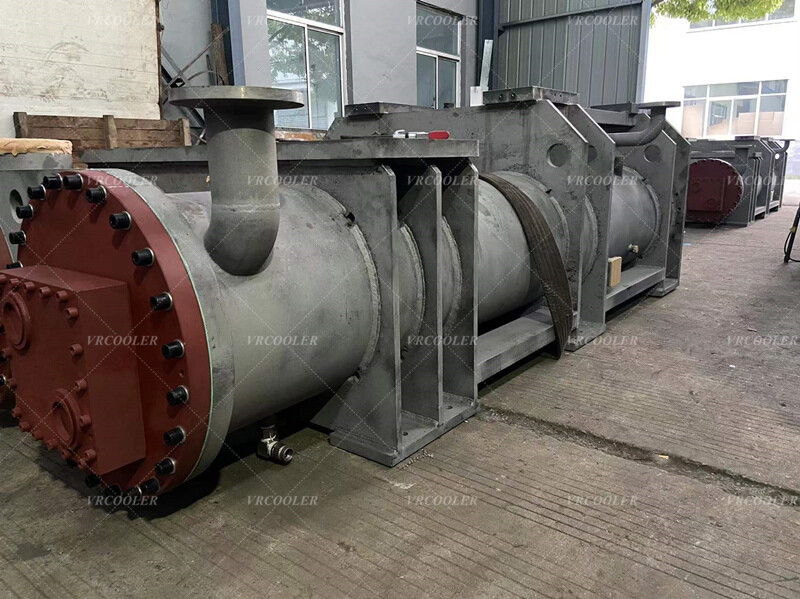
What Parameters Need to be Considered When Selecting a Shell and Tube Heat Exchanger?
When selecting a shell and tube heat exchanger, there are several key parameters that need to be considered to ensure performance and suitability. The following are some of the key considerations:
1. Fluid type
Properties: The physical and chemical properties of the fluid (e.g., viscosity, density, corrosivity) will influence the design and material selection of the heat exchanger.
Phase: Determine whether the fluid is a gas, liquid, or vapor, which will affect flow patterns and heat transfer characteristics.
2. Flow Rate
Flow Rate: Knowing the flow rate of a fluid (usually expressed in cubic meters per hour or liters per minute) is an important factor in selecting a heat exchanger and affects its size and heat exchange capacity.
Flow Patterns: Determine whether the flow is parallel or counter flow, which affects the efficiency of the heat exchange.
3. Temperature
Inlet and outlet temperatures: The temperature of the incoming and outgoing fluid needs to be known in order to calculate the heat exchange requirements and determine the design of the heat exchanger.
Allowable temperature range: Consider the operating temperature range of the fluid to ensure that the materials and design can withstand the required temperature conditions.
4. Pressure
Operating Pressure: Determine the operating pressure of the fluid within the heat exchanger, which will influence the material and structural design of the equipment.
Pressure Loss: Evaluate the pressure drop of the fluid as it passes through the heat exchanger to ensure the overall efficiency of the system.
5. Heat Load
Heat Exchange Requirements: Calculate the amount of heat transfer required to ensure that the selected heat exchanger is capable of meeting the thermal load of the system.
6. Material Selection
Corrosion resistance: Select the appropriate material (e.g. stainless steel, carbon steel, copper, etc.) according to the chemical properties of the fluid to improve durability.
Thermal conductivity: Select materials with good thermal conductivity to improve heat transfer efficiency.
7. Size and Layout
Space constraints: Consider the site installation space to determine the size and layout of the heat exchanger.
Piping Configuration: Select appropriate pipe diameter and length to optimize flow and heat exchange.
8. Maintenance Requirements
Cleanability: Determine the frequency of cleaning and maintenance of the heat exchanger and select a design that is easy to maintain.
Removability: Consider whether periodic disassembly is required for maintenance and select a structure that is easy to disassemble.
9. Economy
Initial Cost: Evaluate the purchase cost of the equipment.
Running Costs: Consider the energy consumption and maintenance costs over a long period of time.
10. Application environment
Environmental conditions: Consider the environment in which the heat exchanger will be installed (e.g., indoor, outdoor, corrosive environments, etc.) in order to select the appropriate design and materials.