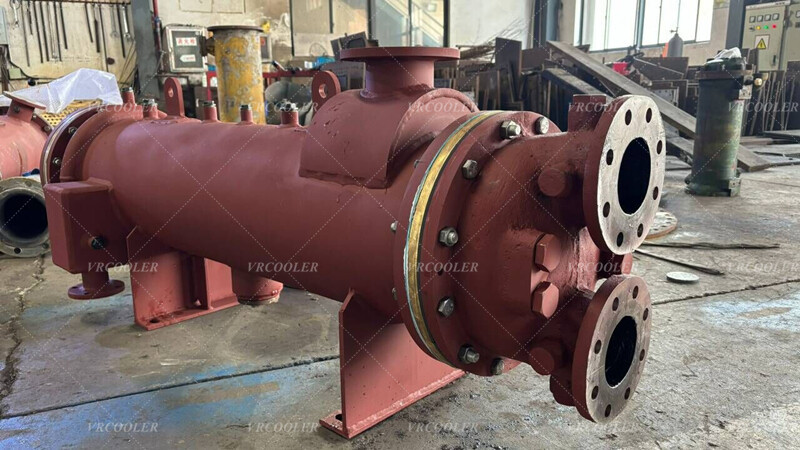
What are the Advantages and Disadvantages of Shell and Tube Biogas Heat Exchangers?
Advantages
Sturdy structure: It consists of shell, tube bundle, tube plate and other components, which can withstand high pressure and temperature, and is suitable for biogas projects under various working conditions, whether it is the treatment of high-pressure biogas or the operation under different ambient temperatures, it can maintain stable performance.
High operating flexibility: it can operate stably over a wide range of flow rates and temperatures. When the biogas production fluctuates or the requirement of biogas temperature changes, the shell and tube heat exchanger can better adapt to these changes by adjusting the flow rate, flow rate and other parameters to ensure the heat exchange effect.
Strong adaptability: it can deal with biogas of various natures, including biogas containing certain impurities or corrosive components. Through reasonable selection of pipes and appropriate anti-corrosion measures, it can effectively deal with harmful substances in biogas and ensure the normal operation and service life of the equipment.
Easy to maintain: the internal structure is relatively simple and easy to overhaul. The tube bundle can be disassembled through the tube plate, which is convenient for cleaning, checking and replacing the damaged tubes inside the tube, with low maintenance cost, and the maintenance process will not be too complicated, which can reduce the downtime of the equipment.
Disadvantages
Relatively low heat transfer efficiency: Compared with high-efficiency heat exchangers such as plate heat exchangers, the heat transfer coefficient of shell and tube heat exchangers is small. This is because in shell and tube heat exchanger, the flow path of biogas and heat transfer medium is relatively long, and there is a large dead zone, resulting in insufficient heat transfer, and the heat transfer efficiency is somewhat limited.
Large footprint: the equipment is large and requires a large installation space. For some biogas engineering sites with limited space, it may bring difficulties in layout and increase the space cost of engineering construction.
High metal consumption: its structure requires a large amount of metal materials, especially the shell and tube bundle part, which leads to high cost of the equipment. At the same time, the large use of metal materials will also increase the weight of the equipment, the installation of the foundation requirements are higher.
Easy to scale and clog: In the process of long-term operation, impurities, salts and other substances in the biogas are easy to scale on the inner wall of the tube bundle, affecting the heat transfer effect. Moreover, the structure of shell and tube heat exchanger makes it more difficult to clean after scaling, and it needs to use specialized cleaning equipment and process, which increases the workload and difficulty of maintenance.