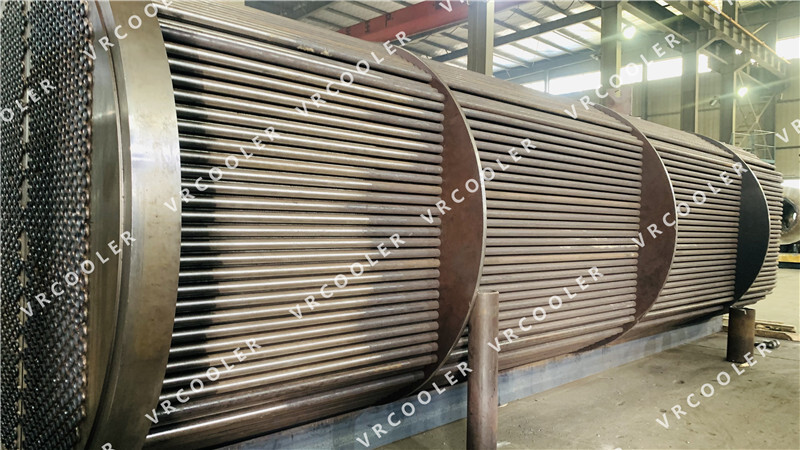
What are the Limitations of U-Tube Heat Exchangers in High Pressure Environments?
1. Material Limitations
Pressure-resistant materials: U-tube heat exchangers often require the use of high-strength materials to withstand high-pressure environments, which can increase costs.
Corrosive fluids: For corrosive fluids, the material chosen must have good corrosion resistance to prevent damage under high pressure.
2. Thermal Expansion Issues
Thermal Stress: The curved portion of the U-tube can develop large thermal stresses at high temperatures and pressures, which can lead to material fatigue and cracking.
Displacement constraints: Thermal expansion under high temperature and pressure may cause displacement of the pipe, increasing the complexity of design and installation.
3. Cleaning and Maintenance Difficulties
Cleaning Difficulty: The design of the U-tube makes internal cleaning more difficult, especially in high pressure environments where downtime may be required for cleaning, increasing maintenance costs and time.
Problems with deposits: High pressure fluids can cause deposits to build up more easily in the pipe, affecting heat transfer performance.
4. Pressure Losses
Resistance to flow: U-tubes have a complex flow path that can lead to high pressure losses. This can affect overall system efficiency in high pressure applications.
Fluid Distribution: In high pressure environments, fluid flow distribution may be uneven, affecting heat exchange performance.
5. Design Complexity
Design Challenges: In order to ensure safety and efficiency at high pressures, the design of U-tube heat exchangers needs to be more complex, making them more difficult to design and manufacture.
Installation Requirements: In high pressure environments, U-tube installation requirements are more stringent and may require specialized equipment and techniques.
6. Economics
Increased costs: High pressure applications often require a higher standard of design and materials, which can lead to increased manufacturing and maintenance costs.
Market Suitability: In some cases, there may be heat exchanger types that are more suitable for high pressure conditions, such as straight tube heat exchangers or other designs that may be more advantageous in terms of cost and performance.