What are the Performance Differences between Different Types of Shell and Tube Heat Exchangers (e.g., U-tube, Straight Tube)?
Structural Design
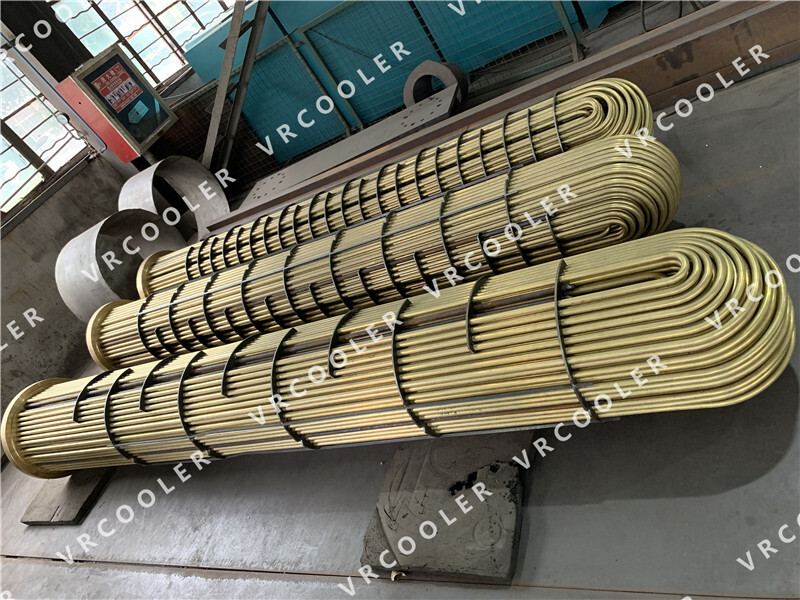
U-tube heat exchanger.
Structure: The tubes are U-shaped, allowing fluid to flow in both directions within the same tube.
Adaptability: Designed to be more adaptable to thermal expansion, reducing the stresses caused by thermal expansion.
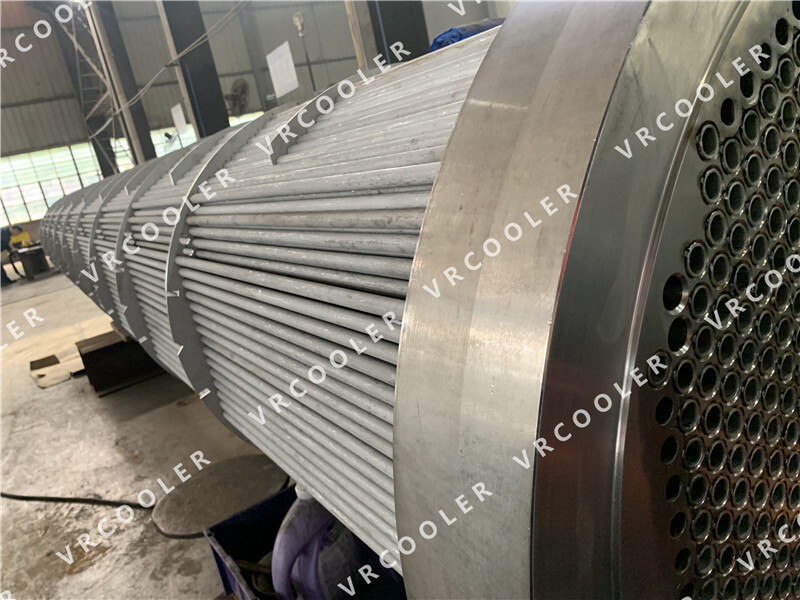
Straight Pipe Heat Exchanger: Structure: Pipes are straight.
Structure: Pipes are straight, allowing fluid to flow in one direction within the pipe.
Compactness: Usually simpler in structure, allowing for easier cleaning and maintenance.
Heat exchange efficiency
U-tube heat exchanger: Heat transfer
Heat transfer: Because the fluid flows repeatedly through the U-tube, higher heat transfer efficiencies can usually be realized, especially at large temperature differences.
Flow Patterns: Due to the U-shaped design, flow patterns are more complex, which helps to enhance turbulence and further improve heat exchange.
Straight Tube Heat Exchangers
Heat transfer: Relatively low heat exchange efficiency, especially at low flow rates, can lead to inadequate heat transfer.
Flow Patterns: The flow is relatively homogeneous with simple flow patterns, which may lead to flow stratification.
Pressure loss
U-tube heat exchanger.
Pressure Losses: Due to complex flow paths, there may be large pressure losses, especially at high flow rates.
Suitability: For systems requiring high flow rates or pressures, special designs may be required to minimize losses.
Straight Tube Heat Exchangers.
Pressure Loss: Typically have low pressure loss and are suitable for applications requiring high flow rates and low energy consumption.
Flow Efficiency: Straight tube design reduces friction losses in the fluid.
Cleaning and Maintenance
U-tube heat exchangers.
Cleaning Difficulty: Cleaning and maintenance is relatively difficult, especially if deposits accumulate in the U-tube.
Disassembly: The entire heat exchanger may need to be disassembled for cleaning.
Straight Tube Heat Exchangers
Ease of Cleaning: Often a simple design that is easy to clean and maintain, especially for removal of surface deposits.
Disassembly: The design usually allows for easier disassembly.
Costs and Applications
U-tube heat exchangers.
Cost: Typically more expensive to manufacture and suitable for high temperature, high pressure and high performance applications.
Applications: Commonly used in chemical and petroleum refineries where high heat exchange efficiency and resistance to thermal expansion are required.
Straight Tube Heat Exchangers
Cost: Relatively low manufacturing cost, suitable for general heat exchange requirements.
Applications: Widely used in HVAC, food processing, etc., suitable for lower temperature and pressure applications.