
Seawater coolers can be used for many types of auxiliary machinery and supporting systems onboard a vessel. Their main role is to remove heat from equipment that does not belong directly to the main engine system but is still essential for vessel operation, power supply, maneuvering, cargo handling, and onboard services.
One common application is the auxiliary diesel engine or generator set. Diesel generators produce heat during continuous operation, and their jacket water, lubricating oil, and sometimes charge air systems need stable cooling. If the generator cooling system loses performance, the vessel may face high-temperature alarms, reduced generator output, or even generator shutdown, which can affect onboard power reliability.
Seawater coolers are also used for air compressors. Marine air compressors generate heat during compression, so cooling may be required for compressor jacket water, intercoolers, aftercoolers, and lubricating oil. Proper cooling helps reduce discharge air temperature, protect compressor components, and maintain safe compressed-air supply for starting air, control air, and service air systems.
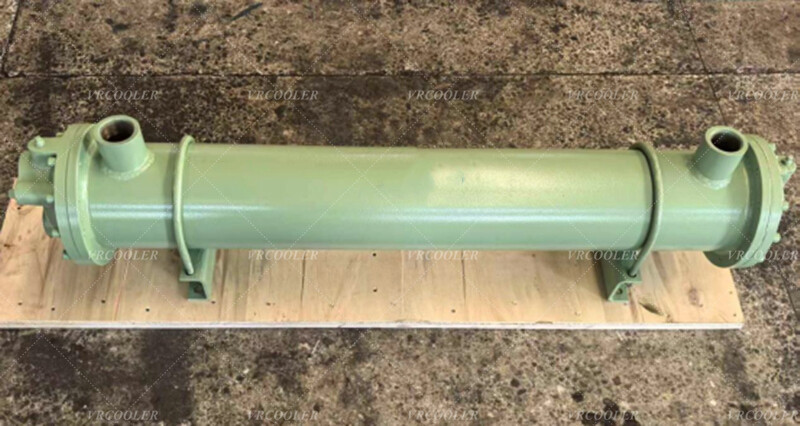
Another important application is hydraulic systems. Hydraulic power units, steering gear systems, deck cranes, winches, hatch covers, and other hydraulic equipment can generate significant heat during operation. A seawater cooler or freshwater cooler connected to a seawater-cooled circuit helps keep hydraulic oil at the correct temperature and viscosity. If hydraulic oil becomes too hot, it may become thinner, reduce lubrication performance, increase leakage, and accelerate wear of pumps, valves, and seals.
Seawater coolers may also support refrigeration and air-conditioning systems, especially by cooling condenser water or removing heat from HVAC-related circuits. Stable cooling is important for maintaining accommodation comfort, provision storage, cargo temperature control, and machinery-space ventilation performance.
In addition, seawater coolers can be used for gearboxes, reduction gears, thrusters, stern tube systems, freshwater cooling circuits, and other auxiliary heat loads. For example, gearbox oil coolers help protect gear teeth and bearings, while thruster cooling systems help maintain reliable maneuvering performance during port operation or dynamic positioning.
In many modern vessels, seawater does not cool every auxiliary machine directly. Instead, seawater cools a central freshwater cooling system, and the freshwater is then distributed to different auxiliary users. This arrangement reduces direct seawater exposure inside sensitive equipment, helping lower the risk of corrosion, scaling, marine growth, and blockage.
