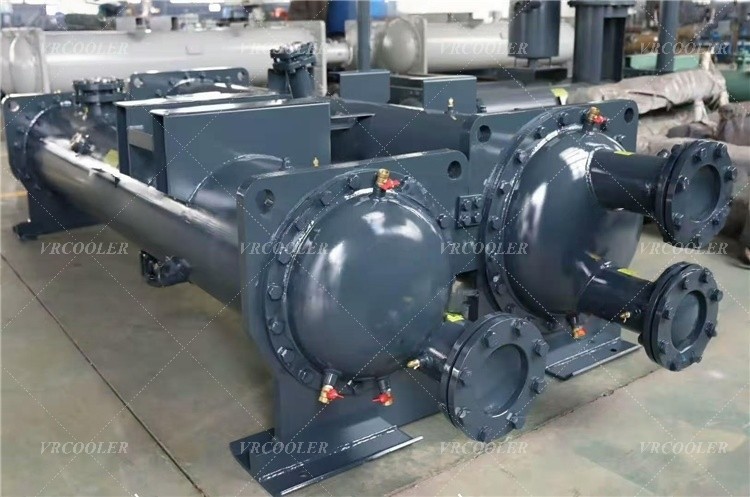
What causes poor performance in a heat pump shell and tube exchanger?
Time :Jun 22, 2026
Poor performance in a heat pump shell and tube heat exchanger is usually caused by reduced heat transfer, incorrect flow conditions, or refrigerant-side problems.
The most common cause is fouling or scaling on the water side. If process water, cooling water, brine, wastewater, or glycol solution contains minerals, sludge, oil, biological growth, or suspended solids, deposits can build up inside the tubes. This creates thermal resistance, reduces heat transfer, and increases pressure drop.
Another common reason is insufficient water or process-fluid flow rate. Low flow can reduce turbulence inside the tubes, lowering heat-transfer efficiency. It can also cause unstable evaporating or condensing temperature, poor heat pump COP, and possible freezing risk in evaporator service.
On the refrigerant side, poor performance may come from incorrect refrigerant charge, refrigerant maldistribution, oil accumulation, non-condensable gas, or poor expansion valve control. In an evaporator, poor refrigerant distribution can leave part of the tube bundle underused. In a condenser, non-condensable gas or oil film can reduce condensation efficiency and raise discharge pressure.
Air trapped in the water circuit can also reduce performance. Air pockets lower the effective heat-transfer area and may cause unstable flow, noise, vibration, or poor temperature control.
For industrial heat pump applications, operation outside design conditions is another important factor. If inlet water temperature, flow rate, refrigerant condition, heat load, or ambient condition is different from the original design, the shell and tube exchanger may not reach the expected outlet temperature.
Poor maintenance can make the problem worse. Blocked strainers, dirty filters, partially closed valves, damaged baffles, leaking tubes, incorrect pump operation, or failed temperature sensors can all lead to poor heat exchanger performance.
In simple terms, poor performance is usually related to dirty tubes, low flow, refrigerant-side problems, air in the system, or operation beyond the design range. Regular cleaning, water treatment, flow checking, refrigerant inspection, and monitoring of temperature difference and pressure drop are key to keeping the heat pump shell and tube exchanger working efficiently.
By clicking "Allow All", you agree to the storage of cookies on your device to enhance site navigation, analyze site usage and assist with our marketing efforts. Cookie Notice