
The cooling medium depends on the required gas outlet temperature, ambient conditions, available utilities, corrosion risk and whether water or hydrocarbons may condense from the gas.
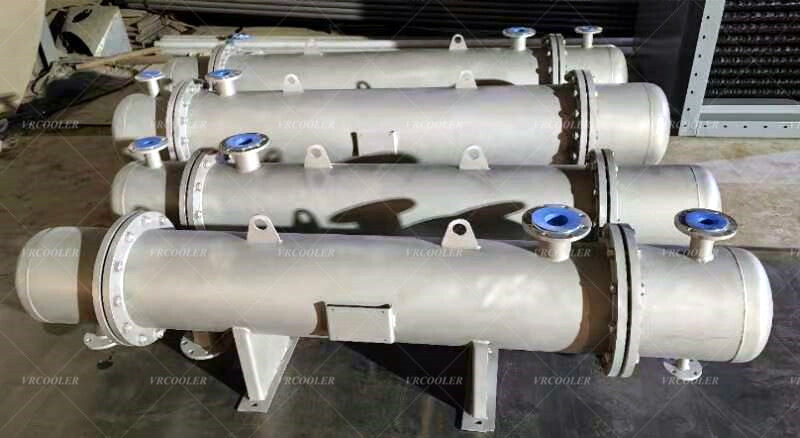
Cooling-tower water is commonly used in onshore gas-processing and compressor facilities. It provides economical cooling but may contain minerals, corrosion products and biological growth, so filtration, water treatment and a suitable fouling allowance are necessary.
Closed-loop freshwater provides cleaner and more stable cooling. It is often used where the gas cooler must be isolated from cooling-tower water, seawater or other contaminated sources. The closed-loop water rejects heat through a secondary heat exchanger, cooling tower or dry cooler.
Water-glycol mixtures are used where freezing is possible. Ethylene glycol normally offers better heat-transfer performance, while propylene glycol may be selected where lower toxicity is required. Because glycol has a lower specific heat and higher viscosity than water, the cooler must be sized for the actual glycol concentration.
Seawater can be used on offshore platforms, FPSOs, coastal plants and marine gas systems. Seawater-wetted components require corrosion-resistant materials such as 90/10 or 70/30 copper-nickel, titanium, Duplex or Super Duplex stainless steel. Carbon-steel water boxes normally need a rubber, neoprene or epoxy lining with suitable sacrificial anodes.
Ambient air is used in air-cooled natural-gas coolers when water is limited or costly. Air-cooled units reduce water consumption but are larger, depend on ambient temperature and may require fan-speed or louver control to prevent overcooling during cold weather.
Chilled water or refrigerant is used when the gas must be cooled below the temperature achievable with cooling water or ambient air. This is common in gas-dew-point control, natural gas liquids recovery and gas-conditioning processes. Low-temperature cooling requires careful evaluation of hydrocarbon condensation, water freezing and hydrate formation.
A colder process stream may also be used where heat integration is practical, reducing external utility consumption. However, fluid compatibility, operating stability and the consequences of internal leakage must be evaluated.
The selected cooling medium must provide the required outlet temperature without cooling the gas below an unsafe dew point. If water or hydrocarbons are expected to condense, the cooler should include effective liquid drainage and normally be followed by a separator. Hydrate risk, minimum metal temperature, gas composition, cooling-medium pressure and potential cross-contamination must all be considered during final design.
