
In a power plant or industrial cooling system, auxiliary coolers are used to remove heat from supporting equipment rather than from the main process itself. They are not usually the main condenser or the primary process cooler. Instead, they protect the machines and subsystems that allow the plant to run safely and continuously.
One of the most common applications is turbine lubricating oil cooling. Large steam turbines, gas turbines, and other rotating machines depend on lubricating oil to reduce friction, carry away bearing heat, and maintain stable oil viscosity. Power Engineering notes that coolers are used on lubricating oil reservoirs of large rotating equipment to control viscosity and reject heat, while Alfa Laval also describes turbine lube oil cooling as a common power-generation duty.
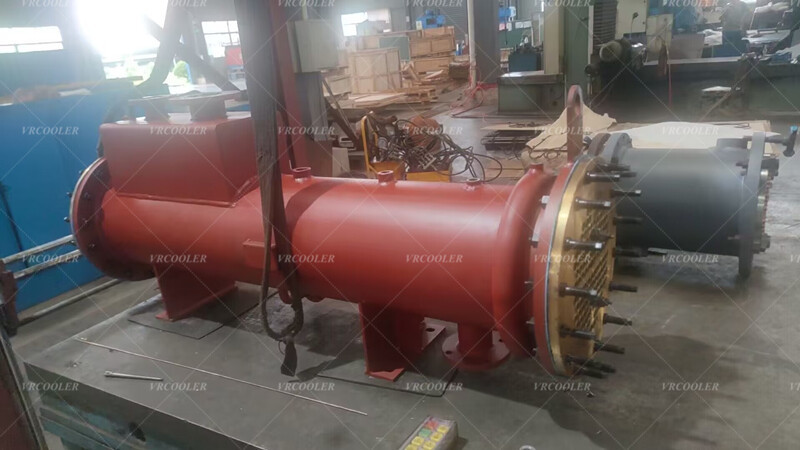
Auxiliary coolers are also commonly used for generator-related cooling. Depending on the generator design, this may include cooling for generator air, hydrogen systems, seal oil, stator water, or related support equipment. The exact arrangement varies by plant, but the purpose is the same: to keep the generator and its auxiliary systems within safe operating temperature limits.
Pump bearing and pump motor cooling is another common duty. Boiler feed pumps, condensate pumps, circulating water pumps, service water pumps, and other large pumps generate heat through bearings, seals, motors, and lubricating systems. Oil coolers are used to keep oil leaving bearings below permitted temperature limits by removing the heat absorbed in pumps and bearings.
Compressors also often require auxiliary cooling. Air compressors, gas compressors, instrument air systems, and process compressors may need oil coolers, intercoolers, or aftercoolers. Compressor oil cooling is especially important because the oil removes heat from rotors, bearings, and seals while also maintaining lubrication performance.
Hydraulic systems are another typical load. Many power plants and industrial facilities use hydraulic oil for control valves, actuators, turbine control systems, damper drives, fuel systems, and mechanical positioning equipment. As hydraulic pressure and operating time increase, the oil temperature rises. Fluid and oil coolers help maintain oil viscosity and protect hydraulic components from overheating.
Transformer oil cooling can also be handled by auxiliary cooling equipment, especially in power plants and substations where large oil-filled transformers operate continuously. The transformer oil carries heat away from the windings and core, and the cooler then rejects that heat to air or water. Transformer oil cooling systems are described as critical equipment in power plants and substations.
In nuclear and large thermal power plants, auxiliary cooling systems may also cool safety-related or support heat exchangers. For example, the U.S. Nuclear Regulatory Commission describes component cooling water removing heat from residual heat removal heat exchangers and then transferring that heat to the service water system through another heat exchanger.
In simple terms, auxiliary coolers commonly cool turbine lubricating oil, generator support systems, pump bearings and motors, compressor oil, hydraulic oil, transformer oil, and plant support heat exchangers. Their job is to protect the equipment around the main power cycle. Without these coolers, the main turbine, generator, pumps, compressors, and control systems could overheat, lose efficiency, or fail prematurely.