
To design or replace a waste-heat recovery tube bundle exchanger for oil-and-gas facilities, the most important information is the real operating condition of both the hot side and cold side. The designer needs to know what fluid or gas is passing through each side, the flow rate, inlet and outlet temperature, operating pressure, design pressure, allowable pressure drop, and required heat duty. These values determine the heat transfer area, tube size, tube quantity, baffle arrangement, shell or casing size, and overall exchanger performance.
For the hot waste-heat source, it is important to provide the medium type, such as flue gas, engine exhaust, gas turbine exhaust, hot condensate, thermal oil, process gas, or hot hydrocarbon liquid. The composition should also be given, especially if the stream contains sulfur, chlorides, CO₂, H₂S, soot, dust, oil vapor, acidic condensate, or other corrosive or fouling components. This information is critical for selecting the correct tube material, corrosion allowance, fin design, and cleaning method.
For the cold side, the required heating medium must be clear. It may be water, glycol solution, thermal oil, crude oil, fuel gas, condensate, amine solution, brine, or another process fluid. The required outlet temperature, flow rate, fluid properties, viscosity, fouling tendency, and pressure drop limit should be provided. If the fluid is viscous or dirty, the tube bundle design may need a lower velocity, larger flow area, removable structure, or special cleaning access.
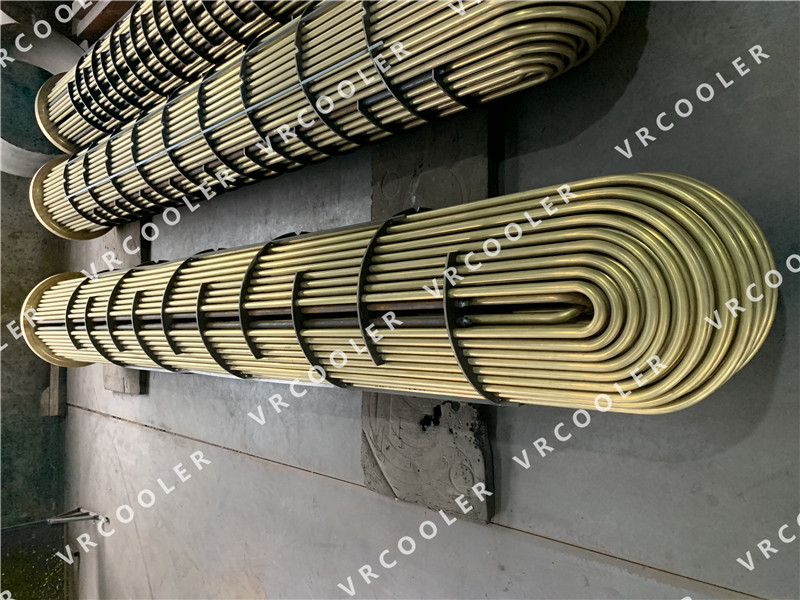
For replacement projects, the existing exchanger information is very important. The supplier should receive the original drawing, nameplate, photos, tube bundle dimensions, tube outside diameter, tube thickness, tube length, tube quantity, tube pitch, tube sheet diameter, baffle spacing, nozzle location, gasket surface size, flange standard, and installation space. If the original drawing is not available, the old tube bundle can often be reverse-engineered from site measurements or a sample unit.
Material requirements should also be confirmed early. Common options include carbon steel, stainless steel 304/316L, duplex stainless steel, low-alloy steel, or special alloy materials depending on temperature, pressure, corrosion, and code requirements. For offshore or sour-service oil-and-gas applications, NDT, PMI, coating, corrosion allowance, and project documentation requirements should also be specified.
In simple terms, the key data needed are: fluid name, flow rate, inlet/outlet temperature, pressure, pressure drop, heat duty, fouling condition, corrosion condition, material requirement, installation size, connection details, and applicable design standard. With complete information, the tube bundle exchanger can be designed for stable heat recovery, safe operation, easy maintenance, and long service life.
