
The main difference between a dry-expansion evaporator and a flooded evaporator is how refrigerant is present and evaporates inside the heat exchanger.
In a dry-expansion evaporator, only a controlled amount of refrigerant enters through the expansion valve. As it flows through the evaporator, it boils and gradually turns from liquid into vapor. By the time it leaves the evaporator, it is expected to be almost completely vapor, usually with a small amount of superheat. That is why it is called “dry-expansion” — the outlet condition is dry vapor, not a liquid-rich mixture.
In a flooded evaporator, the evaporator shell or vessel contains a larger volume of liquid refrigerant. The heat transfer surface is kept wetted by this liquid refrigerant, and boiling takes place continuously around the tubes. The refrigerant vapor generated is then separated from the liquid before going to the compressor. In other words, the evaporator is intentionally kept “flooded” with liquid refrigerant during operation.
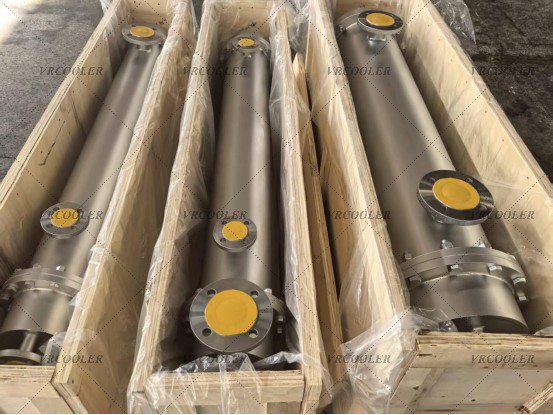
The practical differences are important:
Dry-expansion evaporator
- Uses less refrigerant charge
- Simpler control arrangement
- More compact system design
- Common in small and medium systems
- More sensitive to refrigerant distribution and superheat control
- Heat transfer is usually somewhat lower than flooded designs in large systems
Flooded evaporator
- Keeps the heat transfer surface fully wetted with refrigerant
- Usually provides better heat transfer efficiency
- Often used in larger-capacity chillers and industrial refrigeration
- Requires more refrigerant charge
- Needs additional components such as liquid level control or refrigerant separation
- System design and control are generally more complex
Another key difference is compressor protection. In a dry-expansion system, superheat control is critical because the compressor must receive only vapor. In a flooded system, refrigerant separation is critical because liquid refrigerant must be prevented from carrying over into the compressor suction.
So in simple terms:
A dry-expansion evaporator meters refrigerant carefully and lets it fully evaporate as it moves through the coil or tubes.
A flooded evaporator keeps a reservoir of liquid refrigerant around the heat transfer surface so boiling happens over a larger wetted area.
Because of that, dry-expansion evaporators are usually simpler and cheaper, while flooded evaporators are often more efficient in large systems but more complex and refrigerant-heavy.