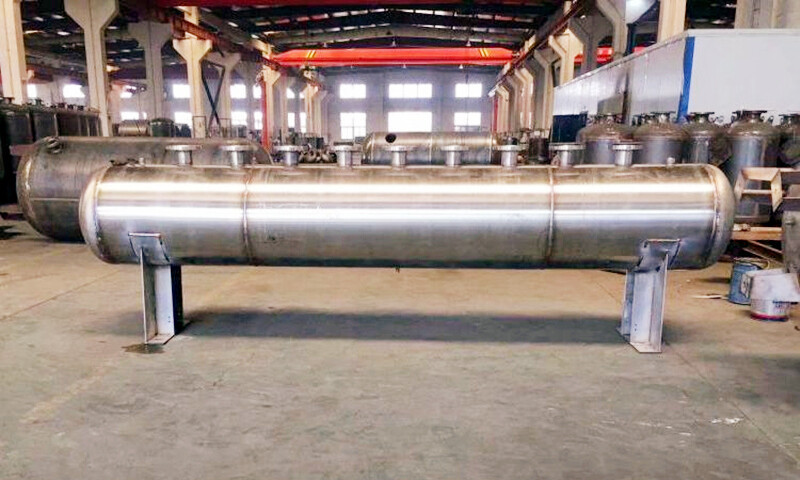
A steam-water separator removes liquid droplets carried in flowing steam, improving steam dryness. A steam trap automatically discharges collected condensate while limiting the escape of live steam. The two devices perform complementary functions and are often used together.
When the devices operate together, wet steam enters the separator, where droplets collect and drain toward the bottom. The steam trap connected to the drain then releases this water into the condensate system. Some separators include a built-in trap; others require an external trap. Effective drainage is essential because accumulated water can be carried back into the steam flow.
For example, a separator upstream of a steam heat exchanger improves the dryness of the incoming steam. The heat exchanger’s own steam trap drains the condensate formed as steam releases heat inside the exchanger. These are separate drainage duties.